
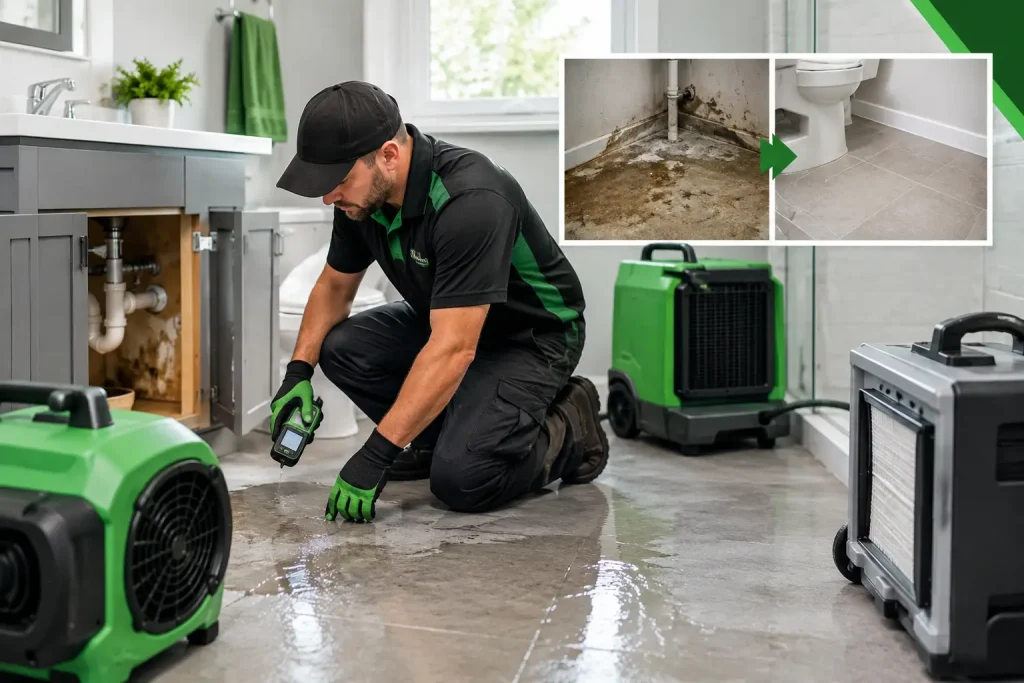
A bathroom leak can start behind a vanity, beneath a toilet, or inside a shower wall and remain hidden until flooring swells, paint bubbles, or water appears in the room below. A qualified bathroom leak repair contractor does more than patch the visible symptom. The right team identifies the source, controls moisture, protects affected materials, and coordinates the repairs needed to restore the space properly.
For homeowners, property managers, and commercial property owners, the priority is not simply making the water disappear. It is preventing a small plumbing or waterproofing failure from becoming a larger restoration project involving damaged subfloors, drywall, insulation, cabinetry, or microbial growth.
What a Bathroom Leak Repair Contractor Should Do
Bathroom leaks require a methodical response because the visible water is often only part of the problem. A leak around a toilet flange, shower valve, supply line, drain, tub overflow, failed grout joint, or deteriorated shower pan can allow water to travel beneath finished surfaces. By the time a stain appears on the ceiling below, moisture may already have reached framing or insulation.
A capable contractor begins with an inspection that focuses on both the source and the extent of the damage. This may include moisture readings, moisture mapping, thermal imaging, visual inspection of accessible areas, and targeted testing of plumbing fixtures or shower assemblies. The goal is to determine where water is entering, how long the area may have been affected, and which materials can be dried versus which materials need removal and replacement.
From there, the work commonly involves water extraction or controlled drying, removal of unsalvageable materials, plumbing repair coordination, cleaning, and reconstruction. If the leak damaged tile, drywall, flooring, vanity bases, insulation, or the ceiling below, those repairs should be planned as one organized scope rather than a series of disconnected fixes.
Signs You Should Act Before Damage Spreads
Not every bathroom leak causes a dramatic flood. Slow leaks are often more damaging because they can continue unnoticed for weeks. Contact a professional promptly if you notice several warning signs, especially when they occur near a shower, tub, toilet, or vanity:
- A soft, stained, warped, or unexpectedly warm section of flooring
- Peeling paint, bubbling drywall, or a ceiling stain below the bathroom
- Persistent musty odors, even after regular cleaning and ventilation
- Loose tile, cracked caulk, deteriorated grout, or water escaping the shower enclosure
- A toilet that rocks, a vanity cabinet with swelling at the base, or recurring water around a fixture
A visible stain does not always identify the source directly above it. Water can follow pipes, framing, and floor assemblies before it becomes visible. That is why opening the wrong area or applying a cosmetic repair too early can leave the actual failure unresolved.
When the Leak Is an Emergency
Turn off the nearest fixture shutoff valve or the main water supply if water is actively flowing and you can do so safely. Avoid using electrical switches or appliances near standing water. If water is near wiring, coming through a ceiling, or affecting multiple rooms, keep people out of the area and contact an emergency restoration professional.
A burst supply line, overflowing toilet, failed washing connection near a bathroom, or a leak that reaches occupied space below should be addressed immediately. Rapid mitigation helps limit how far moisture migrates and can preserve more materials. It also creates a clear record of the damage conditions before reconstruction begins.
Finding the Source Matters More Than Covering the Damage
Bathroom leaks generally fall into two categories: plumbing leaks and waterproofing failures. Plumbing leaks can involve pressurized supply lines, drainpipes, valves, toilet seals, or fixture connections. Waterproofing failures are commonly associated with showers and tubs, where failed caulk, grout, tile backing, shower pans, or enclosure details allow water into wall or floor assemblies.
The distinction matters because grout and caulk are finish materials, not complete waterproofing systems. Recaulking a shower may be appropriate for a minor surface maintenance issue, but it will not solve a failed shower pan, damaged backing board, or leaking valve inside the wall. Similarly, replacing a stained ceiling without drying and repairing the source above can result in repeated damage.
An experienced bathroom leak repair contractor should explain what was found, what testing supports that conclusion, and what repair path is appropriate. In some cases, a limited plumbing repair and focused drywall replacement are enough. In others, the affected shower or bathroom floor must be opened so wet materials can be removed, dried, and rebuilt correctly.
The Restoration Process After a Bathroom Leak
The best repair approach depends on the source, how long the leak was active, the materials affected, and whether water spread beyond the bathroom. A well-managed project usually moves through several connected phases.
First, the contractor documents visible conditions and measures moisture in affected materials. This establishes the initial damage scope and helps guide drying decisions. When insurance may be involved, detailed photos, readings, and a clear timeline can also support communication with the carrier or adjuster.
Next comes mitigation. The team stops or isolates the water source, extracts standing water when present, and uses appropriate drying equipment to reduce moisture in structural materials. Controlled drying is not just about speed. It requires monitoring so the contractor can verify that materials are reaching acceptable drying goals rather than being closed back up while still wet.
Once drying is complete, damaged materials can be repaired or replaced. Depending on the loss, reconstruction may include plumbing access repairs, insulation, drywall, flooring, trim, paint, cabinetry, tile, shower components, and ceiling repairs in the room below. Coordinating these trades under one project manager reduces gaps between mitigation and final restoration.
Mold and Material Removal Considerations
A bathroom does not need to look severely damaged for moisture to affect hidden materials. Wet drywall, insulation, engineered wood, and vanity components may not recover as intended if water has been present for an extended period. The appropriate response depends on measured moisture, material condition, contamination concerns, and the cause of the water intrusion.
If conditions warrant removal, the work should be performed with proper containment, cleaning, and safety practices. This is especially important in older properties where opening walls or flooring may reveal materials that require specialized evaluation or handling. Rushing demolition or treating visible discoloration without addressing moisture can create unnecessary disruption and expense.
Insurance Claims: Documentation Helps, but Coverage Varies
A sudden and accidental plumbing failure may be handled differently from long-term seepage, deferred maintenance, or a pre-existing construction defect. Insurance coverage depends on the policy, the cause of loss, the timing, and the insurer’s findings. A contractor should not promise coverage before the claim is reviewed.
What a restoration contractor can do is provide organized documentation of the affected areas, mitigation work, moisture conditions, photos, and repair scope. This information can help property owners communicate clearly with their insurance representative and make informed decisions about the work ahead.
For multi-unit buildings, condominiums, and commercial properties, documentation is especially valuable. Water may affect common areas, neighboring suites, or multiple stakeholders. A coordinated response helps clarify which spaces are affected and what work is needed to protect the property.
How to Choose the Right Contractor
The lowest estimate is not always the lowest total cost, particularly when it addresses only paint, tile, or drywall while leaving the source and hidden moisture unaddressed. Look for a contractor with water mitigation and reconstruction capabilities, not just cosmetic remodeling experience.
Ask how the source will be confirmed, how moisture will be measured and monitored, who will coordinate plumbing and reconstruction, and how the scope will be documented. You should also expect clear communication about what can be preserved, what must be replaced, expected sequencing, and any decisions that could affect cost or schedule.
For an active loss, emergency response experience matters. For a shower failure or long-term leak, reconstruction quality matters just as much. The contractor should understand how waterproofing, plumbing, ventilation, flooring transitions, and wall assemblies work together so the finished bathroom is not only attractive, but properly protected.
Apollo Construction & Renovation Corp. helps property owners across the Mid-Atlantic manage bathroom water damage from emergency mitigation through detailed documentation and full reconstruction. If you see signs of a leak, act before a surface repair becomes a larger structural or moisture problem.
Every property and insurance policy is different. Contact Apollo to discuss the work your property may need; your insurer determines coverage.