
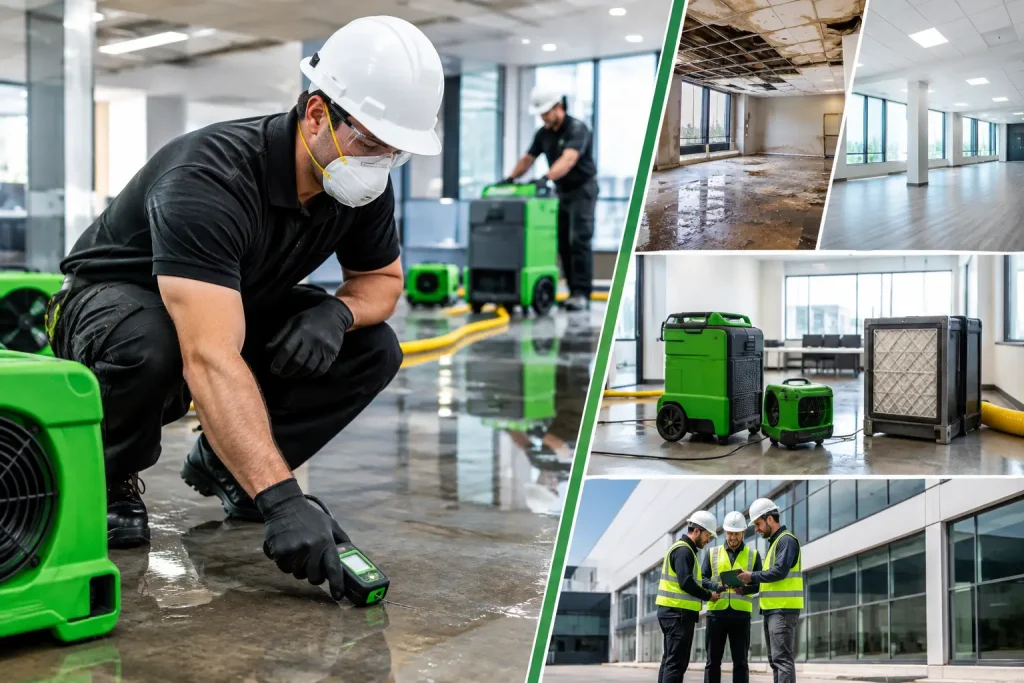
A burst supply line above occupied offices can damage ceiling systems, flooring, electronics, inventory, and tenant operations within hours. A fire can leave behind smoke residues and odor long after the flames are out. This commercial disaster recovery guide gives property owners and managers a practical framework for protecting people, controlling damage, documenting the loss, and moving toward a safe reopening.
The right response is not simply to start repairs quickly. It is to make sound decisions in the correct order. Early choices affect safety, insurance documentation, the scope of restoration, downtime, and the building’s long-term condition.
Commercial Disaster Recovery Guide: The First 24 Hours
The first priority after any commercial loss is life safety. If there is an active fire, gas concern, structural instability, electrical hazard, sewage exposure, or other immediate danger, keep occupants out of the affected area and contact the appropriate emergency authorities. Do not allow employees, tenants, or maintenance staff to re-enter until the space is safe.
Once the immediate hazard is controlled, take reasonable steps to prevent additional damage. That may mean shutting off the water source, protecting unaffected areas from migration, arranging temporary roof protection after a storm, or securing exposed openings. Commercial properties often have interconnected systems, so damage that begins in one suite or mechanical room can travel through wall cavities, ceilings, elevator shafts, and shared corridors.
Document conditions before significant cleanup begins whenever it can be done safely. Take wide photographs that show the overall area and closer images of damaged finishes, contents, equipment, and building materials. Record the date, time, known cause of loss, spaces affected, and actions taken to protect the property. Preserve invoices, emergency service records, maintenance logs, and communications related to the event.
Notify your insurance carrier or broker promptly and follow the reporting process required by your policy. A qualified restoration contractor can also help organize damage documentation, mitigation records, moisture readings, photographs, and repair scopes for the adjuster. Documentation does not replace the carrier’s review, but it gives every party a clearer record of what happened and why each recovery step was necessary.
Build a Recovery Team Before Work Expands
Commercial recovery rarely falls to one person. The property owner, facility manager, property manager, tenants, insurer, adjuster, restoration contractor, and specialty vendors may all have a role. Establishing a clear point of contact prevents conflicting instructions and missed decisions.
For a multi-tenant building, communicate what is known without speculation. Let tenants know which areas are restricted, whether utilities or access have changed, and when the next update will be provided. A short, factual update is more useful than an uncertain promise about reopening dates. If the building must remain partially operational, designate safe routes, staging areas, and work zones that separate occupants from restoration activity.
The contractor should assess the full extent of the loss, not just the visibly damaged surface. Water can remain beneath flooring or behind walls. Smoke can affect HVAC pathways and concealed materials. Storm damage may include roof, siding, gutter, window, and interior water issues. Thermal imaging, moisture mapping, 360-degree imaging, and detailed field notes can help identify conditions that deserve attention before reconstruction begins.
Stop Damage at Its Source
Mitigation and reconstruction are related, but they are not the same phase. Mitigation addresses immediate conditions that can worsen if left untreated. Reconstruction restores the building after the affected areas are clean, dry, stable, and approved for repair.
After a water loss, mitigation may include water extraction, removal of unsalvageable materials, structural drying, humidity control, and ongoing moisture monitoring. Drying equipment should be placed and monitored based on the affected materials and measured conditions, not simply set in the room and left unattended. Incomplete drying can contribute to material failure, odor, and microbial growth.
After fire and smoke damage, the work may involve securing the structure, evaluating soot and smoke impact, cleaning affected surfaces and contents, addressing odor, and reviewing HVAC components before the system distributes contaminants further. The necessary approach depends on the fuel source, extent of smoke movement, materials affected, and building use.
A storm loss can require temporary protection first, followed by a careful review of roofing, exterior components, insulation, interior finishes, and drainage systems. Quick tarping or boarding may be appropriate in some cases, but temporary measures should be installed safely and documented as part of the emergency response.
IICRC-based restoration protocols provide a disciplined framework for water and fire recovery. OSHA-compliant safety practices are equally essential, especially where structural concerns, contaminated water, asbestos-containing materials, lead-containing coatings, or other environmental risks may be present. Do not authorize demolition or disturb suspect materials without the appropriate evaluation and controls.
Keep Business Continuity in the Plan
A commercial property does not always need to be fully closed after a loss. It depends on the extent of damage, occupancy type, life-safety conditions, available utilities, and ability to isolate work areas. A warehouse may be able to shift operations away from one affected section. An office building may support remote work while a damaged floor is restored. A retail location may need a temporary entrance, protected customer route, or phased construction schedule.
The recovery plan should identify the functions that cannot stop: security, payroll, data access, refrigeration, tenant communication, customer service, and critical equipment. It should also establish who can approve emergency spending, sign work authorizations, coordinate access, and receive daily progress updates.
There are trade-offs. Accelerating work can reduce downtime, but only if the building is ready for the next phase. Rebuilding before drying is complete may create preventable rework. Keeping operations open may preserve revenue, but it must not compromise safety or interfere with containment, equipment operation, inspections, or quality control. A good restoration plan protects both the property and the business using it.
Move From Mitigation to Reconstruction With Clear Scope
Before reconstruction starts, confirm that mitigation documentation, drying records, demolition needs, and repair scope align with the actual conditions. This is the time to identify necessary repairs to drywall, insulation, flooring, paint, ceilings, electrical systems, plumbing, HVAC, roofing, or other building components.
Commercial repairs often involve more coordination than expected. Matching existing finishes, sourcing materials, accommodating tenant schedules, meeting code requirements, and sequencing multiple trades can all affect the schedule. A complete contractor can coordinate these moving parts under one project plan rather than leaving the property owner to manage separate mitigation, roofing, mechanical, electrical, and reconstruction vendors.
Ask for clear communication about what is included, what requires further review, and what decisions may affect schedule or cost. Transparency matters most when hidden damage is uncovered. Conditions behind walls, under flooring, or above ceilings sometimes change the repair scope. The goal is not to avoid every surprise. It is to identify issues early, document them properly, and explain the next step before work moves forward.
Make the Next Loss Easier to Manage
Every completed loss is an opportunity to improve the property’s emergency readiness. Keep a current list of utility shutoffs, key vendors, insurer contacts, tenant contacts, equipment locations, and after-hours access procedures. Review roof inspections, plumbing maintenance, drainage conditions, fire protection systems, and HVAC service records on a regular schedule.
For larger properties, maintain a simple disaster file with floor plans, current photographs, equipment inventories, lease contacts, and records of recent renovations. If a loss occurs, those records can shorten the time needed to understand what was affected and support a more organized claim review.
Apollo Construction & Renovation Corp. helps commercial property owners across the Mid-Atlantic manage emergency mitigation, detailed documentation, reconstruction, and the coordination required after a covered loss. The most helpful next step after damage is to protect the site, preserve the evidence, and bring in qualified restoration professionals before a manageable problem becomes a longer interruption.
Every property and insurance policy is different. Contact Apollo to discuss the work your property may need; your insurer determines coverage.