
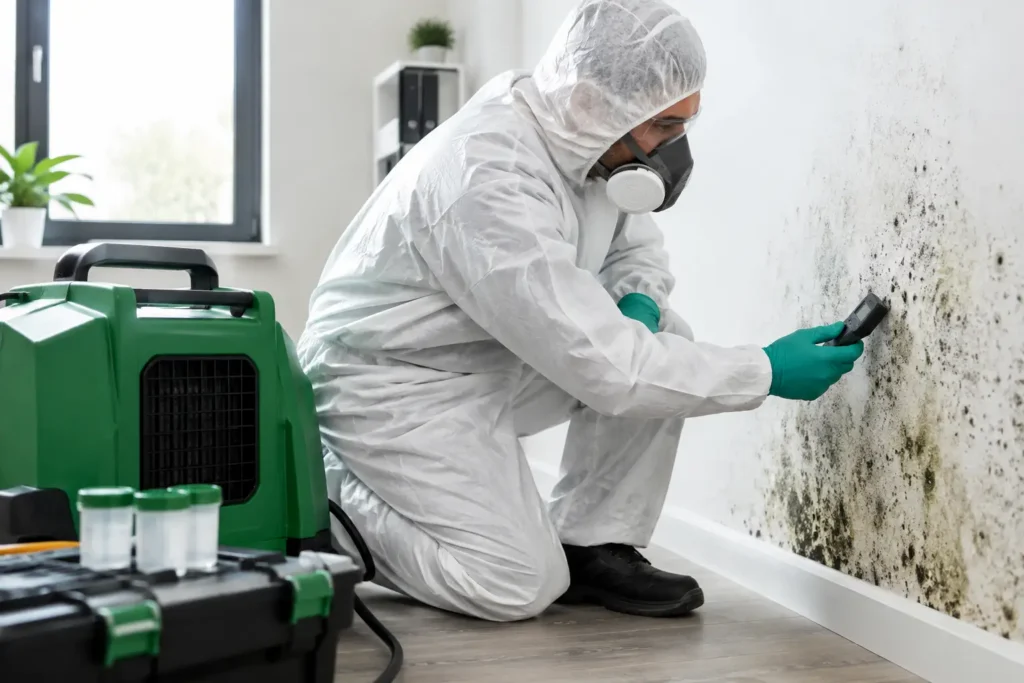
A maintenance call about a musty odor, a stained ceiling, or recurring condensation can become a building-wide concern quickly. Effective mold remediation for property managers is not simply a matter of removing visible growth. It requires prompt source control, appropriate containment, clear resident communication, detailed documentation, and a repair plan that prevents the same conditions from returning.
For apartments, condominiums, HOAs, office suites, and mixed-use buildings, the stakes are practical: protect occupants, limit disruption, preserve the building, and create an accurate record for ownership and insurance stakeholders. The right response is organized from the first report, not improvised after the damage spreads.
Start With the Moisture Source, Not the Surface
Mold needs moisture to grow. That makes the first question straightforward: where is the water coming from, and is it still active? A failed supply line, roof leak, overflowing fixture, HVAC condensate issue, exterior drainage problem, or elevated indoor humidity can all create conditions for growth. Cleaning or removing affected materials without correcting the source may improve appearances temporarily while allowing the problem to return.
Property managers should treat every report as both a maintenance issue and a documentation event. Record when the concern was reported, the affected areas, visible conditions, resident observations, and any active water source. Photos are useful, but a professional assessment may also include moisture mapping and thermal imaging to identify wet materials behind walls, beneath flooring, or above ceilings.
The response timeline depends on the conditions. A small, isolated area caused by a resolved moisture issue may require a limited scope. Widespread growth, repeated water intrusion, sewage-related contamination, damaged porous materials, or moisture affecting multiple units calls for a more controlled restoration plan. The goal is to match the scope to the building conditions rather than assume every situation is either minor or catastrophic.
Protect Residents While Work Is Underway
Clear communication is one of the most valuable tools a property manager has during a mold event. Residents need practical information: what has been identified, what access is needed, what areas should not be disturbed, and what work is planned. Avoid speculating about causes or making promises before the investigation is complete. Calm, factual updates help maintain trust and reduce confusion.
When conditions warrant it, remediation professionals establish containment to limit the movement of dust and affected materials into clean areas. The specific setup varies by the size and location of the work, occupancy, HVAC layout, and whether the affected space is a single unit or a shared building area. In occupied properties, the work plan should also account for safe access routes, work hours, temporary relocation needs, and the protection of personal belongings.
For multifamily properties, communication must extend beyond the unit where growth is visible. Water can travel through wall cavities, floor assemblies, and utility penetrations. A leak from one unit may affect a neighboring unit or common area before anyone sees a stain. Coordinated inspections can prevent a narrow repair from overlooking connected damage.
Build a Defensible Mold Remediation Plan
A well-managed remediation project follows a sequence. Skipping steps often creates avoidable delays, rework, or disputes about what was done and why.
Assess and define the scope
The initial inspection should identify the moisture source, the materials affected, and the extent of visible and concealed damage. Drywall, insulation, carpet, pad, wood framing, cabinetry, and ceiling materials all respond differently to water exposure. Some materials can be dried and cleaned when addressed quickly; others may need removal when they are damaged or cannot be effectively restored.
The assessment should distinguish between the remediation scope and the reconstruction scope. Remediation addresses the source, containment, removal or cleaning of affected materials, and drying. Reconstruction restores walls, ceilings, flooring, trim, paint, and other finishes after the area is ready. Separating these phases gives owners, adjusters, and residents a clearer picture of what is happening next.
Control the work area
Containment, controlled demolition, and appropriate cleaning practices protect unaffected portions of the property. Depending on the conditions, this may include physical barriers, negative air controls, protected pathways, and careful handling of debris. HVAC systems require particular attention because they can move air between spaces. A qualified team will evaluate whether registers, returns, or equipment are connected to the affected area and plan accordingly.
Property managers should avoid allowing maintenance staff or residents to disturb suspect materials before the scope is established. Pulling up wet carpet, opening walls, or spraying products onto visible growth without proper controls can complicate the assessment and spread debris into other areas.
Dry, clean, and verify conditions
Drying is not an afterthought. Moisture readings should guide decisions about whether structural materials have returned to acceptable conditions before rebuilding begins. Professional documentation can include daily drying records, equipment logs, photos, moisture maps, and 360-degree imaging when appropriate.
Cleaning methods depend on the material and level of impact. Nonporous and some semi-porous surfaces may be cleaned when structurally sound. Heavily affected porous materials may require removal. There is no single treatment that fits every property, which is why moisture conditions, building materials, and the extent of the event matter.
Documentation Supports Better Decisions and Claims
A property manager may be coordinating owners, board members, residents, vendors, and insurance representatives at once. Detailed project records turn a confusing loss event into a manageable process. They show what was observed, what mitigation was necessary, when conditions changed, and what repairs remain.
For potential insurance-related losses, notify the carrier or broker promptly and preserve documentation. Coverage decisions depend on the policy, the cause of loss, timing, exclusions, and other facts specific to the claim. A restoration contractor can provide the technical records and repair information needed for the process, but should not promise a coverage outcome.
Useful documentation commonly includes the initial inspection findings, photographs, moisture readings, affected-area diagrams, emergency mitigation records, estimates, invoices, and communications about access or repairs. This record also helps property managers explain the project to ownership and demonstrate that reasonable steps were taken to limit further damage.
Prevent Repeat Events After Reconstruction
The final paint coat is not the end of the job if the building condition that caused the moisture remains. Before closing out a project, property managers should confirm that repairs address the source: plumbing components have been tested, roof or exterior penetrations have been corrected, drainage issues have been addressed, and HVAC condensate management is functioning as intended.
Recurring condensation deserves special attention. It can be tied to ventilation, insulation gaps, unbalanced HVAC performance, high indoor humidity, or occupant use patterns. The solution may involve more than one trade. A qualified contractor can help coordinate repairs across roofing, plumbing, HVAC, drywall, insulation, flooring, and finish work so the building is restored as a complete system rather than a collection of isolated patches.
A practical prevention program also includes routine checks of roofs, gutters, plumbing connections, mechanical rooms, vacant units, and areas below bathrooms or kitchens. Promptly investigating small stains and musty odors is usually less disruptive and less expensive than waiting for visible damage to expand.
Choosing a Restoration Partner for Managed Properties
Property managers need more than a company that can remove damaged drywall. They need a partner that can respond with a defined process, communicate with multiple stakeholders, document conditions thoroughly, and coordinate the path from emergency mitigation through reconstruction.
Ask how the contractor identifies hidden moisture, controls affected work areas, documents drying, handles occupied units, and coordinates repairs after remediation. For larger or insurance-related events, ask who will provide updates, what records will be available, and how the team will coordinate with adjusters or ownership representatives. Licensing, insurance, safety practices, and restoration training should all be part of the conversation.
Apollo Construction & Renovation Corp. supports property managers throughout Maryland, Northern Virginia, Washington DC, and Pennsylvania with organized mitigation, detailed documentation, and full reconstruction capabilities. The objective is to stabilize the property, protect the people who use it, and move each affected space toward a durable recovery.
When the next moisture report arrives, treat it as an opportunity to act early and methodically. A prompt inspection, a controlled remediation plan, and clear communication can protect both the property and the confidence of the people who depend on it.
Every property and insurance policy is different. Contact Apollo to discuss the work your property may need; your insurer determines coverage.