
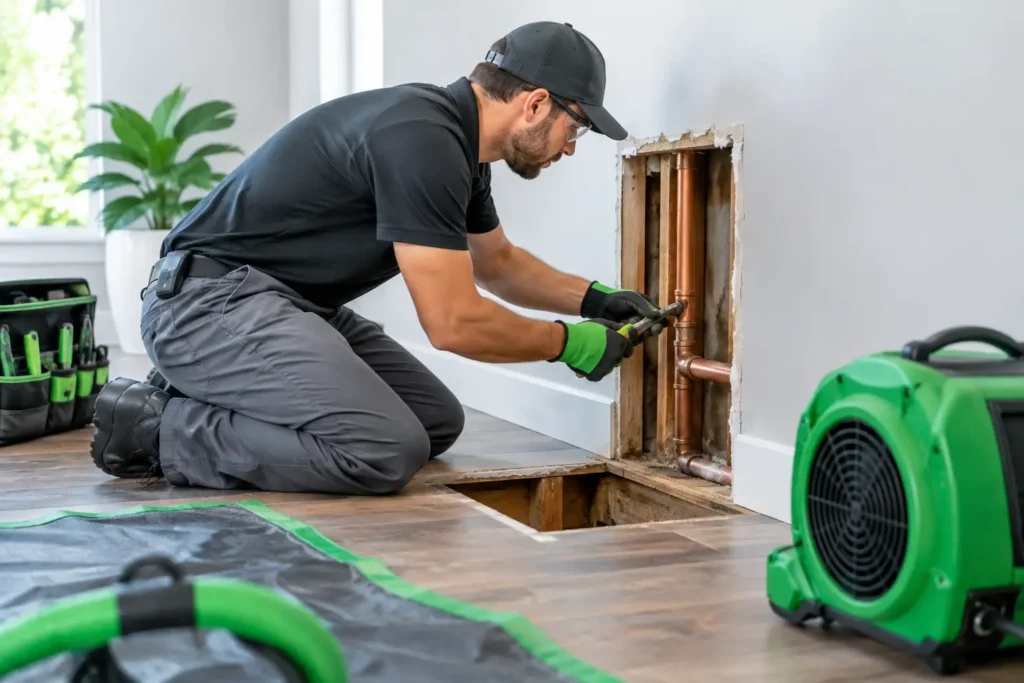
A pipe leak can begin behind a cabinet, above a ceiling, or inside a wall and affect far more than the visible stain. Effective pipe leak renovation starts by stopping the water and protecting the structure, then moves through professional drying, documentation, targeted demolition, and complete reconstruction. Skipping any of those steps can leave hidden moisture behind, creating conditions for damaged materials, odors, and mold growth after the surface appears repaired.
For homeowners, property managers, and commercial building owners, the goal is not simply to make the affected area look normal again. The goal is to restore the property safely, document the loss clearly, and repair the source so the problem does not return.
Start With Emergency Mitigation, Not Cosmetic Repairs
When a plumbing leak is active, the first priority is to limit additional water damage. If it is safe to do so, shut off the local fixture valve or the building’s main water supply. Avoid using electrical outlets, switches, or appliances near standing water, and contact a qualified restoration professional promptly.
Water can travel beneath flooring, through wall cavities, around insulation, and into adjoining rooms. A small leak under a sink may damage the cabinet base, subfloor, drywall, and nearby flooring. A failed supply line on an upper floor may affect ceilings, light fixtures, insulation, and finished areas below.
Emergency mitigation focuses on controlling the source and removing moisture before demolition or rebuilding begins. Depending on the loss, this process may include water extraction, removal of unsalvageable materials, controlled drying equipment, dehumidification, and moisture monitoring. The right approach depends on how long the leak was active, the materials affected, and whether water reached concealed areas.
Drywall, carpet padding, insulation, engineered flooring, and cabinet components do not all respond to water exposure the same way. Some materials can be dried successfully when addressed quickly. Others may need removal because they have swollen, delaminated, lost structural integrity, or cannot be reliably dried in place.
Why Hidden Moisture Changes a Pipe Leak Renovation
Visible water is only part of the problem. The most costly issues often develop where moisture cannot be seen. Without proper inspection, a contractor may replace a section of drywall while leaving damp framing, insulation, or subflooring behind the finished surface.
A professional restoration assessment should identify the full moisture path. This commonly includes moisture meters, thermal imaging, and visual inspection of connected spaces. For larger or insurance-related losses, detailed moisture mapping and photo documentation help establish the condition of the property before reconstruction begins.
This assessment determines the true scope of work. It may reveal that the repair is limited to a vanity cabinet and small drywall area, or it may show that water moved into a hallway, adjacent bedroom, ceiling cavity, or lower-level living space. Accurate scope development prevents surprises later in the project and supports more organized communication with an insurance carrier when a covered loss is involved.
The Right Order of Work After a Plumbing Leak
Renovation should follow the condition of the building, not a rushed finish schedule. Replacing flooring or closing walls before materials have reached appropriate drying goals can trap moisture inside the assembly.
First, the plumbing failure must be identified and repaired by a qualified professional. This may involve a failed supply line, drain connection, shutoff valve, appliance hose, toilet seal, aging pipe, or another component. Repairing the visible damage without correcting the source only delays another loss event.
Next comes mitigation and drying. Restoration technicians monitor affected materials and adjust equipment as needed to remove excess moisture. When materials are beyond recovery, controlled removal allows the assembly to dry and provides access for inspection and repairs.
Only after drying and any necessary environmental work are complete should reconstruction begin. This phase may include insulation, drywall, trim, painting, cabinetry, flooring, electrical repairs, plumbing finish work, and fixture replacement. A coordinated contractor can manage these trades in the correct sequence, reducing delays and avoiding damage to completed work.
Reconstruction Should Match the Cause and Scope
Not every leak requires a full remodel, but some losses create an opportunity to make practical improvements while the area is already open. For example, a bathroom pipe leak may require a vanity replacement, new baseboards, drywall, and flooring. If the owner chooses to update finishes at the same time, it is essential to distinguish between damage-related restoration work and elective upgrades.
That distinction matters for planning and insurance communication. Coverage depends on the policy, cause of loss, conditions, and carrier determination. Detailed documentation can support the claim process, but no contractor should promise coverage before the insurer completes its review.
For commercial properties and multi-family buildings, renovation planning may also need to account for tenant access, business operations, shared plumbing systems, and work-area containment. The best solution balances thorough restoration with a practical plan for keeping the property functional.
Common Mistakes That Make Leak Damage Worse
Property owners often act quickly with good intentions, but several decisions can complicate recovery. Painting over a stain, installing new flooring immediately, or running household fans without assessing the affected area can conceal conditions rather than resolve them.
Another common mistake is discarding damaged materials before documenting the loss. Photos, moisture readings, invoices, and a clear timeline can be valuable when reporting an insurance claim. If water damage appears extensive, document the area before cleanup when safe, then allow trained mitigation professionals to begin work.
Delaying the response can also raise the cost and complexity of the project. Moisture exposure changes over time. Wood materials may swell, drywall can soften, adhesives can fail, and microbial growth may become a concern. Fast action does not mean rushing reconstruction. It means beginning the right process early.
Questions to Ask Before Hiring for Pipe Leak Renovation
The contractor you select should be equipped to address both the emergency conditions and the rebuilding process. A cosmetic repair company may provide quality finishes but may not have the equipment, training, or documentation process needed for a water loss. Conversely, mitigation alone is not the final answer if the property needs skilled reconstruction afterward.
Ask whether the team can identify and document concealed moisture, provide drying records, coordinate necessary plumbing repairs, and manage reconstruction after mitigation. For insurance-related losses, ask how the company communicates with adjusters and whether it prepares clear photo documentation, scope information, and project updates.
It is also reasonable to ask about safety procedures. Water can affect electrical systems, insulation, building materials, and indoor air quality. Professional crews should use appropriate containment, personal protective equipment, and OSHA-conscious work practices for the conditions present.
When Insurance May Be Part of the Process
Many sudden and accidental plumbing failures may lead to an insurance claim, while long-term leaks, deferred maintenance, or pre-existing damage may be handled differently. Every policy and claim is unique, so property owners should review their policy and speak directly with their carrier or adjuster regarding coverage.
A restoration contractor can help make the process more manageable by documenting the damage, separating mitigation from reconstruction activities, and providing a clear scope of repairs. Organized records help all parties understand what occurred, what materials were affected, and what work is needed to return the property to its pre-loss condition.
Apollo Construction & Renovation Corp. provides emergency mitigation, damage documentation, and full reconstruction support for residential and commercial properties across the Mid-Atlantic. This integrated approach helps reduce the burden of coordinating multiple vendors during an already stressful property loss.
Protect the Property Before You Rebuild It
The best pipe leak repair is not the fastest-looking repair. It is the one that confirms the source is fixed, moisture has been properly addressed, affected materials are evaluated honestly, and reconstruction is completed with durable workmanship. If you discover a leak, act quickly, preserve documentation, and bring in a qualified restoration and renovation team before hidden damage becomes a larger problem.
Every property and insurance policy is different. Contact Apollo to discuss the work your property may need; your insurer determines coverage.