
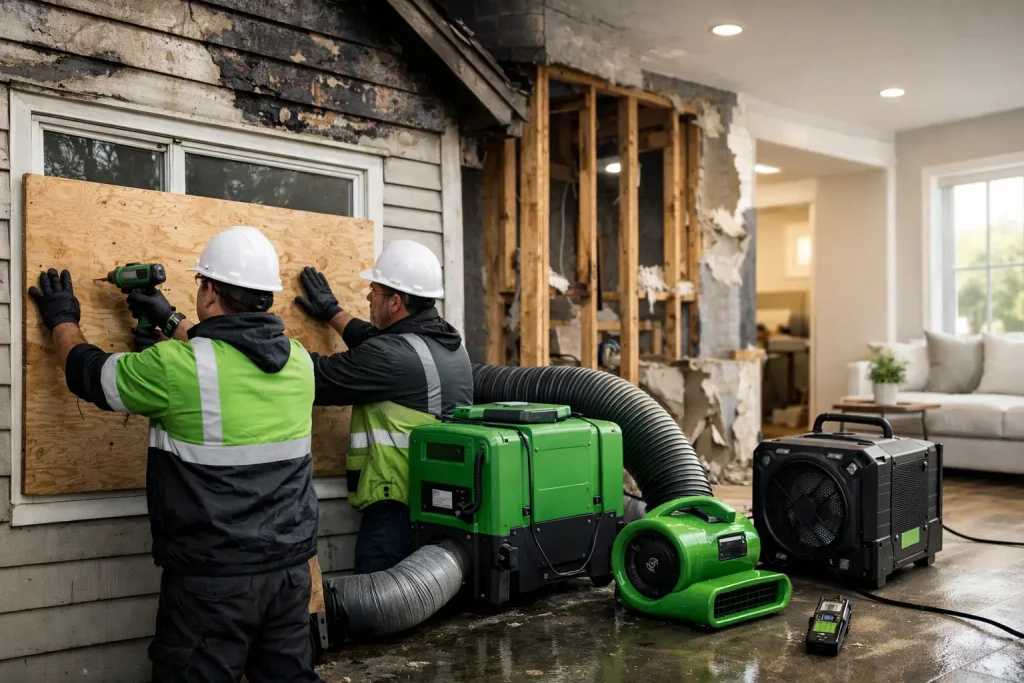
A broken window at 2 a.m. is not just a glass problem. It is an open invitation for rain, wind, theft, temperature loss, and added structural damage. That is why emergency board up services matter in the first hours after a property loss. The goal is simple – secure the building fast, prevent further damage, and create a safe path for inspection, mitigation, and permanent repairs.
For homeowners, commercial property owners, and property managers, the first priority after a loss is stabilization. When a roof opening, shattered storefront, damaged door, or exposed wall is left unsecured, the original damage often spreads. Water enters. Debris blows in. Interior finishes become vulnerable. Occupant safety becomes harder to manage. A proper board-up is not cosmetic. It is a critical protective measure that buys time for the next phase of restoration.
What emergency board up services actually do
Emergency board up services are used to temporarily secure openings caused by fire, storms, vandalism, vehicle impact, fallen trees, break-ins, roofing failures, and other sudden loss events. That can include windows, doors, garage openings, roof sections, or damaged wall areas.
The work sounds straightforward, but the quality of the response matters. A rushed board-up can leave gaps, create safety hazards, or even cause more damage if materials are fastened improperly. A professional response focuses on containment, stability, weather protection, and access control while keeping the property ready for adjuster review and restoration planning.
In many cases, board-up work is part of a larger emergency response. The same incident that breaks a window may also involve water intrusion, smoke damage, roof failure, or compromised framing. That is why property owners often benefit from working with a restoration contractor that can move from emergency protection to mitigation, documentation, and reconstruction without losing momentum.
When emergency board up services are needed most
Some damage scenarios are obvious. A shattered storefront glass panel or a door kicked in during a break-in clearly needs immediate protection. Other situations are less obvious but just as urgent.
After fire damage
Even when the fire is contained quickly, windows may be broken for ventilation, doors may be damaged during access, and roof sections may be compromised. Leaving those openings exposed can allow weather in and create security concerns. Fire losses also tend to leave weakened materials behind, so the area has to be secured carefully and safely.
After storm damage
High winds, hail, falling limbs, and wind-driven debris often create openings in roofing, siding, windows, and exterior doors. The visible damage is only part of the issue. Once the building envelope is breached, water can travel quickly into insulation, drywall, flooring, and electrical areas. Temporary protection helps limit that secondary damage.
After vandalism or forced entry
For commercial properties and multi-unit buildings, unsecured entry points can disrupt operations and expose tenants or contents to additional loss. A fast board-up helps restore control of the site while ownership works through police reporting, insurance communication, and permanent replacement.
After vehicle impact or structural failure
When a car strikes a garage, storefront, or exterior wall, the damage can involve more than a visible opening. Load paths may be affected, framing may be cracked, and neighboring materials may be unstable. In those cases, board-up is one part of making the site safer until a full structural assessment is completed.
Why speed matters, but process matters too
During an emergency, everyone wants the opening covered immediately. That urgency is justified. Still, speed without process can create problems.
A professional team should first identify what caused the breach, whether there are active hazards, and how to secure the area without making conditions worse. If there is standing water, smoke contamination, unstable debris, or electrical risk nearby, those conditions affect how the board-up should be handled.
Documentation also matters early. Photos, measurements, and condition notes can support the insurance process and establish what emergency work was necessary to protect the property from further loss. For insurance-related restoration, that first response should not be disconnected from the broader claim and repair strategy.
What a professional board-up should include
A proper emergency board-up is more than placing plywood over a hole. It should be planned around safety, weather resistance, and the specific type of damage.
For windows and doors, the goal is usually to close off access, reduce exposure, and prevent movement around the damaged opening. For roof damage, temporary tarping or covering may be more appropriate than traditional boarding. For commercial sites, visibility, access points, and occupant flow may also need to be considered.
The best approach depends on the property and the loss. A single-family home with one broken rear window has different needs than a retail site with multiple openings and customer-facing security concerns. A multifamily property may require staged access for tenants, while an office building may need areas isolated until inspections are complete.
That is where experience matters. Teams familiar with restoration work understand that temporary protection has to support what comes next. Materials should be installed in a way that protects the structure, avoids unnecessary damage to surrounding finishes, and allows efficient transition into repairs.
Emergency board up services and the insurance process
Emergency board up services are often part of a covered loss response when the work is necessary to prevent further damage. The key phrase is necessary and reasonable. Insurance carriers generally expect property owners to take prompt action to protect the building after a sudden event, but they also expect documentation.
This is one reason many owners prefer a contractor who understands both emergency service and insurance restoration. The board-up itself may only take a short time, but the records created during that visit can support the claim later. Photos of the opening, notes on affected materials, moisture concerns, weather exposure, and site conditions all help tell the story of the loss.
It also helps when the same team can identify related issues early. A broken roof section may suggest hidden attic moisture. A fire-damaged opening may lead to smoke and soot migration inside the structure. A boarded storefront may still need glass cleanup, water extraction, temporary power considerations, or reconstruction planning. Treating board-up as a standalone task can slow the overall recovery.
Choosing the right contractor in an emergency
Not every contractor is equipped for emergency stabilization work. Some can perform the basic labor but may not be prepared to handle documentation, site safety, moisture concerns, or transition planning. In a stressful situation, that difference becomes clear quickly.
Look for a contractor that responds with urgency but communicates clearly. They should explain what is being secured, what remains at risk, and what the next steps are. They should also understand restoration sequencing, not just temporary enclosure.
For larger losses, it is especially helpful to work with a company that can coordinate mitigation and reconstruction under one roof. That reduces delays, improves accountability, and keeps emergency work aligned with the full scope of repairs. Apollo Construction & Renovation Corp. approaches these losses with that bigger picture in mind, helping clients protect the property immediately while preparing for documentation, mitigation, and permanent restoration.
What property owners should do before help arrives
If the damage is recent, the first step is safety. Stay clear of unstable areas, broken glass, exposed wiring, or active leaks. If emergency services or utility shutoff are needed, address that first.
After that, try to limit access to the damaged area and preserve the scene as much as practical. Photos taken from a safe distance can be useful. If rain is entering or security is compromised, call for emergency service right away. Waiting until morning can turn a contained loss into a much larger repair.
It is also wise to avoid improvised fixes that create liability or hide damage. A temporary covering installed incorrectly can trap water, interfere with inspection, or fail when weather changes. The goal is protection, not guesswork.
Emergency board up services are the first step, not the last
One of the biggest misunderstandings after a loss is assuming the property is fine once the opening is covered. In reality, board-up work is only the first layer of protection. The building still needs inspection, moisture control if water entered, damage documentation, and a clear reconstruction plan.
That is why the best emergency response is organized, not just fast. It protects the property in the moment and positions the owner for a smoother recovery after that. When the right team handles the first call, the next steps tend to move with less confusion and less added damage.
When a building has been exposed, every hour matters. Secure it quickly, document it properly, and move into restoration with a plan that protects both the property and the people responsible for getting it back to normal.
Every property and insurance policy is different. Contact Apollo to discuss the work your property may need; your insurer determines coverage.