
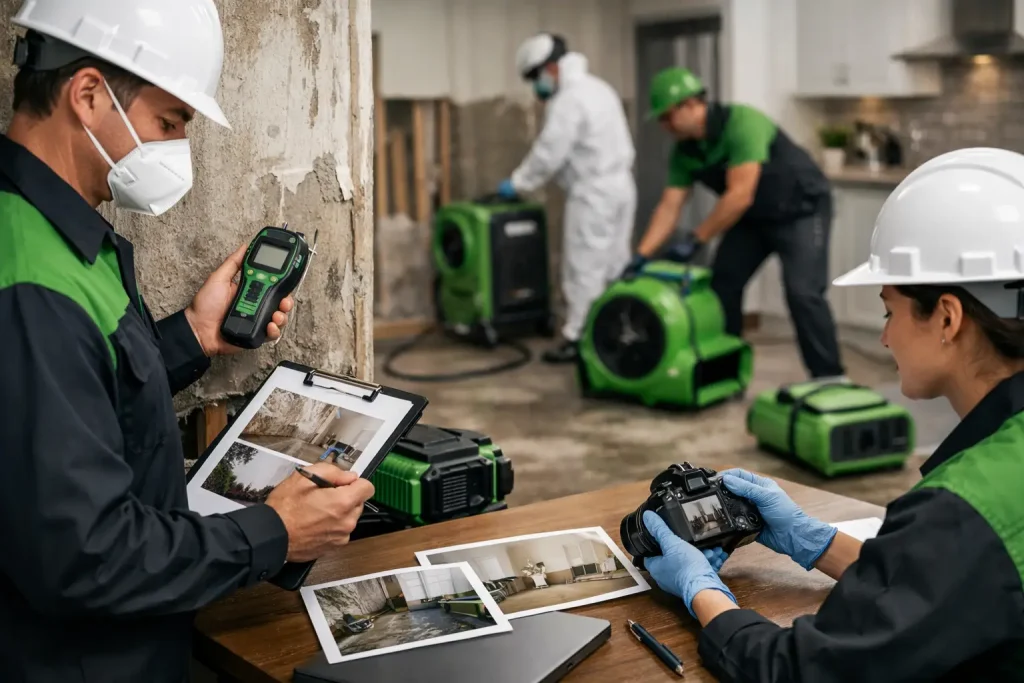
A wet ceiling, smoke residue, missing shingles, or a flooded business suite creates two urgent problems at once: protecting the property from further damage and creating a clear record of what happened. Insurance claim documentation services help property owners address both. The right documentation gives the carrier and adjuster an organized view of the loss while giving the restoration team a reliable scope for mitigation and repairs.
For homeowners, property managers, and commercial owners, documentation is not paperwork that can wait until the work is done. It begins at the first inspection and continues through drying, cleaning, repairs, and final reconstruction. When records are incomplete, it can be harder to explain the cause, timing, affected materials, and work needed to return a property to its pre-loss condition.
What Insurance Claim Documentation Should Show
A strong claim file tells a chronological, evidence-based story. It should show the condition of the property when damage was discovered, the immediate actions taken to reduce additional damage, the areas affected, and the work performed. That record helps support productive conversations among the property owner, contractor, adjuster, and carrier.
For a water loss, for example, documentation may establish where water entered, which rooms were affected, moisture readings in building materials, drying equipment placement, and the progress of drying over time. For fire and smoke damage, it may show soot patterns, odor migration, damaged finishes, contents conditions, and the cleaning or replacement work required. Storm losses often require photographs and inspection findings that distinguish damaged roofing, siding, gutters, windows, or interior areas.
The details matter because two losses that look similar from a distance may require very different restoration plans. A supply-line leak behind a wall can affect insulation, framing, flooring, and adjacent rooms. A roof leak may begin with limited staining but create hidden moisture and mold concerns if it has been active for an extended period. Thorough documentation helps prevent assumptions from driving the project.
How Insurance Claim Documentation Services Support Recovery
Professional insurance claim documentation services are most valuable when they are integrated with emergency mitigation and reconstruction rather than treated as a separate administrative task. The restoration team documents conditions while performing necessary work to stabilize the property. This creates a more accurate record than trying to recreate events weeks later.
At Apollo Construction & Renovation Corp., that process may include detailed photographs, 360 imaging, moisture mapping, thermal imaging, inspection notes, drying logs, equipment records, measurements, and itemized repair information. The exact records depend on the loss. A small localized plumbing leak does not need the same documentation approach as a multi-unit commercial water event or a fire loss involving contents and structural repairs.
Advanced imaging and moisture documentation can be especially useful when damage is not visible on the surface. A wall may appear dry while elevated moisture remains behind it. Likewise, thermal imaging can help identify areas that need closer investigation, though it is used alongside moisture-meter readings and physical inspection rather than as a stand-alone determination.
This level of organization also helps property owners stay informed. Instead of relying on memory during a stressful event, they have a clearer record of findings, recommended work, and progress. That transparency is valuable whether the claim is straightforward or requires additional inspection and discussion.
Documentation Starts Before Reconstruction
The first priority after a covered loss is often mitigation: stopping the source when possible, extracting water, securing an opening, removing immediate hazards, or protecting unaffected areas. These actions can reduce the extent of damage, but they should be documented as they occur.
Waiting for an adjuster before taking reasonable emergency steps can sometimes allow preventable damage to spread. At the same time, property owners should avoid discarding damaged materials, beginning major repairs, or signing off on a broad reconstruction scope without clear records. Preserve evidence when it is safe to do so, photograph visible conditions, and keep receipts for emergency expenses.
A qualified restoration contractor can help organize this early phase. IICRC-based mitigation protocols focus on identifying affected materials, controlling moisture, documenting drying conditions, and monitoring the property until appropriate drying goals are reached. For fire, storm, and roof-related losses, the process may involve temporary protection, detailed inspections, and a repair plan that addresses both visible damage and the systems behind it.
Coverage decisions remain with the insurance carrier under the terms of the policy. A contractor’s role is to provide accurate, professional documentation of the damage and necessary work – not to promise an outcome or interpret policy language. Clear documentation supports the claim process, but it does not replace the carrier’s review.
The Records That Often Make a Difference
Not every claim needs the same level of reporting, but several categories are consistently useful. Property owners should expect records that connect conditions in the field to the work being proposed or completed.
- Date-stamped photos and video of affected rooms, exterior elevations, contents, and damaged materials
- Inspection findings, measurements, moisture readings, and drying or monitoring logs when water is involved
- Emergency service records, including extraction, board-up, tarping, cleaning, and equipment placement
- Detailed estimates or scopes that identify affected materials, labor, and repairs by area
- Communication records, invoices, receipts, and change documentation when conditions are discovered during work
The best file is not necessarily the largest one. It is the one that is clear, consistent, and tied to the actual loss. Hundreds of unorganized photos can be less helpful than a well-labeled set of images supported by room-by-room notes and measurements.
Common Gaps That Slow the Process
Many documentation issues begin with understandable decisions made under pressure. A homeowner may clean up quickly before taking photos. A facility manager may authorize emergency work but not keep equipment logs or invoices in one place. A roof leak may be patched, then later become difficult to connect to interior damage because the original conditions were not recorded.
Another common problem is treating mitigation and reconstruction as unrelated projects. When different parties handle each phase without coordinated records, important details can be lost between the initial emergency response and the final repair scope. This is one reason a full-service restoration contractor can simplify recovery: the same team can maintain continuity from inspection through reconstruction.
Commercial and multi-family properties may face additional challenges. Damage can affect common areas, tenant spaces, mechanical systems, multiple floors, or business operations. In those cases, documentation should be organized by location and unit, with clear notes about access, affected areas, and work completed. An orderly file helps property managers communicate with stakeholders while keeping the restoration project moving.
What Property Owners Can Do Right Away
After an incident, safety comes first. If there is an active leak, fire-related hazard, electrical risk, sewage exposure, structural concern, or suspected asbestos-containing material, contact qualified professionals and avoid unsafe cleanup. For water losses, moving valuables away from the affected area is reasonable when it can be done safely, but do not enter standing water near electrical sources.
Once the immediate danger is controlled, take wide and close-up photos before extensive cleaning begins. Note the date and time the loss was discovered, the apparent source, affected rooms, and any emergency steps taken. Keep receipts and avoid throwing away damaged items or materials until they have been documented and the carrier has had an opportunity to review them, unless removal is necessary for safety or mitigation.
Then request a professional inspection. A trained restoration team can identify conditions that are easy to miss, document the loss in an organized manner, and explain what needs to happen next. For properties across Maryland, Northern Virginia, Washington DC, Delaware, and Pennsylvania, Apollo provides emergency restoration, mitigation, documentation support, and reconstruction coordination for residential and commercial losses.
A well-documented claim cannot remove the disruption of property damage, but it can replace confusion with a clear record and an organized path forward. When damage occurs, act quickly, preserve the evidence, and let an experienced restoration partner handle the documentation and recovery work with the care your property requires.
Every property and insurance policy is different. Contact Apollo to discuss the work your property may need; your insurer determines coverage.