
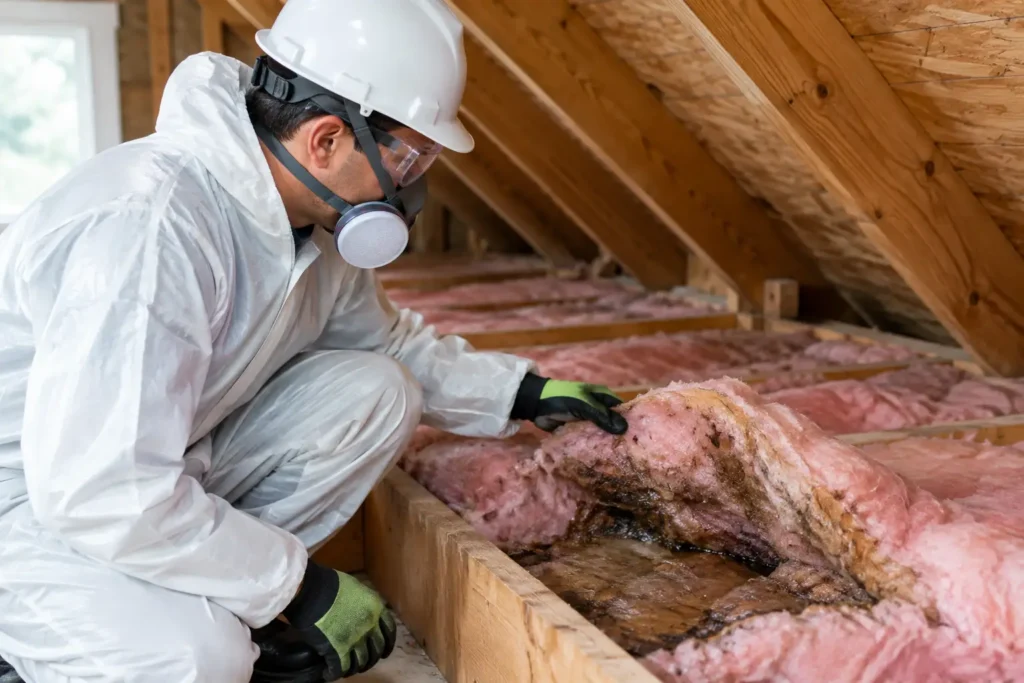
A wet ceiling stain, a burst supply line, or a roof leak can leave damage hidden well beyond the visible surface. Property owners often ask, when should wet insulation be replaced rather than dried in place? The answer depends on the water source, insulation type, how long it remained wet, and whether the material can be fully dried without creating a mold or air-quality concern.
Insulation does more than make a property comfortable. It helps control heat transfer, supports energy efficiency, and can affect moisture movement within walls, attics, ceilings, and floors. Once it becomes saturated or contaminated, it may lose its performance and hold moisture against surrounding building materials. Fast assessment is the best way to protect the structure and avoid a larger reconstruction project later.
When Should Wet Insulation Be Replaced?
Wet insulation should generally be replaced when it is saturated, contaminated, compressed, visibly deteriorated, or unable to be dried quickly and completely. Replacement is also the safer course when moisture has been trapped inside a closed wall or ceiling cavity long enough for mold growth to become a concern.
Not every damp material automatically requires removal. A small amount of clean-water moisture caught immediately in accessible insulation may be dryable under controlled conditions. However, that decision should be based on moisture readings and a professional inspection, not on whether the outside of the wall or ceiling feels dry.
A drywall ceiling can dry on its exposed face while insulation above it remains wet. The same problem occurs behind finished walls, under flooring, and inside exterior cavities. Moisture mapping, thermal imaging, and targeted testing help identify the full affected area before repairs begin.
Replace insulation after contaminated water exposure
Insulation exposed to sewage, toilet overflows with waste, ground water, or other unsanitary water sources should usually be removed and discarded. Porous materials can absorb contaminants that are not reliably eliminated through drying alone. This includes common batt insulation, blown-in cellulose, and many acoustic insulation products.
Even when the affected area appears limited, contaminated water can wick through insulation and reach framing, subfloors, drywall, and baseboards. A qualified mitigation team can establish containment, remove affected materials safely, clean structural components, and document the work for the property owner and insurance carrier.
Replace insulation that is saturated or compressed
Fiberglass batt insulation can sometimes be dried after limited clean-water exposure, but saturation changes the situation. When batts become heavy, matted, sagging, or compressed, their insulating value can drop significantly. Material that no longer returns to its original thickness may leave gaps that reduce thermal performance.
Cellulose insulation is particularly vulnerable to water damage. It absorbs moisture readily, clumps when wet, and can settle inside cavities or across attic floors. Once it has shifted or compacted, drying may not restore its original coverage or R-value. In many cases, wet cellulose requires removal and replacement after the source of water has been corrected.
Foam board and closed-cell spray foam are more moisture-resistant than fiberglass or cellulose, but they are not automatically exempt from evaluation. Water may travel around the material, become trapped at seams, or affect adjacent framing and finishes. The insulation itself may remain serviceable while the surrounding assembly requires drying or selective removal.
Replace insulation when mold is present or likely
Visible mold growth, persistent musty odor, and prolonged moisture exposure are all warning signs that insulation should be evaluated for removal. Insulation is difficult to clean thoroughly because of its porous structure. If mold has affected the material, replacement is often more reliable than attempting to treat it in place.
The time factor matters. Clean water from a supply-line leak is different from water that has remained in an enclosed cavity for several days. Conditions inside a damp wall can support microbial growth before exterior warning signs become obvious. Prompt mitigation reduces this risk, but delayed discovery often expands the scope of removal.
Insulation Type Makes a Difference
The type of insulation affects whether drying is reasonable and how much material may need to be removed. A professional assessment should identify the material rather than assuming all insulation responds the same way.
Fiberglass batts may be salvageable after a small, clean-water event if they are accessible, retain their shape, and can be dried rapidly along with the framing. They still need careful inspection because wet facing paper, vapor barriers, or drywall can retain moisture nearby.
Blown-in fiberglass can shift, settle, and lose even coverage after a water event. In an attic, a roof leak may affect only one section, but water can travel along framing members and spread farther than expected. Targeted removal is sometimes possible, provided moisture testing confirms that surrounding materials are dry.
Cellulose usually calls for a more conservative approach. Because it holds water and compacts, it may remain damp deep within the material even after the surface dries. Removing affected cellulose allows technicians to dry and inspect the ceiling assembly or wall cavity properly.
Spray foam and rigid foam require an assembly-level evaluation. The key questions are whether water entered behind the insulation, whether substrates remain wet, and whether the loss involved contaminated water. The goal is to preserve materials that are truly dry and sound while removing materials that could retain moisture or contamination.
Do Not Judge Damage by What You Can See
A common mistake after a leak is replacing the stained drywall while leaving wet insulation behind it. That may improve appearance without resolving the actual moisture problem. Odors, staining, peeling paint, recurring mold, and high humidity can return later because the cavity was never fully dried.
Professional water mitigation follows a documented process. The team identifies and stops the source, determines the category of water, measures moisture in affected assemblies, removes materials that cannot be safely restored, and places drying equipment where it can do the most good. Follow-up readings confirm that structural materials have reached an appropriate drying standard before reconstruction begins.
For commercial properties, the same principles apply, but the consequences can be broader. Wet insulation above offices, retail areas, multifamily units, or common spaces can affect tenant operations, building systems, and indoor conditions. Organized documentation helps property managers make informed repair decisions and communicate clearly with stakeholders.
What to Do After Discovering Wet Insulation
First, address the source of water if it is safe to do so. Shut off the local water supply for a plumbing leak, move belongings away from the affected area, and avoid disturbing wet ceilings or walls that may be unstable. If water is near electrical components, do not enter the area or attempt electrical repairs yourself.
Next, arrange a professional inspection as soon as possible. Waiting to see whether a stain dries can allow moisture to remain concealed and increase the chance of secondary damage. Photos of the source, damaged areas, and affected belongings can be helpful for your records and for an insurance claim, but documentation should never delay emergency mitigation.
Avoid using household fans to force air into a closed wall or ceiling cavity. Uncontrolled drying can move moisture to other areas, and contaminated water losses require proper safety procedures. Restoration technicians use moisture data and controlled drying methods to determine whether materials can remain or should be removed.
Repair Comes After Drying Is Verified
Replacing insulation is only one part of a complete recovery plan. Before new material is installed, the water source must be repaired and the framing, sheathing, and other structural components must be properly dried and inspected. Installing fresh insulation too early can trap moisture and conceal unresolved damage.
Once drying is confirmed, reconstruction can restore the insulation system, drywall, ceilings, flooring, paint, and other affected finishes. Matching the replacement material to the existing assembly, local code requirements, and the property’s performance needs helps prevent gaps in coverage and protects long-term comfort.
Apollo Construction & Renovation Corp. provides coordinated mitigation, documentation, and reconstruction support for water-damaged residential and commercial properties throughout the Mid-Atlantic. When water reaches insulation, an early, evidence-based inspection gives you the clearest path forward and helps protect the parts of your property you cannot see.
Every property and insurance policy is different. Contact Apollo to discuss the work your property may need; your insurer determines coverage.