
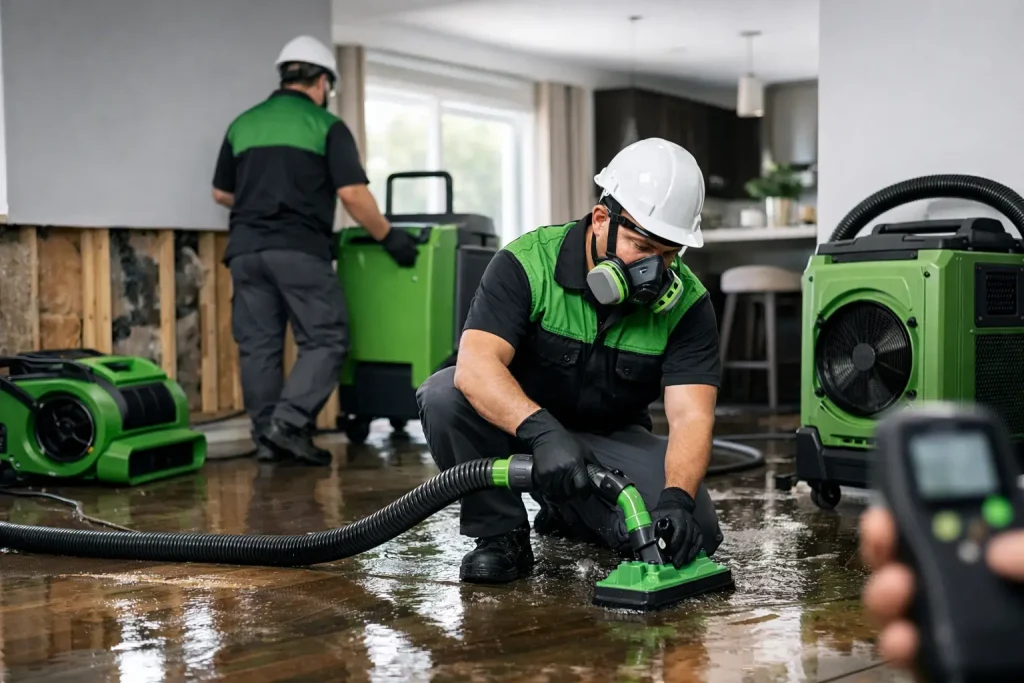
Water on the floor is never just water on the floor. Within hours, it can move under baseboards, soak insulation, swell hardwood, damage drywall, and create conditions that lead to microbial growth. The right emergency water extraction steps help limit that spread, protect salvageable materials, and set up the property for proper drying and repair.
Why emergency water extraction steps need to happen fast
The first priority is safety. The second is controlling how far the water travels. Even a small-looking loss can affect subfloors, wall cavities, cabinetry, and adjacent rooms, especially when water has been sitting overnight or has come from a supply line under pressure.
Fast extraction matters because standing water keeps feeding damage. The longer materials stay saturated, the more likely they are to warp, delaminate, stain, or require replacement. Quick action also improves documentation for insurance-related losses because conditions are captured closer to the event, before secondary damage changes the picture.
That does not mean rushing in without a plan. A professional response should be organized, documented, and based on the source of the loss, the category of water, the affected materials, and the building layout.
The first emergency water extraction steps at the property
Start by stopping the source if it is safe to do so. That may mean shutting off the local supply valve, turning off the main water line, or containing active intrusion from a roofing or plumbing failure. If electrical systems may be affected, the area should be treated cautiously and evaluated before equipment or occupants enter wet spaces.
Once the source is controlled, the next step is to assess where the water has migrated. This is where many property owners underestimate the loss. Water follows gravity, but it also follows seams, penetrations, floor transitions, and hidden cavities. What looks confined to one room may already be affecting neighboring finishes or the level below.
A proper response includes visible inspection plus moisture detection. Meter readings, thermal imaging, and moisture mapping help define the wet area more accurately than visual review alone. That information guides extraction, demolition decisions when needed, and the drying plan that follows.
Extract standing water before focusing on cleanup
Extraction comes before cosmetic cleanup. Mopping, wiping, and setting out a few fans may help with a minor surface spill, but they are not enough for a meaningful water loss. Standing water and absorbed water need to be removed with the right equipment before drying can work efficiently.
Professional extraction typically uses truck-mounted or portable extraction units, submersible pumps where depth requires it, and specialty tools for carpet, pad, and hard surface recovery. The goal is simple – remove as much water as possible, as quickly as possible, with the least additional disruption.
This step often determines how much can be saved. Carpet may be recoverable in some clean-water losses if extraction starts quickly. Hardwood may respond better when surface and subfloor moisture are addressed early. Cabinet toe-kicks, contents, and lower drywall sections may also have a better outcome when the bulk water is removed before it continues to wick upward.
It depends, however, on the source. Clean water from a supply line is handled differently than a sewage backup or other contaminated intrusion. When contamination is involved, extraction and removal protocols become more controlled, and some materials may not be suitable for restoration.
Emergency water extraction steps do not end with water removal
A common mistake is assuming the job is done once the floor looks dry. It is not. Extraction removes bulk water, but wet building materials can still hold significant moisture below the surface. That is why drying and dehumidification are separate phases, not optional add-ons.
After extraction, affected materials need to be evaluated for retention or removal. In some cases, non-salvageable materials are removed in a controlled way to expose wet cavities and prevent trapped moisture. In other cases, targeted drying can preserve finishes and reduce reconstruction needs. The right decision depends on how long the water sat, what materials were affected, and whether the water source was clean, gray, or contaminated.
Air movers, dehumidifiers, and specialty drying systems are then positioned based on the structure, not just the size of the room. Drying a basement with concrete and open framing is different from drying a finished office suite, an occupied condominium, or a hardwood floor system over wood subfloor. Equipment placement, humidity control, and regular monitoring all matter.
Documentation is part of the extraction process
For insurance-related losses, documentation should begin immediately and continue throughout mitigation. That includes photos, moisture readings, affected area notes, equipment logs, and a clear record of what was extracted, removed, protected, and monitored.
This is not paperwork for its own sake. Good documentation helps establish the extent of damage, supports communication with adjusters and carriers, and reduces confusion later when reconstruction begins. It also helps property owners understand what is happening and why certain materials can be saved while others cannot.
In larger residential or commercial losses, documentation becomes even more important because conditions can change quickly. Moisture migration, hidden damage, and multiple affected units or rooms can complicate the scope. Clear reporting keeps the project moving in a more organized way.
What property owners should and should not do right away
There are a few helpful actions property owners can take before a mitigation team arrives. If it is safe, shut off the water source, move vulnerable contents out of the affected area, and document visible damage with photos. You can also place foil or blocks under furniture legs to reduce staining or transfer if flooring is wet.
What you should not do is just as important. Do not use household vacuums on significant standing water. Do not pull up materials aggressively without understanding the category of water or what is below them. Do not enter wet areas where electrical hazards may be present. And do not assume that if the surface dries, the structure is fine.
This is where a trained restoration contractor adds real value. The job is not simply to remove water. It is to stabilize the property, identify hidden impact, protect health and safety, document the loss properly, and prepare the structure for successful drying and repair.
Residential and commercial losses follow the same principles, but not the same pace
A burst pipe in a house and a sprinkler discharge in a commercial property both require urgent extraction, but the response plan may look very different. In a home, the focus may be protecting finishes, contents, and family routines. In a commercial setting, access, business continuity, tenant coordination, and after-hours work may shape the mitigation strategy.
That is why experience matters. The emergency water extraction steps are grounded in the same restoration standards, but the execution has to fit the building, occupancy, and scope of damage. A one-size-fits-all approach usually leads to missed moisture, delayed drying, or unnecessary disruption.
Choosing the right restoration partner after water damage
When water damage happens, speed matters, but so does structure. Look for a contractor that follows IICRC-based mitigation practices, uses moisture detection and documentation tools, and can manage the next phase of recovery, not just the initial extraction. That includes communicating clearly, coordinating with insurance stakeholders when needed, and moving from emergency response into repairs without losing momentum.
For many property owners, the best outcome comes from working with one qualified team that understands mitigation, reconstruction, and the claims process together. Apollo Construction & Renovation Corp. handles that full path for residential and commercial clients across the Mid-Atlantic, with emergency response, technical documentation, and reconstruction support under one roof.
If your property has standing water, the best next move is not to wait and see what dries on its own. It is to get the water out, get the structure evaluated, and make sure the recovery starts on solid ground.
Every property and insurance policy is different. Contact Apollo to discuss the work your property may need; your insurer determines coverage.