
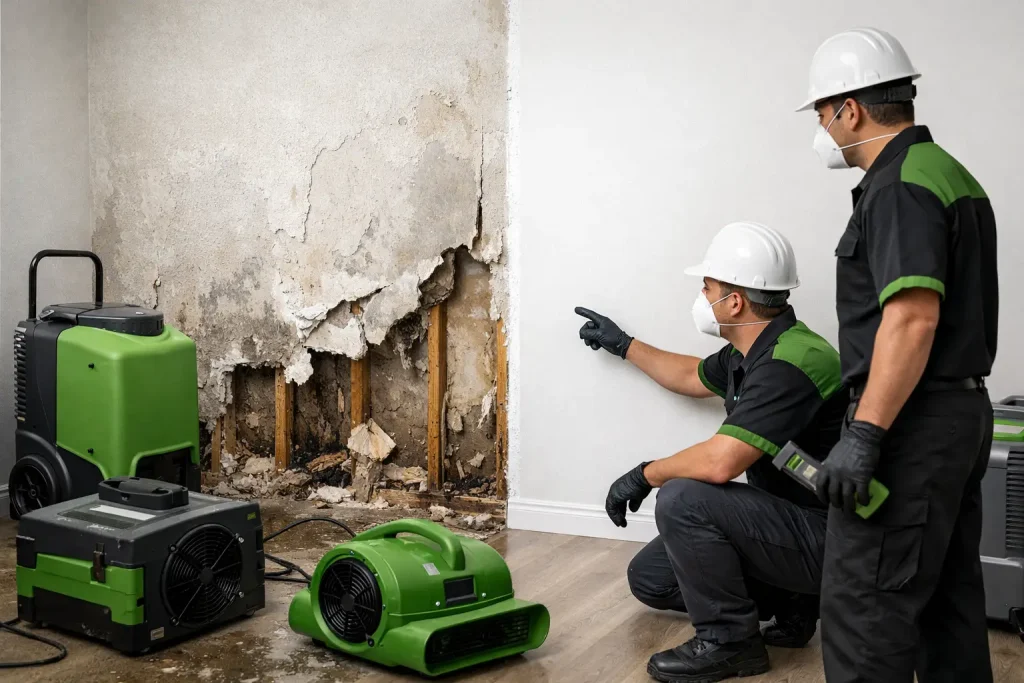
A small wall stain can turn into a much bigger repair faster than most property owners expect. If you are asking when should drywall be replaced, the real answer depends on what caused the damage, how far it spread, and whether the drywall still has its strength, cleanliness, and structural integrity.
Drywall is not a finish material you can judge by looks alone. A wall may appear dry while moisture remains trapped behind paint, insulation, or trim. In other cases, a crack or hole looks minor but points to movement, repeated water intrusion, or hidden deterioration. That is why replacement decisions should be based on the condition of the material, not just the surface appearance.
When should drywall be replaced instead of repaired?
Drywall should usually be replaced when it has absorbed significant water, developed mold contamination, lost its shape, become soft or crumbly, or been exposed to conditions that make cleaning unreliable. If the panel is still solid, dry, and clean, a targeted repair may be enough. If the core has broken down, replacement is the safer and more durable choice.
This matters for both homes and commercial properties. Damaged drywall can affect indoor air quality, paint performance, insulation value, and the condition of adjacent framing. Delaying replacement can also increase the scope of reconstruction later.
Water damage is the most common reason for replacement
Not all water-damaged drywall has to come out, but a lot of it does. The key question is how much water the material absorbed and how long it stayed wet.
Drywall is highly porous. Once water enters the gypsum core, the panel can swell, sag, soften, and lose strength. If the source was a clean water event caught early, and the drywall shows no swelling or deterioration, drying and repair may be possible. That window is often narrow.
If water sat in the wall cavity for more than a short period, replacement becomes more likely. The same is true when the leak came from a plumbing backup, roof failure, storm intrusion, or any source that introduced contaminants. Wet drywall near the bottom of walls is especially prone to wicking, where moisture travels upward beyond the visible stain line.
Signs water-damaged drywall should come out
Bulging seams, soft spots, staining that keeps returning, peeling paint, nail pops, tape separation, and musty odor all suggest the panel has been compromised. If pressing lightly on the wall leaves an indentation, that is a strong sign the gypsum core has weakened.
A proper evaluation should also include moisture readings and inspection of what is behind the wall. Surface dryness does not confirm the cavity is dry.
Mold changes the decision quickly
When drywall supports mold growth, replacement is often the most effective path. Mold can grow on the paper facing and penetrate areas that are difficult to clean thoroughly. In many cases, trying to save contaminated drywall costs more time and creates more uncertainty than removing and replacing it.
This is especially true if the mold growth resulted from a hidden leak, elevated humidity, or prolonged wetting. The drywall may be one part of a larger problem involving insulation, framing, or HVAC conditions. Simply painting over staining or surface growth does not address the source.
When should drywall be replaced after mold?
If mold has spread across the drywall face, reached the paper backing, or developed after repeated moisture exposure, replacement is generally recommended. The same applies if the drywall is soft, stained through, or located in a wall cavity with active moisture. The priority is not just removing visible growth. It is restoring a clean, dry assembly that will not keep supporting microbial activity.
Fire, smoke, and odor can make drywall unsalvageable
After a fire event, drywall may need replacement even when it is not burned through. Heat can weaken the material, smoke particles can penetrate porous surfaces, and odor can remain trapped in the board. In severe cases, the panel loses integrity. In moderate cases, the real issue is contamination.
Whether the drywall can be cleaned or needs replacement depends on the extent of smoke damage, the type of fire, and how long residues remained on the surface. A localized kitchen incident may allow selective repair. A larger loss with heavy soot, staining, or odor transfer into wall cavities often calls for removal and reconstruction.
Property owners sometimes focus on visible black marks, but the harder problem is what settled into the material itself. If odor persists after proper cleaning efforts, replacement may be the more reliable long-term solution.
Cracks, holes, and impact damage are different
Not every damaged wall needs full replacement. Drywall can often be patched successfully after minor impact damage, small holes, or isolated settlement cracks. Good repair work can restore appearance and performance without removing an entire section.
The decision changes when cracks are recurring, wide, or paired with door misalignment, sloping floors, or ceiling separation. Those conditions can point to movement in the building rather than a drywall-only issue. Replacing the board without addressing the cause will not hold up.
Large holes, crushed corners, and multiple damaged areas close together may also make replacement more practical than repeated patching. At a certain point, labor-intensive spot repairs produce a weaker and less uniform result than installing a new section.
Ceiling drywall often needs a stricter standard
Ceilings deserve extra caution. Water-damaged ceiling drywall can sag unexpectedly, and gravity makes any loss of strength more serious. Staining, bubbling paint, visible droop, or cracking around a wet ceiling area should be treated as a warning sign.
If a ceiling has absorbed water from above, replacement is often the safer choice, especially if the drywall is taped at seams that are already separating. A ceiling may look stable until it suddenly is not.
Age alone is not the deciding factor
Old drywall does not automatically need replacement. Many older walls remain serviceable if they are dry, solid, and free from contamination. That said, age can matter when drywall has been patched many times, contains outdated finishes, or has suffered repeated moisture exposure over the years.
In older properties, replacement may also make sense during larger reconstruction if walls need to be opened for insulation, electrical updates, plumbing access, or environmental remediation. The drywall itself may not be the only reason, but it becomes part of a smarter overall scope.
Repair vs. replacement comes down to performance
The practical test is simple. Can the drywall still do its job?
It should remain flat, firm, dry, and clean. It should hold fasteners, support finishes, resist ongoing deterioration, and allow a stable paint-ready surface. If it cannot do those things, repair is usually a temporary fix.
This is where professional documentation matters, especially after an insured loss. Moisture mapping, thermal imaging, and selective demolition can show whether damage is cosmetic or whether the wall assembly has been compromised. A property owner should not have to guess.
What property owners should do next
If drywall damage follows a leak, storm event, roof failure, fire, or mold concern, the first step is to stop the source and document the condition right away. Waiting too long can increase deterioration and make it harder to separate old damage from new damage.
Then have the affected areas evaluated with the right tools, not just a visual walk-through. In restoration work, the goal is not to save drywall at all costs. The goal is to restore the property correctly, safely, and efficiently. Sometimes that means drying and repairing. Sometimes it means removing damaged sections, cleaning the assembly, and rebuilding with confidence.
Apollo Construction & Renovation Corp. approaches these situations with that standard in mind – identifying what can be preserved, what needs to be replaced, and what documentation is needed to support the recovery process.
If you are unsure when should drywall be replaced, treat uncertainty as a reason to inspect the damage more carefully, not to wait. The right decision protects more than the wall surface. It protects the durability, safety, and long-term condition of the entire property.
Every property and insurance policy is different. Contact Apollo to discuss the work your property may need; your insurer determines coverage.