
A pipe leak, roof failure, fire loss, or planned renovation can expose materials that were never a concern when left intact. The decision between asbestos abatement versus encapsulation affects occupant safety, the construction schedule, future maintenance, and potentially the scope of an insurance restoration claim. The right answer is not automatically removal. It depends on the material’s condition, location, likelihood of disturbance, and the work the property needs next.
For homeowners, property managers, and commercial building owners, the first priority is simple: do not disturb suspected asbestos-containing material. Arrange for a qualified inspection and testing process before demolition, cleanup, or repairs begin. Once results are available, a licensed environmental professional can determine whether abatement or encapsulation is the appropriate control method.
What Is Asbestos Abatement?
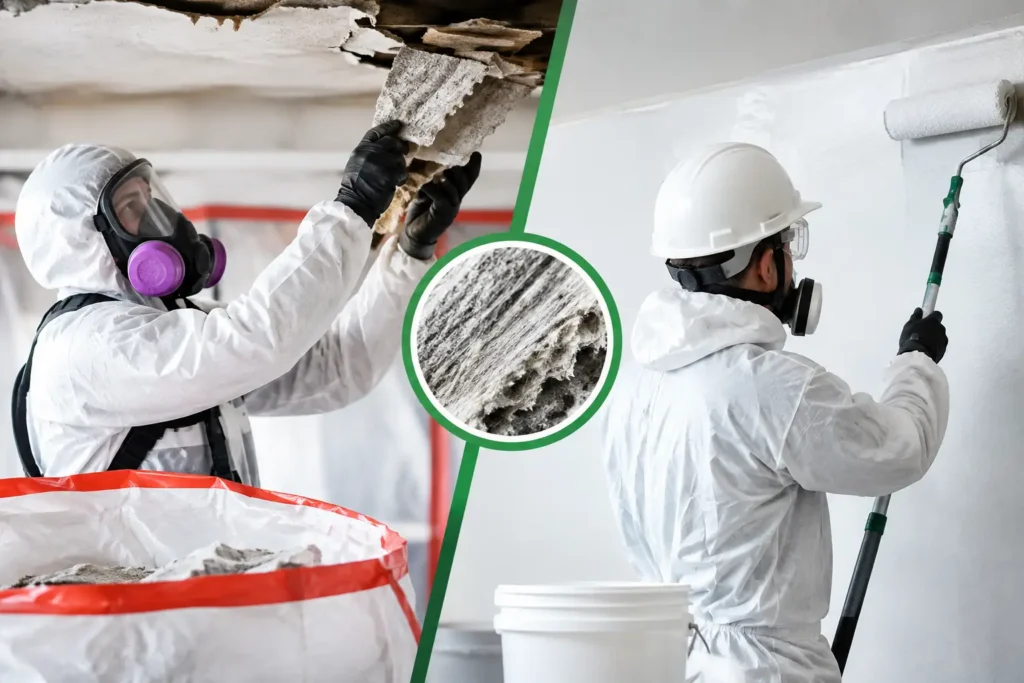
Asbestos abatement is the controlled removal of asbestos-containing material from a structure. It is often called asbestos removal, but the term abatement can also cover regulated cleaning, repair, enclosure, and disposal activities. In practice, it commonly involves isolating the affected area, using engineering controls to prevent fiber release, removing material with approved methods, cleaning the work zone, and completing required clearance steps before reconstruction begins.
Abatement is typically considered when material is damaged, friable, actively deteriorating, or likely to be disturbed by repairs or renovation. Friable material can be crumbled, pulverized, or reduced to powder by hand pressure. Examples may include damaged pipe insulation, deteriorated thermal system insulation, sprayed-on fireproofing, or certain textured coatings.
Removal can also be the practical choice when a building component must come out anyway. If water damage requires opening walls, replacing insulation, removing flooring, or rebuilding a ceiling where asbestos-containing material is present, leaving that material in place may prevent necessary repairs or create a future hazard.
The central benefit of abatement is permanence. When asbestos-containing material is properly removed from a work area, it no longer needs ongoing management at that location. However, removal is generally more disruptive and may carry a higher upfront cost than leaving sound material in place under an approved encapsulation plan.
What Is Asbestos Encapsulation?
Encapsulation means treating asbestos-containing material with a protective coating or covering designed to prevent fibers from becoming airborne. Depending on the material and conditions, an encapsulant may bind fibers together, create a durable protective membrane, or reinforce the material’s surface. Enclosure is a related approach that separates the material from occupied spaces behind a durable barrier, such as a properly designed wall or ceiling system.
Encapsulation is not a coat of paint applied over an unknown material. It requires a documented assessment of the substrate, the condition of the asbestos-containing material, the correct product or enclosure design, and the likelihood that the area will be damaged or accessed later.
For example, intact asbestos-containing insulation in a mechanical area may be a candidate for encapsulation when it is stable, not subject to routine contact, and not in the path of planned construction. In contrast, material that is wet, peeling, crumbling, or exposed to repeated maintenance activity may not hold an encapsulant reliably enough to be a long-term solution.
Encapsulation can limit disruption, reduce the immediate scope of work, and allow certain properties to remain operational while hazards are controlled. The trade-off is that the asbestos remains in the building. It must be recorded, monitored, and protected from future disturbance.
Asbestos Abatement Versus Encapsulation: The Main Differences
The most meaningful difference is whether the asbestos-containing material remains in place. Abatement removes it. Encapsulation manages it where it is. That difference affects budget, project timing, maintenance obligations, and the flexibility of future renovation work.
Condition of the material
Material condition is often the deciding factor. Intact, non-friable material that is unlikely to be touched can sometimes be safely managed through encapsulation or enclosure. Damaged, friable, water-affected, delaminating, or contaminated material usually requires a more aggressive response.
Water damage deserves particular attention. Moisture can weaken ceilings, adhesives, insulation wraps, and other building materials. A material that was once stable may become compromised after a plumbing leak, storm intrusion, or roof failure. Before drying, demolition, or reconstruction moves forward, the affected materials should be assessed so the restoration plan does not create an avoidable exposure risk.
Planned repairs and renovation
A sound encapsulation strategy can become impractical when the building needs significant repairs. If contractors must remove a ceiling, replace mechanical equipment, open wall cavities, install new wiring, or reconstruct fire-damaged areas, asbestos-containing material in the work path may need abatement first.
This is why testing early protects the project schedule. Discovering asbestos after demolition has started can stop work, complicate documentation, and delay reconstruction. Identifying it before work begins allows the environmental scope, mitigation plan, and rebuilding sequence to be organized correctly.
Long-term responsibility
Removal reduces future management responsibilities for the specific material removed. Encapsulation creates an ongoing responsibility to maintain the protective system and prevent accidental disturbance. Property managers should retain inspection reports, laboratory results, location records, and details about the encapsulation or enclosure method.
That documentation is especially useful during tenant improvements, maintenance work, property sales, and future loss events. A clear record helps maintenance teams and contractors understand what is behind a wall, above a ceiling, or inside a mechanical room before they begin work.
Cost and disruption
Encapsulation may have a lower initial cost and a shorter work window when the material is stable and accessible for treatment. Yet lower initial cost does not always mean lower lifecycle cost. If the area will need renovation in a few years, removal now may prevent the property from paying for containment, protection, and environmental work twice.
Abatement can require more extensive containment, specialized labor, clearance procedures, and coordination with reconstruction. For occupied commercial spaces, it may also require carefully planned work hours or phased areas. A qualified contractor can help evaluate the immediate expense alongside the future use of the building.
How a Professional Evaluation Protects the Restoration Process
Suspected asbestos should be addressed before general demolition begins. A proper process starts with identifying potentially affected materials and obtaining representative testing by an appropriate professional. Building age alone is not enough to confirm asbestos, and visual inspection alone cannot provide a definitive answer.
If asbestos-containing material is confirmed, the scope should define the affected locations, material type, condition, planned work, containment requirements, disposal procedures, and clearance expectations. For insurance-related property damage, thorough documentation also helps show why environmental work was necessary before repairs could proceed.
At Apollo Construction & Renovation Corp., environmental concerns can be coordinated with mitigation and reconstruction planning so the property is not treated as a series of disconnected projects. This is particularly valuable after water, fire, or storm damage, when drying, cleaning, demolition, and rebuilding activities must be sequenced carefully around regulated materials.
When Encapsulation Is Often the Better Fit
Encapsulation may be a reasonable option when asbestos-containing material is intact, firmly adhered, dry, and located where it will not be disturbed. It can also make sense where removal would require unnecessary damage to otherwise sound building components or would cause major disruption to an occupied property.
Even in these situations, the plan should account for future access. A concealed material above a ceiling may remain stable for years, but HVAC servicing, plumbing repairs, or electrical work can change the risk. The property owner should know where the material is and ensure future contractors are informed before work starts.
When Abatement Is Often the Better Fit
Abatement is generally the stronger choice when material is damaged, deteriorating, friable, or affected by water or fire. It is also often necessary when the material must be disturbed to complete repairs, meet project specifications, or allow safe reconstruction.
For a property undergoing a major renovation, removing affected materials can provide a cleaner path forward. It can eliminate uncertainty in areas that will be repeatedly accessed, modified, or maintained. The decision should still be based on testing, site conditions, applicable regulations, and the planned construction scope rather than a one-size-fits-all rule.
Make the Decision Before Work Disturbs the Material
The safest and most cost-conscious choice is usually the one made early, based on verified information. Do not let urgent repairs turn into uncontrolled demolition around suspected asbestos-containing material. Pause the affected work area, document the conditions, arrange testing, and build the environmental response into the restoration plan.
Whether the answer is removal or a carefully designed encapsulation system, the goal is the same: protect occupants, support compliant repairs, and leave the property ready for safe, durable recovery.
Every property and insurance policy is different. Contact Apollo to discuss the work your property may need; your insurer determines coverage.