
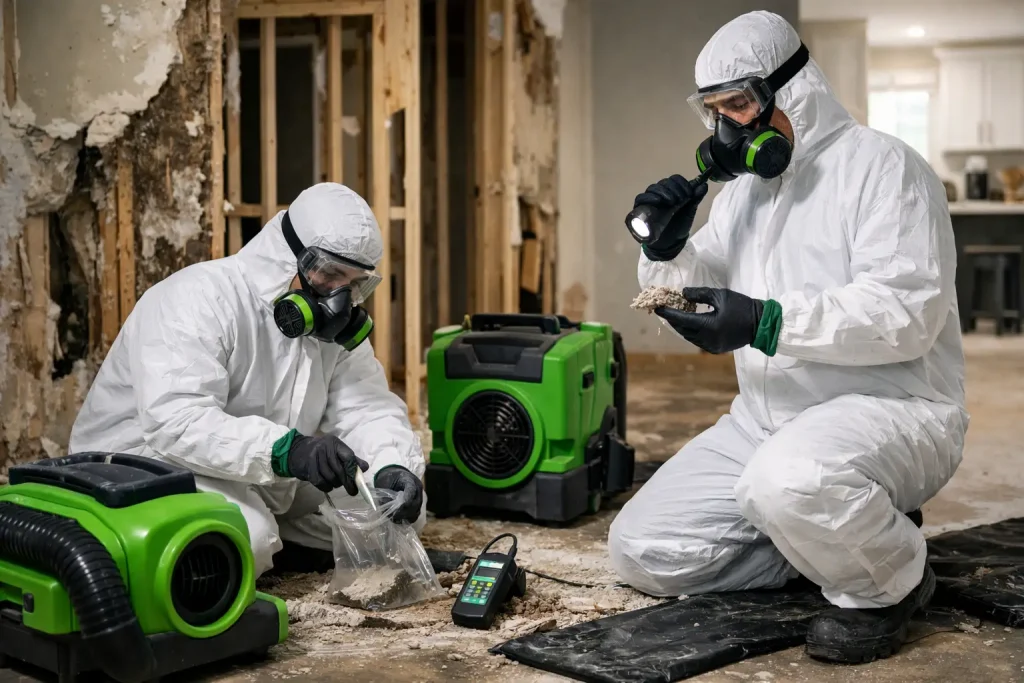
A wall opens up after water damage, a ceiling comes down after a fire, or an older floor needs to be removed before reconstruction starts. That is often the moment property owners realize asbestos testing before restoration or demolition is not a side issue. It can directly affect safety, scheduling, compliance, and whether the project moves forward without costly disruption.
For homeowners, property managers, and commercial building owners, the challenge is usually timing. You want mitigation and repairs started quickly, especially after a loss event. But if suspect materials are present in an older property, moving too fast without proper testing can create a bigger problem than the original damage. The right approach protects occupants, contractors, and the overall restoration timeline.
Why asbestos testing matters before work begins
Asbestos was used for decades in common building materials because it resisted heat, added strength, and improved durability. In many older homes and commercial buildings, it may still be present in floor tile, mastic, drywall compounds, insulation, ceiling textures, siding, pipe wrap, roofing materials, and other components.
The problem is not always the material sitting undisturbed in place. The risk increases when restoration, demolition, or repair activities disturb it. Cutting, sanding, breaking, stripping, or removing asbestos-containing material can release microscopic fibers into the air. Once that happens, the job changes from a standard construction task to an environmental and safety issue.
That is why asbestos testing before restoration or demolition matters so much. It helps determine whether suspect materials can remain undisturbed, need special handling, or must be abated before reconstruction can continue. Testing also reduces guesswork. Instead of assuming every old material is hazardous or, worse, assuming none of it is, the project can move forward based on documented findings.
When asbestos testing before restoration or demolition is needed
In practical terms, testing is most relevant any time a project involves disturbing building materials in an older structure. That can include planned renovations, emergency tear-out after water or fire damage, roof replacement, interior demolition, or reconstruction after mold remediation.
Age is one indicator, but it is not the only one. A building does not need to look outdated to contain asbestos. Materials may have been left in place through multiple remodels. A newer finish can also be installed over an older asbestos-containing layer, especially with flooring and mastics.
Emergency restoration projects deserve special attention here. After a pipe burst or storm loss, there is often pressure to remove wet drywall, insulation, flooring, and ceiling materials immediately. In many cases, quick action is necessary to reduce secondary damage. But when suspect asbestos-containing materials are involved, that urgency has to be balanced with proper environmental procedures. A rushed tear-out in the wrong area can trigger contamination, work stoppages, added cleaning, and more complicated insurance documentation.
What testing actually involves
Many property owners hear the word testing and imagine a long, disruptive process. In reality, asbestos testing is usually straightforward when handled correctly. A trained professional identifies suspect materials, collects representative samples using controlled methods, and sends those samples to a qualified laboratory for analysis.
The goal is not to test every surface in the building. The goal is to identify materials that are likely to be disturbed by the planned restoration or demolition work. That distinction matters because good project planning keeps the scope targeted and efficient.
Results then guide next steps. If the material does not contain asbestos, standard demolition or restoration procedures can proceed. If asbestos is confirmed, the project team can decide whether the material needs abatement, containment, modified work practices, or a revised scope.
Turnaround times vary depending on the project and lab processing, but testing is generally much faster and less expensive than dealing with an asbestos release after the fact.
The cost of skipping testing
The most obvious concern is health and safety, but the business impact is just as real. Skipping testing can create delays at the exact moment you are trying to move a property back to normal.
If asbestos is discovered after demolition has already started, work may need to stop immediately. Areas may require containment, additional cleaning, air monitoring, revised scopes, and specialized abatement. That affects labor, scheduling, occupant disruption, and in some cases claim handling.
There is also a documentation issue. Restoration projects often involve adjusters, property managers, tenants, building engineers, or multiple decision-makers. When testing is completed early, everyone is working from the same information. When it is skipped, confusion tends to show up later, usually when the project is already under pressure.
The trade-off is simple. Testing up front adds one controlled step. Skipping it can add several uncontrolled ones.
Older properties need a more careful restoration plan
Not every property has the same risk profile. A recently built structure with known material records may present fewer concerns than a building constructed decades ago and altered over time. Schools, apartment buildings, offices, retail spaces, and older single-family homes often have hidden layers of original material behind finished surfaces.
That is why restoration planning in older properties needs more than a demolition estimate. It needs a coordinated look at what was damaged, what needs to be removed, and what environmental issues may affect the work sequence.
This is especially important after fire, water, or storm losses. Damaged materials may already be fragile. What would normally be a controlled removal can become a more complicated process if materials are saturated, delaminated, or partially collapsed. Testing helps set the right path before crews start opening walls or removing finishes.
How asbestos testing supports insurance-related restoration
For insurance restoration work, asbestos testing often helps projects move more cleanly from mitigation to reconstruction. It gives the file a factual basis for environmental handling, demolition scope, and repair planning.
That does not mean every claim will treat asbestos-related costs the same way. Coverage depends on the policy, the cause of loss, and the specific facts of the project. But clear documentation almost always helps. When testing identifies affected materials early, it becomes easier to explain why a certain removal method, containment setup, or abatement phase is necessary.
For property owners, this means fewer surprises. For project teams, it creates a cleaner handoff between emergency services, environmental work, and rebuilding.
Choosing the right contractor mindset
Asbestos testing is not just a lab issue. It is part of how a contractor plans risk, sequencing, and site safety. The right team does not treat testing as a box to check after demolition starts. They look at the age of the building, the materials involved, the damage conditions, and the repair scope before invasive work begins.
That is especially valuable on projects where multiple trades are involved. Roofing, drywall, flooring, insulation, HVAC access, and finish removal can all intersect with suspect materials. Good coordination prevents one trade from accidentally creating an environmental problem for everyone else.
A full-service restoration contractor with asbestos abatement experience can often make this process more efficient because the planning is integrated from the start. Instead of separating emergency response, environmental review, demolition, and reconstruction into disconnected steps, the project can be organized around the real conditions on site.
What property owners should do first
If your property was built during the years when asbestos-containing materials were commonly used and your project involves cutting, tearing out, or removing original materials, do not assume it is safe to proceed without testing. That applies whether you are recovering from a covered loss or planning a renovation.
Start by identifying the areas that will be disturbed. Then have suspect materials evaluated before restoration or demolition begins. If asbestos is present, the next step is not panic. It is a clear plan for proper containment, abatement if needed, and reconstruction sequencing.
For occupied properties, communication matters too. Tenants, staff, residents, and stakeholders should understand that careful testing is not a delay for delay’s sake. It is what keeps the work safe, compliant, and organized.
Apollo Construction & Renovation Corp. sees this issue often on older residential and commercial projects across the Mid-Atlantic, especially when emergency damage forces fast decisions. The best results usually come from acting quickly, but not blindly.
When a property needs repairs, everyone wants to get to the rebuild. The smart move is making sure the path there is safe, documented, and built on the right information from the start.
Every property and insurance policy is different. Contact Apollo to discuss the work your property may need; your insurer determines coverage.