
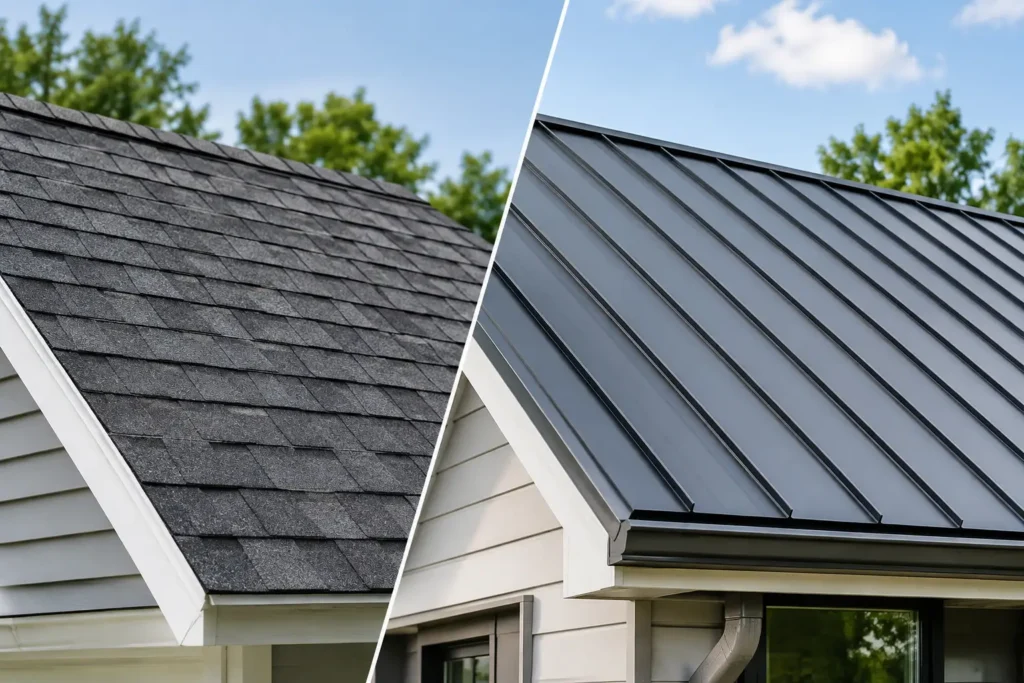
A roof replacement often follows a stressful event: wind-lifted shingles, hail impacts, a persistent leak, or water staining that reveals a larger failure overhead. When comparing asphalt shingles vs metal roofing, property owners need more than a simple answer about which material lasts longer. The right decision depends on the roof’s condition, your budget, local weather exposure, the building’s design, and whether an insurance claim is part of the recovery.
For many homes and commercial properties in the Mid-Atlantic, both systems can perform well when they are specified correctly and installed with attention to the roof deck, underlayment, flashing, ventilation, and drainage. The material matters, but the details determine whether a new roof protects the building when the next storm arrives.
Asphalt Shingles vs Metal Roofing: The Core Difference
Asphalt shingles are the most common residential roofing material in the United States. They are installed in overlapping courses and are available in basic three-tab styles, architectural shingles, and higher-end impact-resistant options. Their familiar appearance, broad color selection, and manageable upfront cost make them a practical choice for many replacement projects.
Metal roofing is available in several forms, including standing-seam panels, metal shingles, and corrugated or exposed-fastener panels. Standing-seam systems are often selected for residential properties because concealed fasteners create a cleaner appearance and reduce the number of exposed penetration points. Metal can cost more at installation, but it is generally valued for its long service life and strong performance in rain, snow, and high-wind conditions.
Neither material is automatically right for every property. A well-installed architectural shingle roof may be the most sensible solution for a homeowner planning to sell within several years. A standing-seam metal roof may make greater sense for an owner who expects to remain in the property for decades and wants a lower-maintenance exterior system.
Upfront Cost and Long-Term Value
Asphalt shingles usually have the lower initial cost. They are widely available, roofing crews are experienced with installation, and replacement materials are easier to source when repairs are needed. This makes asphalt a strong option when a roof must be restored quickly after a covered loss and the approved scope or property budget favors a conventional system.
Metal roofing typically requires a larger upfront investment. Costs vary substantially based on panel type, roof complexity, gauge, finish, underlayment, trim details, access, and whether existing materials must be removed. A roof with numerous valleys, skylights, chimneys, dormers, or wall transitions needs more custom flashing and labor regardless of material, but those details can have a greater impact on a metal roofing estimate.
Long-term value is where metal may shift the calculation. A properly installed metal system can outlast multiple shingle replacements, especially on properties where owners intend to stay for the long term. That does not mean metal always costs less over a property’s lifetime. A homeowner should weigh projected ownership length, future maintenance, resale expectations, and the likelihood of storm-related repairs rather than relying only on a broad lifespan claim.
Storm Performance and Water Protection
Storm damage is one of the most important considerations for homes in Maryland, Northern Virginia, Washington DC, and Pennsylvania. Wind, hail, driven rain, ice, falling branches, and rapid freeze-thaw cycles all test a roofing system differently.
Architectural asphalt shingles can provide strong wind resistance when they are installed with the correct fastening pattern, starter materials, sealant strips, and edge details. However, shingles can be vulnerable to wind uplift, creasing, granule loss, and missing tabs after severe weather. Over time, age and heat exposure can make shingles more brittle and less able to reseal after a storm.
Metal roofing can perform very well against wind because panels are mechanically fastened to the roof structure. It sheds rain and snow efficiently, and its surface is less likely to absorb moisture. Still, metal is not damage-proof. Hail can dent panels, falling debris can puncture or deform them, and improperly installed flashing can allow water intrusion at penetrations and transitions. Cosmetic damage may also be a concern, particularly on highly visible roof slopes.
The most common cause of a roofing leak is not always the field of the roof. It may be a failed pipe boot, chimney flashing, valley detail, step flashing at a wall, skylight connection, or damaged gutter system. Whether you choose shingles or metal, these components should be inspected as part of the full roofing scope.
Service Life, Repairs, and Maintenance
Asphalt shingles generally require more frequent replacement than metal roofing, but they are often simpler to repair. A qualified roofer can replace a limited number of damaged shingles, provided the surrounding roof is in serviceable condition. Matching can be difficult on an older roof due to weathering, discontinued colors, or fading, yet targeted repairs remain a practical option in many cases.
Metal roofs generally need less routine maintenance, but repairs require material-specific experience. Replacing a damaged panel or correcting a flashing issue may involve carefully disengaging adjoining panels and preserving the system’s water-shedding design. Exposed-fastener metal roofs also require periodic attention because fasteners and washers can deteriorate over time.
For either system, maintenance should include clearing debris from valleys and gutters, checking for loose or damaged flashing, keeping tree limbs from rubbing the roof, and addressing interior signs of moisture promptly. A small ceiling stain can indicate a roof opening, but it can also result from condensation, plumbing leaks, or an HVAC issue. A professional inspection helps identify the actual source before repairs begin.
Energy Efficiency and Comfort
Metal roofing is often associated with energy savings because many finishes reflect a portion of solar heat. That can reduce heat gain at the roof surface, especially with lighter colors or reflective coatings. However, a roof’s energy performance also depends on attic insulation, ventilation, air sealing, roof orientation, and the condition of the building envelope.
Asphalt shingles can also support efficient roof performance when paired with balanced attic ventilation and appropriate insulation. A dark shingle roof on a poorly ventilated attic may contribute to elevated attic temperatures, but changing materials alone will not correct inadequate airflow or insulation gaps.
Noise is another common concern. Rain on a properly installed metal roof over solid decking, underlayment, and an insulated attic is usually not dramatically louder inside than rain on shingles. The roof assembly matters more than the surface material alone.
Appearance, Architecture, and Neighborhood Requirements
Asphalt shingles offer the widest range of familiar residential looks. They work well with traditional Colonial, ranch, craftsman, and suburban home styles, and many architectural shingle profiles create depth without the cost of specialty roofing.
Metal can complement modern homes, farmhouses, historic-inspired buildings, and properties with steep rooflines. It is also useful for low-slope applications when the selected system is engineered for that roof pitch. Not every metal product is suitable for every slope, so the panel profile and installation method should be selected carefully.
Before deciding, review any HOA requirements, historic-district guidelines, or commercial property standards that may limit colors, profiles, or materials. These restrictions can affect both replacement choices and insurance restoration timelines.
Insurance Considerations After Roof Damage
Insurance coverage depends on the policy, the documented cause of loss, the age and condition of the roof, deductibles, endorsements, and the adjuster’s scope of damage. A storm claim may cover repairs or replacement when covered wind or hail damage is present, but normal wear, poor maintenance, and pre-existing deterioration are not typically covered.
Material upgrades also require clear expectations. If an approved claim scope calls for asphalt shingles and you choose to upgrade to metal, the additional cost may be your responsibility. In some cases, code requirements or matching considerations can affect the scope, but those decisions should be supported by documentation and handled transparently.
Apollo Construction & Renovation Corp. approaches roof-related losses with detailed inspections, photo documentation, and a clear repair or replacement plan. When water intrusion is involved, identifying and stabilizing the source quickly helps limit additional damage to insulation, drywall, flooring, and interior finishes.
How to Choose the Right Roof for Your Property
Choose asphalt shingles when you want a proven, cost-conscious roofing system with broad design options and relatively straightforward repairs. Consider higher-quality architectural or impact-resistant shingles if the property has repeated weather exposure and the roof structure is appropriate for the product.
Choose metal roofing when long-term service life, low maintenance, strong weather performance, and a distinct architectural appearance justify the higher initial investment. Confirm that the contractor has experience with the specific metal system, not simply general roofing experience.
The best next step is a full roof assessment before selecting a material. A qualified inspection should evaluate the roof deck, attic conditions, ventilation, drainage, flashings, penetrations, existing damage, and whether a storm or water event may require insurance documentation. A roof is a complete system, and choosing the right material is only the first part of protecting what is underneath.
Every property and insurance policy is different. Contact Apollo to discuss the work your property may need; your insurer determines coverage.