
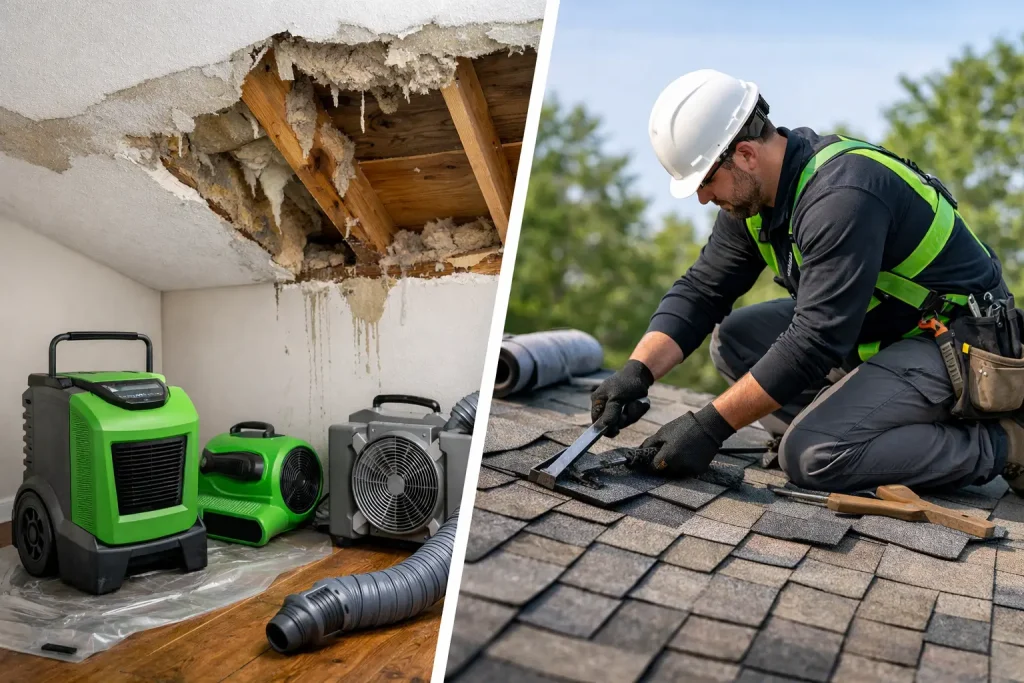
A water stain on the ceiling does not always mean you need a full new roof. In many cases, the first question property owners ask is the right one: can a roof be repaired instead of replaced? The honest answer is yes, sometimes. But the decision depends on what failed, how far the damage has spread, how old the roof is, and whether the problem is isolated or part of a larger system breakdown.
For homeowners and property managers, the stakes are real. A targeted repair can save time and money when the damage is limited. A replacement, however, may be the smarter investment if the roof has widespread deterioration, repeated leaks, or storm damage that has compromised more than the visible surface. The key is getting a thorough inspection before a small problem turns into interior damage, mold growth, insulation loss, or structural repairs.
When can a roof be repaired instead of replaced?
A roof can often be repaired instead of replaced when the damage is confined to one section and the rest of the roofing system is still performing as it should. That usually means the decking is sound, moisture intrusion is limited, and the surrounding materials are still in serviceable condition.
This is common after a localized wind event, a fallen branch, a flashing failure around a chimney or vent, or a small section of missing shingles. It can also apply when the leak is caused by a penetrations issue rather than general roof aging. In these situations, a focused repair may restore protection without the cost and disruption of tearing off the entire roof.
Repairs also make sense when the roof is relatively newer and the materials have useful life left. If the shingles are still holding granules, the seal strips remain effective, and there is no broad pattern of curling, cracking, or soft spots, repair is often a reasonable option.
Signs a repair may be enough
Not every leak points to failure across the whole roof. Some of the most repairable roofing problems start small and stay manageable if they are addressed quickly.
Localized storm damage
If a storm lifted or tore shingles in one area but the rest of the roof remains intact, that area may be repairable. The same is true for minor hail impact that affects a limited section instead of creating widespread bruising or granule loss across multiple slopes.
Flashing failures
Many roof leaks start where materials meet – around chimneys, skylights, valleys, wall transitions, plumbing vents, and HVAC penetrations. If the field shingles are still in good shape, replacing damaged flashing and sealing the area properly may solve the issue.
Small areas of missing or damaged shingles
A handful of cracked, slipped, or blown-off shingles does not automatically justify full replacement. Matching materials can sometimes be installed, provided the surrounding shingles are not too brittle to work with.
Damage from a single event
A tree limb strike or puncture from debris may affect a defined section of roofing and decking. When the damage is isolated and the structure around it remains sound, spot repair or partial replacement may be enough.
When replacement is usually the better choice
There is a point where repair stops being cost-effective and starts becoming a temporary patch on a failing system. That is when replacement should be considered seriously.
The roof is near the end of its service life
Even a well-maintained roof has a lifespan. If an asphalt shingle roof is already aging out and showing wear across multiple areas, repairing one leak may only delay the next one. The issue is not just the current failure. It is the condition of the whole system.
Leaks are recurring
Repeated repairs in different areas often signal broader deterioration. If the roof keeps leaking after storms, or if new water stains keep appearing, there may be hidden moisture in the underlayment, compromised decking, or multiple weak points.
Damage is widespread
When missing shingles, hail impacts, lifted edges, exposed fasteners, or soft spots appear across large sections, replacement is often the safer path. At that stage, targeted repairs can become inefficient and leave the property vulnerable.
The decking or structure is affected
If water has penetrated below the surface and damaged roof decking, insulation, or framing, the problem is no longer cosmetic. A full scope repair may still be possible in some cases, but widespread substrate damage usually pushes the project toward replacement.
The parts homeowners do not always see
The visible roof covering is only one layer of protection. A proper inspection looks beyond shingles or membrane damage and evaluates flashing, underlayment, ventilation, decking condition, moisture intrusion, and drainage performance.
That matters because the leak you notice inside may not be directly above the stain. Water can travel along framing, underlayment, or decking before it becomes visible in a ceiling or wall. A repair decision based only on what can be seen from the ground is often incomplete.
This is also why emergency tarping or temporary patching should not be mistaken for a finished solution. Temporary measures are meant to stabilize the property and reduce further intrusion until the full extent of damage can be documented and addressed correctly.
Can a roof be repaired instead of replaced after storm damage?
After a wind or hail event, the answer depends on both the severity and the distribution of the damage. A few creased shingles on one slope may be repairable. Damage spread across multiple elevations, with broken seals or compromised underlayment, may justify full replacement.
Storm losses also raise another practical issue: documentation. If the roof damage may be part of an insurance claim, the inspection should clearly record the affected materials, the probable cause, the extent of damage, and any interior impact. Accurate documentation can make a major difference in showing whether the roof needs a repair, a partial section replacement, or a full replacement.
For that reason, property owners should be cautious about rushing into cosmetic fixes before the condition has been assessed fully. A fast patch can stop active leaking, but the long-term decision should be based on a documented inspection, not guesswork.
Age, materials, and matching issues
Even when a roof is technically repairable, material compatibility can affect the decision. Older shingles may be discontinued, faded, or too brittle to lift without causing additional breakage. In that case, the repair itself may create more damage or leave an obvious mismatch.
This does not always mean replacement is mandatory. Sometimes a repair is still appropriate if appearance is a secondary concern or if a matching product is available. But for many homeowners, especially after visible storm damage on a front-facing slope, aesthetics matter alongside performance.
Different roofing materials also behave differently. Architectural shingles, three-tab shingles, metal panels, flat roofing membranes, slate, and tile each have their own repair limits. Some systems allow clean sectional repairs. Others are less forgiving once moisture gets below the surface.
Why professional inspection matters
The cost difference between repair and replacement is significant, which is exactly why the inspection needs to be thorough and unbiased. An experienced roofing and restoration team should identify not just what is damaged, but why it failed and what else may be at risk.
That means checking for wind uplift, impact damage, flashing separation, drainage issues, hidden moisture, attic ventilation problems, and signs of interior water migration. In insurance-related losses, it also means documenting the conditions carefully enough to support the scope of work.
Apollo Construction & Renovation Corp. approaches roofing failures with that broader restoration mindset. The roof is not treated as an isolated surface. It is part of the building envelope, and any decision to repair or replace should protect the entire property.
How to think about the decision
A good rule is simple: repair when the problem is limited and the rest of the roof is still dependable. Replace when the damage is widespread, the roof is aging out, or repeated failures suggest the system no longer offers reliable protection.
The cheapest option upfront is not always the least expensive over time. A well-executed repair can extend the life of a healthy roof. A patch on a failing roof can lead to more leaks, interior restoration costs, insurance complications, and avoidable disruption.
If your roof has started leaking, has visible storm damage, or you are unsure whether the issue is isolated or widespread, act early. The longer water is allowed to enter, the more the decision shifts from simple roof work to broader property restoration. The best next step is a professional inspection that tells you what can realistically be repaired and what should not be left to chance.
Every property and insurance policy is different. Contact Apollo to discuss the work your property may need; your insurer determines coverage.