A roof can look intact from the driveway and still have storm-related damage, compromised flashing, wet insulation, or a small penetration that is allowing water into the structure. This roof inspection technology review explains where modern tools provide meaningful evidence, where they have limits, and why experienced field verification still matters when protecting a home, commercial building, or insurance claim.
Why Roof Inspection Technology Matters
Roof failures rarely announce themselves at the moment they begin. A lifted shingle edge, a dented metal component, a puncture near a rooftop unit, or failed sealant around a vent can become a leak after the next hard rain. By the time a stain appears on a ceiling, moisture may have already affected insulation, decking, drywall, or framing.
Modern inspection tools help contractors identify concerns earlier and document conditions more clearly. They can also reduce unnecessary foot traffic on steep, wet, fragile, or heavily damaged roofs. For property owners, the value is not simply getting more images. It is receiving a clear explanation of the roof condition, the evidence supporting the findings, and the next appropriate step.
Technology is especially useful after hail, wind, fallen branches, or suspected water intrusion. Still, no camera, sensor, or software platform can replace a trained professional who understands roofing assemblies, building movement, drainage patterns, and the difference between a cosmetic mark and a condition that can lead to a covered loss or future failure.
Roof Inspection Technology Review: The Tools That Deliver Value
Drones for Safe Visual Access
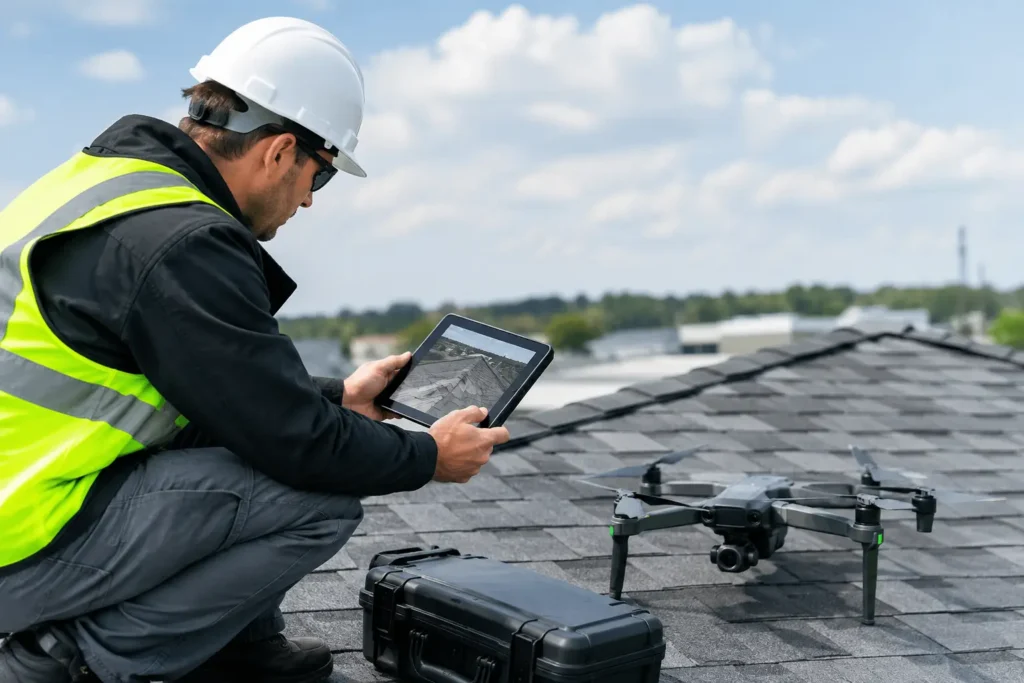
Drone inspections have become one of the most practical advances for roofing assessments. High-resolution aerial images and video can show ridge caps, valleys, chimney flashing, skylight perimeters, gutters, roof-mounted equipment, and broad field areas without immediately placing an inspector on the roof.
This is valuable for steep roofs, multi-story commercial buildings, and properties where wind or storm debris creates a safety concern. A drone also creates a repeatable visual record that can be reviewed with a property owner, maintenance team, or insurance representative.
The trade-off is that drones provide visual information, not a complete diagnosis. They may reveal missing shingles, displaced flashing, open seams, debris accumulation, ponding, or impact marks. They cannot reliably confirm whether a shingle seal has been broken, whether a surface has become soft underfoot, or whether moisture has migrated beneath a membrane. Glare, shadows, tree cover, wind, and flight restrictions can also limit results.
A drone is best used as part of an inspection process, not as a substitute for one.
Thermal Imaging for Moisture Clues
Thermal imaging cameras detect differences in surface temperature. Under suitable conditions, wet materials may heat or cool at a different rate than dry materials, creating patterns that can point an inspector toward potential moisture intrusion.
For a suspected roof leak, thermal imaging can be highly effective inside the building. It may help identify cooler areas in ceilings or walls, trace a likely path of water movement, and guide targeted moisture testing. On low-slope commercial roofs, thermography can sometimes help locate areas that warrant further investigation.
However, a thermal image does not show water directly. Temperature differences can be caused by insulation gaps, air movement, structural components, sun exposure, HVAC equipment, or changes in material thickness. The image must be interpreted in context and confirmed with appropriate inspection methods. A technician should never call a thermal anomaly a roof leak without supporting evidence.
Moisture Meters and Moisture Mapping
When water intrusion is suspected, moisture meters provide the confirmation that photographs and thermal images alone cannot. Pinless meters can scan large areas for elevated moisture readings, while pin-type meters can provide more targeted testing in suitable materials.
Moisture mapping documents where readings were taken, what was found, and how conditions change during drying or repair. This is particularly useful when a roofing issue has affected interior finishes, insulation, or structural components. Detailed readings help establish the scope of mitigation and reconstruction work while giving property owners and adjusters an organized record of the loss.
Moisture meters also require skill. Material type, density, coatings, metal framing, and the presence of foil-backed insulation can affect readings. The right approach combines meter results with visual inspection, thermal patterns, building history, and, when needed, limited exploratory work performed safely.
360 Imaging and Digital Documentation
A standard roof inspection may include close-up photos, but 360 imaging adds context. It records the relationship between the roof, exterior elevations, interior damage, contents, access points, and surrounding site conditions. That can be useful when documenting a storm event or explaining how a roof-related leak affected multiple areas of a property.
For commercial property managers and homeowners managing a claim, organized documentation reduces confusion. Instead of relying on scattered phone photos, the inspection record can show conditions in sequence and support clear communication among the owner, contractor, and insurance professionals.
Digital documentation is not glamorous, but it is often one of the most useful technologies in a restoration project. Good records support accurate scope development, help track changes over time, and make it easier to explain why a repair, mitigation step, or roof replacement recommendation is being made.
Measurement and Estimating Software
Aerial measurement platforms and estimating software can calculate roof dimensions, slopes, waste factors, and material quantities. These tools can improve speed and reduce manual measurement errors, particularly on complex roofs or large commercial structures.
Their greatest value is consistency. Accurate measurements help a contractor build a realistic repair or replacement scope and plan labor, materials, and safety requirements. They can also help owners compare proposed work against the actual roof geometry.
But measurements are only as useful as the field verification behind them. Software may not capture hidden deterioration, unusual flashing details, structural concerns, or the full condition of materials below the surface. A quality estimate must reflect what is actually present at the property.
What Technology Cannot Tell You on Its Own
The most common mistake in roof assessments is treating a single tool as a final answer. A drone image may show an area of concern but not its cause. A thermal camera may show a temperature change but not confirm active moisture. A moisture meter may find elevated readings without identifying the entry point.
Roofing systems are layered assemblies. Water can enter at one location and travel along framing, underlayment, insulation, or ceiling cavities before becoming visible elsewhere. A professional inspection considers the roof covering, flashing, penetrations, drainage, attic or plenum conditions, interior moisture patterns, and recent weather history together.
This is also where inspection credentials and construction experience matter. HAAG-certified inspection practices, OSHA-compliant access procedures, and restoration-focused moisture investigation bring a level of discipline that technology alone cannot provide. The goal is not to generate more data. The goal is to reach a defensible finding and a practical plan.
Choosing the Right Inspection Approach After Damage
The right technology depends on the situation. After a windstorm, aerial imaging may be the safest way to identify displaced materials and debris before a closer inspection. After a ceiling leak, thermal imaging and moisture mapping can help define affected interior areas. For a flat commercial roof with recurring leaks, a combination of visual inspection, moisture investigation, drainage review, and targeted testing may be necessary.
Timing matters as well. Thermal imaging works best when there is enough temperature contrast between materials. Wet weather, direct sun, and building operations can affect the results. Drone flights depend on safe weather conditions and site access. A qualified contractor should explain these limitations rather than overselling a tool.
At Apollo Construction & Renovation Corp., advanced inspection technology is used to strengthen field observations, support organized documentation, and help property owners make informed decisions after roof and storm damage. For homes and commercial properties across the Mid-Atlantic, that means a process focused on safety, evidence, and appropriate repairs instead of assumptions.
When to Schedule a Professional Roof Inspection
Arrange an inspection promptly after visible storm damage, a new interior leak, missing or lifted roofing materials, impact from a fallen limb, repeated ice damming, or unexplained moisture in an attic or upper-floor ceiling. Commercial owners should also investigate recurring ponding, membrane seams that appear open, and drainage issues around rooftop equipment.
Do not climb onto a damaged or wet roof to get answers. Photograph visible conditions from the ground if it is safe to do so, protect interior contents from active drips, and contact a qualified roofing and restoration professional. The right inspection technology can make the damage easier to see, but experienced interpretation is what turns those findings into a clear path to protect the property.
Every property and insurance policy is different. Contact Apollo to discuss the work your property may need; your insurer determines coverage.