
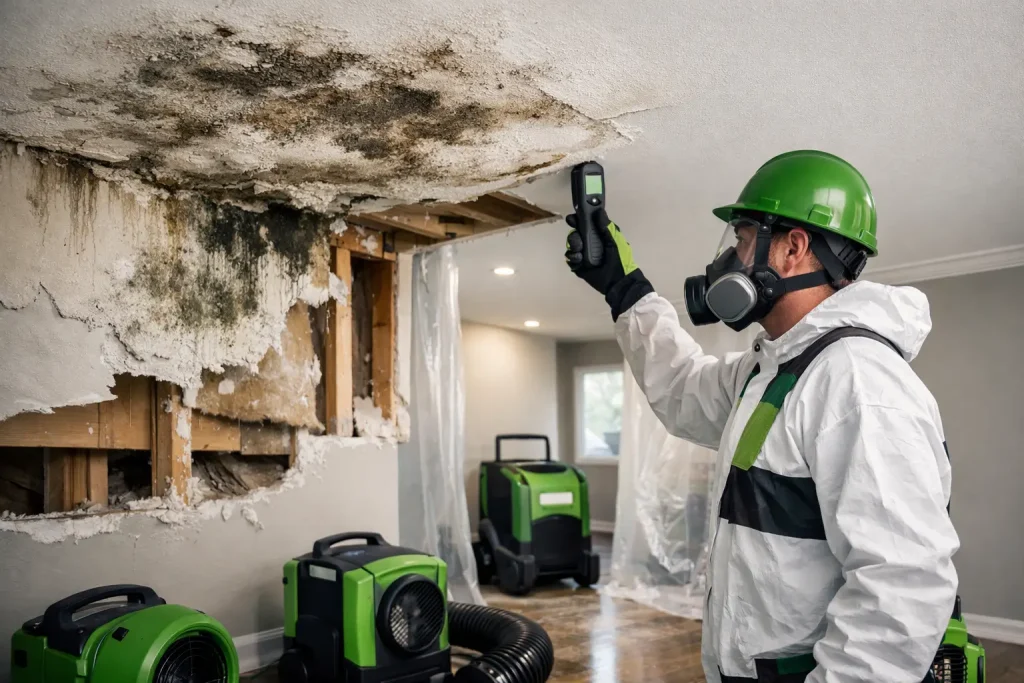
A ceiling stain that appeared after last night’s storm or a plumbing failure upstairs is more than a cosmetic issue. Mold after ceiling leak damage can begin developing quickly when wet drywall, insulation, wood framing, and trapped humidity are left in place. What looks like a small brown spot on the ceiling may be the visible edge of a much larger moisture problem.
The first priority is not paint. It is stopping the water source, identifying how far moisture traveled, and determining whether materials can be dried or need to be removed. That decision matters because mold growth rarely stays limited to the exact spot where water first showed up.
Why mold after ceiling leak damage happens so quickly
Ceilings often hide moisture longer than walls or floors. Water can travel along joists, soak insulation, sit above drywall, and spread into adjacent rooms before a drip becomes obvious. By the time staining appears, materials may have been wet for hours or even days.
Mold needs moisture, organic material, and time. A ceiling assembly provides all three. Drywall paper, wood framing, dust, and insulation can support microbial growth once water intrusion is introduced. Warm indoor conditions can accelerate the process, especially in poorly ventilated spaces.
The type of leak also affects the risk. A clean water line break is serious, but repeated roof intrusion or a slow plumbing leak often creates a longer exposure window. The longer the moisture stays trapped, the more likely it is that drying alone will not be enough.
Warning signs you may have mold after a ceiling leak
Sometimes mold is visible as spotting, dark staining, or fuzzy growth near a sagging ceiling area. More often, the warning signs show up before you see active growth. A musty odor, peeling paint, bubbling texture, warped drywall seams, or recurring discoloration after repainting can all point to hidden contamination.
Ceiling leaks also tend to spread downward and outward. You may notice soft drywall, swelling around light fixtures, damp insulation in the attic, stained baseboards in the room below, or HVAC vents pulling musty air into occupied areas. In commercial buildings and multifamily properties, moisture can also migrate between units or above drop ceilings.
One of the most common mistakes is assuming the problem is resolved because the drip stopped. If the assembly was never properly dried, mold can continue developing behind finished surfaces even after the visible leak is repaired.
What to do immediately after a ceiling leak
Start with safety and source control. If water is still entering the property, contain it as much as possible and have the leak addressed right away. If the ceiling is sagging, actively dripping near electrical fixtures, or looks unstable, stay clear of the area until it can be assessed safely.
Once the source is stopped, the next step is documenting the damage and beginning professional drying as soon as possible. Photos of stains, wet contents, ceiling collapse, affected finishes, and any visible mold can be useful, especially when the damage may involve an insurance claim.
Fast action matters here. Drying equipment, moisture readings, thermal imaging, and a structured inspection can help determine whether water is limited to one section of drywall or has spread into insulation, framing, flooring, wall cavities, or adjacent rooms. That information drives the restoration plan.
Can you clean mold after ceiling leak damage yourself?
It depends on the size of the affected area, the type of material involved, and whether the moisture problem is fully resolved. A very small area of surface discoloration on a non-porous material may be manageable once the leak is repaired and the area is confirmed dry. But ceilings are rarely straightforward because the visible area is often not the full extent of the problem.
Drywall, insulation, and ceiling texture are porous. If those materials stayed wet long enough to support mold growth, surface cleaning may not solve it. The contamination can remain inside the material or above the ceiling line. In that situation, affected materials often need controlled removal, proper containment, and replacement after the structure is dried.
This is also where unsafe DIY work creates bigger problems. Opening wet ceilings without proper containment can spread spores and debris into other parts of the home or building. Disturbing insulation, hidden electrical components, or damaged framing without training is another risk. For anything beyond a very minor and fully exposed issue, professional remediation is the safer path.
How professionals assess hidden mold and moisture
A proper response goes beyond looking at the stain. Restoration teams typically inspect the source of the leak, measure moisture levels in building materials, and check surrounding assemblies for migration. Thermal imaging can help identify temperature differences consistent with trapped moisture, while direct moisture readings confirm what is wet and what is not.
That distinction matters because not every stained ceiling is still wet, and not every dry-looking ceiling is actually dry underneath. A methodical inspection helps avoid two expensive mistakes: tearing out more than necessary or leaving damaged material in place.
When mold after ceiling leak conditions are confirmed, remediation planning should match the extent of contamination. Small isolated losses are handled differently than widespread roof leaks, repeated plumbing failures, or damage affecting commercial occupancies, multifamily units, or HVAC systems.
What remediation and restoration usually involve
In many cases, the process starts with protecting unaffected areas. That may include containment, air filtration, and careful demolition of damaged ceiling materials. Wet insulation is commonly removed because it is difficult to dry effectively once saturated and can hold moisture against framing.
After damaged materials are removed, the exposed structure can be cleaned, treated as appropriate within accepted remediation protocols, and dried to target levels. Only after moisture conditions are stabilized should reconstruction begin. That may include new insulation, drywall replacement, texture matching, painting, and repairs to the original leak source such as roofing, plumbing, or HVAC components.
For property owners, the biggest advantage of a full-service restoration contractor is coordination. Mitigation, documentation, remediation, and reconstruction all affect one another. If those phases are fragmented across multiple vendors, delays are common and important details can get missed.
Insurance considerations for ceiling leak and mold damage
Coverage depends on the cause of loss, policy language, and whether the damage resulted from a sudden event or a long-term maintenance issue. That is why documentation from the beginning is so important. Photos, moisture maps, inspection notes, and a clear scope of affected materials can help support the claim process.
Property owners should avoid assuming that visible mold automatically means the claim will be denied or approved. It depends on the source and timeline. A sudden roof failure during a storm is different from a slow leak that has been active for months. The right contractor can help organize the facts, document findings clearly, and align the restoration process with the claim requirements without overstating what coverage should be.
How to prevent future mold after a ceiling leak
Prevention is partly about maintenance and partly about response speed. Roof systems, flashing, plumbing connections, attic ventilation, HVAC drain lines, and upstairs bathrooms should all be checked before a small issue turns into hidden ceiling damage.
If a leak does happen, the goal is simple: stop the source, remove moisture fast, and verify drying before closing anything back up. Repainting a stain or patching drywall without addressing trapped moisture is what leads many property owners right back to the same problem.
In the Mid-Atlantic region, where storms, humidity, aging roofing systems, and winter pipe issues can all contribute to interior water damage, that speed matters even more. Apollo Construction & Renovation Corp. responds to these losses with mitigation, documentation, and reconstruction under one roof so property owners can move from emergency response to full recovery with less disruption.
If you suspect mold after ceiling leak damage, trust what the building is telling you. A stain, odor, or soft spot is usually not the whole story. The right next step is a professional assessment that identifies the source, measures the moisture, and gives you a clear plan to protect the property before the damage spreads further.
Every property and insurance policy is different. Contact Apollo to discuss the work your property may need; your insurer determines coverage.