
A pipe bursts at 2 a.m., water moves through drywall and flooring, and by morning you are not just dealing with repairs – you are dealing with active damage, moisture, documentation, and an insurance claim. In that moment, the difference between a restoration contractor vs general contractor matters more than most property owners realize.
Both types of contractors build, repair, and coordinate trades. But they are not interchangeable, especially after water, fire, storm, mold, or other property loss events. The right choice depends on what happened, how urgent the situation is, and whether the job involves mitigation, insurance documentation, environmental concerns, or straight remodeling and construction.
What is the difference between a restoration contractor vs general contractor?
A general contractor is typically hired to manage planned construction or renovation work. That can include remodeling a kitchen, building an addition, replacing finishes, or coordinating trades for a standard repair project. Their role is centered on construction management, scheduling, subcontractor oversight, and delivering the finished build.
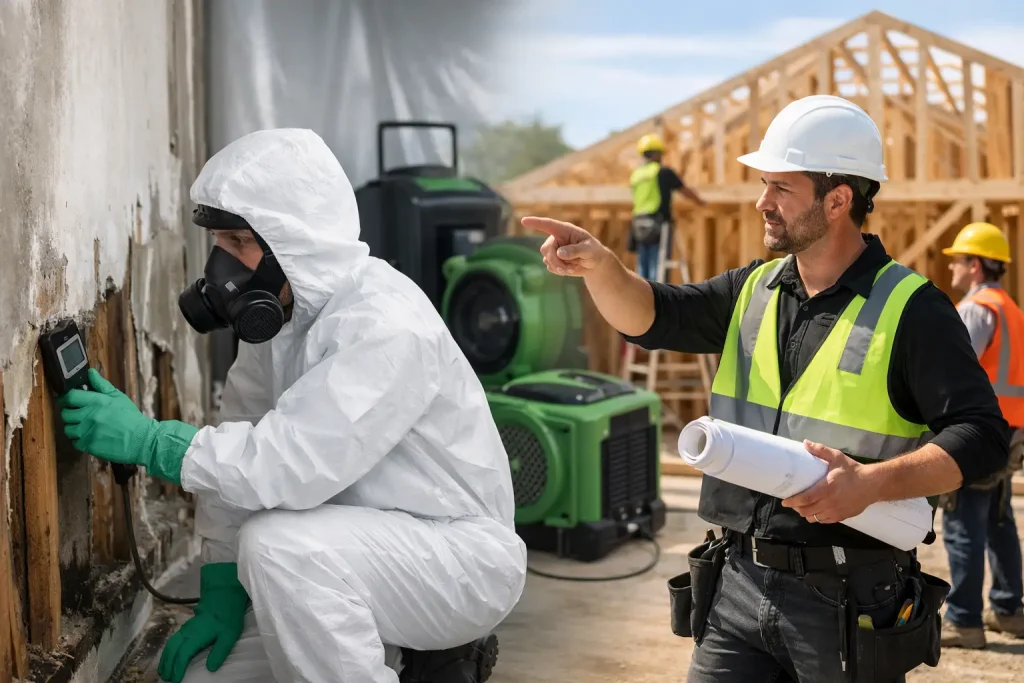
A restoration contractor works in a different environment. Restoration begins when a property has suffered damage and immediate action is needed to prevent the loss from getting worse. That can include emergency water extraction, structural drying, smoke cleanup, debris removal, temporary protection, mold-related containment, damage documentation, and then reconstruction once the property is stabilized.
The simplest way to look at it is this: a general contractor builds and repairs, while a restoration contractor responds, stabilizes, documents, and rebuilds after a loss. Some companies can do both, but the restoration side requires a different level of urgency, process control, and damage-specific expertise.
When a general contractor is the right fit
If your project is planned, non-emergency, and not tied to active damage, a general contractor may be exactly what you need. Bathroom remodels, tenant improvements, cosmetic upgrades, room additions, and standard property improvements usually fall into this category.
A general contractor is also a reasonable fit when the damage has already been properly mitigated by another qualified team and the remaining scope is limited to rebuilding. For example, if a mitigation company has already dried the structure, removed unsalvageable materials, and documented conditions, a general contractor may be able to step in for reconstruction.
That said, there is a trade-off. If the project still involves hidden moisture, smoke residue, contamination concerns, or insurance-related scope disputes, a standard general contractor may not be equipped to manage the full recovery process. Construction skill matters, but loss-specific knowledge matters just as much.
When a restoration contractor is the right fit
A restoration contractor is usually the better choice after sudden or catastrophic property damage. Water intrusion, sewage backup, fire and smoke damage, storm impacts, roof failures, and mold-related events all create conditions where timing and technical handling matter.
In those cases, the first priority is not finishes – it is stabilization. Water has to be extracted. Moisture levels have to be mapped and monitored. Damaged materials may need controlled removal. The property may require board-up, temporary drying equipment, odor control, contents pack-out, or safety measures before rebuilding can even begin.
That is where restoration differs from ordinary construction. The work starts with protecting the property and limiting secondary damage. From there, the contractor documents what happened, helps define scope, communicates with the insurer or adjuster as needed, and moves the project toward reconstruction once conditions are ready.
For homeowners and property managers, this creates a more organized path. Instead of hiring one company for emergency response and another for repairs, a full-service restoration contractor can often manage the project from first loss through final rebuild.
Why insurance claims change the equation
One of the biggest differences in the restoration contractor vs general contractor conversation is insurance experience.
Insurance restoration work involves more than submitting an estimate. It requires accurate documentation, damage photos, moisture readings, line-item clarity, scope support, and a clear record of what was affected and why certain steps were necessary. If the loss includes water migration, smoke spread, roofing failure, or concealed damage, that documentation becomes even more important.
A general contractor may be excellent at pricing and building, but not every general contractor is set up for insurance-driven work. Restoration contractors often operate with claims coordination in mind from day one. They understand how mitigation records, inspection findings, drying logs, and reconstruction scope connect.
This does not mean every claim will be simple or every scope will be approved exactly as written. It does mean the process is usually stronger when the contractor understands both the construction side and the loss documentation side.
The role of emergency response and mitigation
After a loss event, delays are expensive. Wet materials can deteriorate further. Humidity can spread damage beyond the original area. Soot and smoke residues can continue to affect surfaces. A roof leak can expose more of the interior with the next storm.
A restoration contractor is built for that urgency. Emergency response is not an add-on service – it is part of the job. That includes assessing immediate hazards, stopping ongoing damage where possible, setting drying or containment protocols, and making sure the property is moving toward stabilization rather than further loss.
This is often the dividing line between the two contractor types. General contractors usually work on scheduled timelines. Restoration contractors are structured for active loss conditions where the clock is already running.
Restoration contractor vs general contractor for reconstruction
The distinction becomes less obvious once demolition is complete and rebuilding begins. At that stage, both a restoration contractor and a general contractor may be capable of installing drywall, flooring, cabinetry, paint, roofing, or other finish work.
The difference is continuity. A restoration contractor that handled mitigation and documentation already knows the loss history, the drying results, the affected assemblies, and the insurance scope. That reduces handoff issues and can help keep the rebuild aligned with what was documented from the start.
A general contractor entering midstream may still do quality work, but they are inheriting a file rather than building it. If anything was missed during the early stages, it can show up later as change orders, scope disagreements, or project delays.
For larger losses, that continuity is often worth a lot. For smaller jobs with clean documentation and no active damage, it may matter less. This is one of those areas where the right answer depends on the condition of the property and how far along the recovery process is.
Questions to ask before hiring either one
Property owners do not need to become restoration experts overnight, but they should ask a few practical questions before moving forward.
Ask whether the contractor handles mitigation, reconstruction, or both. Ask how they document damage and whether they work with insurance-related scopes. Ask what safety protocols they follow if the property has contamination, structural concerns, or environmental hazards. Ask who is managing the trades, the schedule, and communication from start to finish.
If the loss is recent, also ask how quickly they can respond and what the first 24 to 48 hours will look like. A contractor who is right for a remodel is not always right for an emergency.
Credentials and process matter here. Licensed and insured is the baseline. Beyond that, look for a contractor who can explain their approach clearly, document their work thoroughly, and manage both the urgent phase and the rebuilding phase with confidence.
Choosing the right partner for your property
If you are planning an upgrade or routine improvement, a general contractor is often the correct choice. If your property has suffered water, fire, storm, mold, or other insurance-related damage, a restoration contractor is usually the safer and more complete option.
The reason is simple. Damage recovery is not just construction. It is emergency response, technical drying or cleanup, documentation, safety, coordination, and then reconstruction. When those phases are handled under one organized process, the property owner typically has fewer gaps to manage and fewer chances for the claim or project to go off track.
For homeowners, commercial owners, and property managers across the Mid-Atlantic, that distinction can protect both the building and the recovery timeline. Apollo Construction & Renovation Corp. works in that space every day, helping clients move from active loss to complete repair with clear communication, detailed documentation, and disciplined project management.
When the issue is cosmetic, build with the right contractor. When the issue is damage, respond with the right one first. That decision often shapes everything that follows.
Every property and insurance policy is different. Contact Apollo to discuss the work your property may need; your insurer determines coverage.