
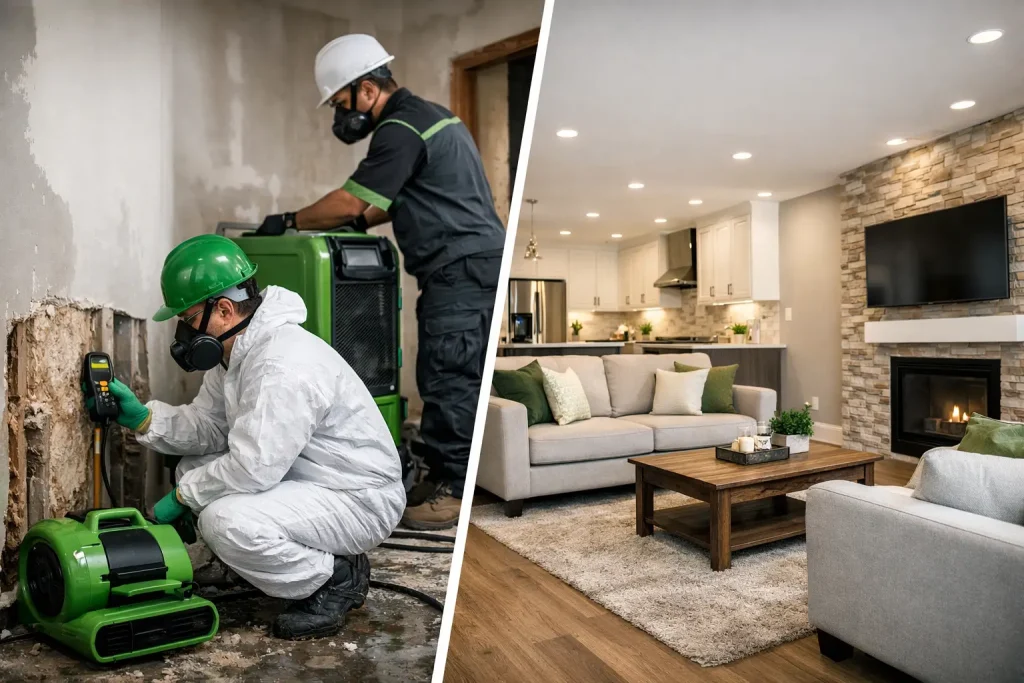
When a pipe bursts at 2 a.m. or a roof leak turns into interior damage after a storm, you usually do not have the luxury of a long hiring process. That is exactly why knowing how to choose restoration contractor services before you sign anything matters. The right company helps protect the property, control further damage, document the loss properly, and move the job from emergency mitigation to full repairs without confusion.
Restoration work is different from standard remodeling. A restoration contractor is often stepping into an active damage event, coordinating moisture control, demolition, safety concerns, insurance documentation, and reconstruction under tight timelines. Hiring based on the lowest price or the first ad you see can create delays, incomplete drying, missed scope items, or problems with claim support later.
How to choose restoration contractor services under pressure
The first thing to look for is whether the contractor is built for emergency response, not just general construction. A company that does excellent kitchen remodels is not automatically equipped to handle water extraction, smoke contamination, moisture mapping, or structural drying. In a real loss event, response speed and process matter just as much as craftsmanship.
Ask what happens in the first 24 hours. A qualified restoration contractor should be able to explain how they inspect the damage, secure the property if needed, document conditions, begin mitigation, and communicate next steps. If the answer is vague, that is a warning sign. You want a team that works from a clear system, especially when the situation is stressful.
It also helps to ask whether they handle both mitigation and reconstruction. Some companies only do the emergency cleanup phase, which means you may need to bring in a second contractor for repairs. That can create handoff issues, scope disputes, and longer timelines. In many cases, a full-service firm can provide a smoother recovery because one team manages the entire process from initial loss through final rebuild.
Start with licensing, insurance, and restoration credentials
Any contractor you consider should be properly licensed and insured for the work they perform in your area. That includes general liability coverage and, where applicable, workers’ compensation coverage. This is not just a box to check. If a contractor cannot clearly verify insurance and licensing, that risk can quickly become your problem.
For restoration-specific work, certifications and training matter. Water, fire, mold, and environmental losses require procedures that go beyond ordinary repairs. Companies that follow recognized industry standards tend to be more consistent in how they inspect, document, dry, clean, and restore damaged materials.
You should also pay attention to safety practices. Damage sites can involve contaminated water, unstable materials, electrical hazards, or environmental concerns. A professional contractor should have clear safety protocols and know when specialized services such as asbestos abatement, contents handling, or controlled demolition are required.
Why standards matter after water, fire, or storm damage
A wall that looks dry is not always dry. Smoke residue can remain in areas you do not immediately see. Storm damage can extend from roofing and siding into insulation, framing, and interior finishes. This is where experience and proper inspection tools make a difference.
A restoration contractor should be able to explain how they verify conditions, not simply assume them. Moisture meters, thermal imaging, photo documentation, and detailed inspection notes help support sound decisions. They also create a stronger record if questions come up during the insurance process.
Evaluate communication as carefully as workmanship
Property damage is disruptive enough on its own. Poor communication makes it worse. One of the best ways to judge a contractor early is to see how they handle the first conversation. Are they organized? Do they ask practical questions? Do they explain next steps clearly? Do they respond with urgency without making unrealistic promises?
A dependable restoration partner should tell you what they know, what still needs to be confirmed, and what actions should happen immediately. They should also explain who manages the job, how updates are provided, and how change orders or additional findings are handled.
This matters for homeowners, but it is especially important for commercial property owners, property managers, and HOAs. When multiple stakeholders are involved, clear documentation and consistent updates keep the project moving and reduce confusion across tenants, boards, adjusters, and ownership groups.
Questions worth asking before you hire
You do not need a long checklist, but you should ask a few direct questions. How quickly can your team respond? What types of losses do you handle most often? Do you provide both mitigation and reconstruction? How do you document damage for insurance? Who will be my point of contact? What happens if additional damage is discovered after work begins?
Listen for specific answers. Strong contractors usually explain their process in a straightforward way because they perform it every day. Weak answers tend to sound generic or overly sales-driven.
Insurance experience is not optional in many restoration jobs
Many restoration projects involve an insurance claim, and that changes the job. It does not mean the contractor should make claim decisions for the carrier, but they should understand how restoration scope, documentation, and communication affect the claim process.
A contractor with insurance restoration experience knows that photos, moisture readings, room-by-room notes, emergency service records, and repair documentation all matter. They also understand the difference between moving quickly and moving carelessly. Fast action is necessary, but it still has to be organized and defensible.
If your loss is insurance-related, ask how the contractor supports documentation and whether they regularly work with adjusters, carriers, and property owners through the full process. A good restoration company helps reduce friction. They do not create confusion with poor records, missing paperwork, or unclear scope descriptions.
There is a practical trade-off here. Some firms are excellent builders but weak on claim documentation. Others are strong in emergency mitigation but do not have the staffing or project management to complete high-quality reconstruction. The best fit is usually a contractor that can do both well, especially on larger or more complex losses.
Look beyond price and focus on scope
Price matters, but restoration is not a commodity service. Two estimates can look similar at first glance while covering very different scopes of work. One contractor may include proper drying verification, contents protection, debris handling, code-related considerations, and detailed reconstruction planning. Another may price only the most visible repairs.
That is why the lowest number is not always the lowest cost. If hidden moisture is missed or repairs are incomplete, the property owner may face extra downtime, rework, and more disruption later. A detailed scope with clear explanations is often more valuable than a quick estimate that leaves major questions unanswered.
Pay attention to whether the contractor actually inspected the property thoroughly before discussing price. Restoration requires investigation. If someone gives you a confident quote with minimal inspection, be careful.
Reputation should reflect real restoration performance
Reviews and referrals are useful, but they should be read with context. Look for signs that the contractor performs well during urgent, complex situations, not just routine home improvement projects. Comments about responsiveness, organization, documentation, jobsite cleanliness, professionalism, and follow-through are especially relevant.
It can also help to ask whether the company has experience with your type of property and loss. A single-family home with a clean water loss is different from a multifamily building with storm damage, or a commercial property with smoke contamination and business interruption concerns. The more closely their experience matches your situation, the better they can anticipate problems before they grow.
In the Mid-Atlantic, where properties face everything from frozen pipe breaks to wind-driven rain and seasonal storm damage, local experience can add real value. Contractors familiar with regional building types, weather patterns, and insurance restoration workflows often move more efficiently because they have seen these scenarios before.
Choose the contractor you can trust for the full recovery
If you are deciding how to choose restoration contractor services, the goal is not simply to get someone on site fast. It is to choose a company that can stabilize the property, document the loss correctly, communicate clearly, and restore the structure with the right standards from start to finish.
That usually means looking for a contractor with emergency response capability, restoration-specific training, proper licensing and insurance, strong safety practices, organized project management, and real insurance claim experience. One qualified partner can save time, reduce stress, and help prevent costly gaps between mitigation and rebuilding.
Apollo Construction & Renovation Corp. sees this every day across residential and commercial losses. The property recovers faster when the contractor is prepared not just to repair damage, but to manage the entire restoration process with urgency, clarity, and accountability.
When the damage is serious, trust the company that can explain the process calmly, act quickly, and back every step with documentation and workmanship that holds up after the emergency has passed.
Every property and insurance policy is different. Contact Apollo to discuss the work your property may need; your insurer determines coverage.