A siding decision becomes much more urgent after wind-driven rain, hail, a roof leak, or fire-related damage exposes what is behind the exterior. The best materials for house siding are not simply the ones with the lowest installed price or the most attractive sample board. They are the materials that fit your home’s structure, local weather exposure, maintenance expectations, insurance restoration scope, and long-term plans for the property.
For homes across Maryland, Northern Virginia, Washington DC, and Pennsylvania, siding must manage humid summers, freeze-thaw cycles, heavy rain, wind events, and occasional hail. A good choice protects the wall assembly, supports curb appeal, and can make future maintenance more predictable. The right answer depends on the property, but the trade-offs are clear once you look beyond the surface.
How to Choose the Best Materials for House Siding
Start with the condition of the home, not just the style you want. If siding damage followed a loss event, a qualified inspection should determine whether water reached sheathing, insulation, framing, flashing, or interior finishes. Replacing visible panels without addressing moisture behind them can leave the property vulnerable to mold, wood deterioration, and recurring leaks.
Material selection should also account for the home’s architectural style, exposure to trees and sun, roof drainage, nearby landscaping, and the availability of matching materials. A historic property, for example, may require a different approach than a newer suburban home with large, sun-exposed elevations.
Before choosing, weigh five practical questions: How much maintenance are you prepared to handle? How well does the material resist moisture and impact? Can it be repaired in sections? Does the budget allow for proper flashing, weather-resistive barriers, and trim work? Will the material meet applicable building-code and HOA requirements? Installation details matter as much as the siding itself.
Vinyl Siding: Practical and Budget-Conscious
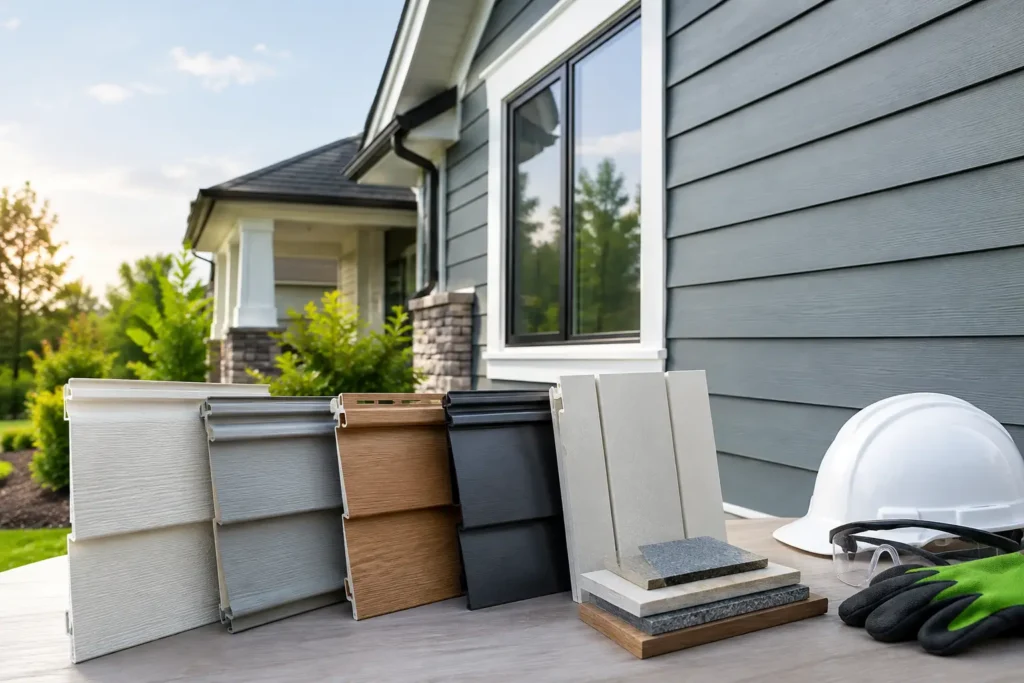
Vinyl remains one of the most common siding choices because it is affordable, widely available, and low maintenance. It does not require routine painting, and modern profiles offer a broad selection of colors, widths, textures, and insulated options. For homeowners rebuilding after a covered storm loss, vinyl can be a sensible way to restore a consistent exterior while keeping reconstruction costs manageable.
Its limitations are worth understanding. Standard vinyl can crack under significant impact or become brittle in very cold temperatures. Dark colors may show fading over time, and improper installation can allow panels to warp, rattle, or conceal water intrusion. Vinyl is designed to expand and contract, so installers must use the correct fastening method and leave appropriate movement space.
Vinyl is often a strong fit for homeowners who want a clean appearance, limited upkeep, and a reasonable initial investment. Upgraded, thicker panels can improve impact resistance and visual depth, but they still need a properly detailed water-management system behind them.
Fiber Cement: Durable Performance With More Upfront Cost
Fiber cement siding is frequently selected for homeowners who want the look of painted wood with greater resistance to rot, insects, and fire exposure. It is available in lap siding, vertical panels, shingles, and trim profiles, making it flexible enough for traditional, colonial, craftsman, and contemporary designs.
This material performs well in changing Mid-Atlantic weather when installed correctly. It is stable, does not rot like untreated wood, and holds paint well. It can also be a practical choice when a restoration project calls for a durable exterior that complements masonry, stone, or existing architectural details.
The trade-off is cost and installation complexity. Fiber cement is heavier than vinyl, requires specialized cutting practices, and must be installed with careful attention to clearances, flashing, caulking, and paint or factory-finished edges. It is not maintenance-free. Painted fiber cement will eventually need repainting, particularly on elevations exposed to intense sun and weather.
Engineered Wood: The Warm Look of Wood With Added Protection
Engineered wood siding offers a convincing wood appearance in a lighter, more uniform product. It is typically treated to improve resistance to fungal decay and insects, and it is available in lap, panel, and shake styles. For property owners who value warmth and architectural character but want less upkeep than traditional wood, it can be an appealing middle ground.
Like any wood-based product, engineered wood depends on disciplined installation. Cut edges, penetrations, joints, and transitions around windows, doors, roofs, and decks must be protected according to manufacturer requirements. If water repeatedly enters those areas, even a treated product can deteriorate.
Engineered wood can be particularly effective for a full exterior redesign or a reconstruction project where the goal is to improve curb appeal without moving to the higher cost of fiber cement. Plan for periodic paint maintenance and address damaged boards promptly rather than allowing moisture to spread behind the siding.
Natural Wood: Beautiful, Repairable, and Maintenance-Intensive
Cedar and other natural wood siding deliver a finish that manufactured products can imitate but not fully duplicate. Wood can be stained or painted, repaired in localized areas, and tailored to historic or custom homes. It is often the right aesthetic choice where architectural authenticity matters.
The maintenance commitment is significant. Wood requires regular inspection, refinishing, and attention to peeling paint, failed caulk, open joints, and vegetation that holds moisture against the wall. It can be affected by insects, rot, and repeated wetting if drainage and ventilation are poor.
Natural wood makes the most sense for owners who are committed to ongoing care and want the character that only real wood provides. In a post-loss reconstruction, it may also be necessary to maintain the established appearance of a historic home or a neighborhood with strict design standards.
Metal Siding: Strong, Modern, and Highly Weather-Resistant
Metal siding, including aluminum and steel panels, is increasingly used on contemporary homes, mixed-material facades, and commercial properties. It resists insects and rot, sheds water effectively, and can provide a crisp, modern profile. Steel generally offers greater strength, while aluminum is naturally resistant to rust.
Potential concerns include denting, noise during heavy rain, and the importance of managing cut edges and dissimilar-metal contact. The exterior may be durable, but correct underlayment, flashings, fasteners, and trim details still determine whether the wall assembly keeps water out.
Metal is an excellent option for accent walls, upper-story sections, or whole-building designs that call for a long-lasting, low-maintenance finish. It may not be the best visual match for every traditional neighborhood, so consider the architecture before committing.
Brick, Stone, and Stucco Veneers Need Specialized Evaluation
Masonry and stucco exteriors are often viewed as permanent, but they are not maintenance-free. Cracked mortar, failed sealant, missing weep paths, damaged flashing, and trapped moisture can lead to hidden deterioration. Repairs may require careful color matching and a broader evaluation of the wall system.
These materials can be excellent choices for longevity and architectural presence, especially when used as accents with fiber cement, engineered wood, or vinyl. However, they are usually more expensive to install and repair. After storm or water damage, the source of intrusion should be identified before cosmetic repairs begin.
Do Not Let Appearance Override Water Management
The siding material is only one layer of protection. Housewrap or another weather-resistive barrier, properly integrated flashing, drainage planes, kick-out flashing at roof-wall intersections, window and door details, and correctly installed trim all affect performance. Gutters and roof drainage also matter. Overflowing gutters can soak siding and wall sections repeatedly, regardless of the product selected.
This is especially relevant when insurance-related damage has occurred. A reconstruction scope should distinguish between visible siding replacement and necessary repairs to damaged sheathing, insulation, framing, or moisture barriers. Thorough documentation and organized inspections help create a clearer path for repairs while keeping the work focused on the actual condition of the property.
Match the Material to the Home and the Exposure
There is no single winner for every property. Vinyl is often the practical value choice. Fiber cement offers strong durability and design flexibility for owners willing to invest more. Engineered wood balances warmth and performance when maintained correctly. Natural wood delivers unmatched character but requires consistent care. Metal can be a highly durable modern solution, while masonry and stucco need specialized detailing and repair knowledge.
If your exterior has been damaged or you are planning a major renovation, start with a professional evaluation of the entire wall and drainage system. Apollo Construction & Renovation Corp. can help property owners assess damage, document conditions, coordinate restoration needs, and rebuild with materials suited to the home. A well-planned siding project should leave you with more than a better-looking exterior – it should provide confidence every time the weather turns.
Every property and insurance policy is different. Contact Apollo to discuss the work your property may need; your insurer determines coverage.