
A basement flood rarely starts with water suddenly appearing across the floor. More often, it begins outside with a clogged gutter, soil that slopes toward the home, a failed sump pump, or a small foundation opening that worsens during a heavy rain. Knowing how to prevent basement flooding means controlling water before it reaches the foundation and identifying the warning signs before a minor issue becomes an insurance claim.
For homeowners and property managers, prevention is not a single repair. It is a practical maintenance plan that accounts for the roof, gutters, grading, drainage system, plumbing, and basement equipment. The right priorities depend on where the water is coming from.
Start by Identifying Where Water Can Enter
Before investing in repairs, look for patterns. Does moisture appear after wind-driven rain, after several days of steady precipitation, or when snow melts? Does water collect near one foundation wall? Does the problem happen when laundry is running or after a toilet backs up? Each pattern points to a different source.
Water that enters during storms often indicates exterior drainage, grading, gutter, window well, or foundation concerns. Water appearing near a utility room, bathroom, or finished ceiling may be caused by a plumbing supply line, drain line, appliance, or HVAC issue. A sewer backup is a separate emergency that requires prompt professional cleanup because contaminated water can create serious health and building-material concerns.
Do not assume every damp basement needs foundation waterproofing. In some cases, correcting gutter discharge and soil slope solves the problem. In others, an exterior drainage system, sump pump upgrade, or targeted foundation repair is necessary. A qualified inspection helps avoid spending money on a solution that does not address the actual source.
How to Prevent Basement Flooding From Outside
The most effective flood prevention begins above ground. Rainwater should move off the roof, through clean gutters, and far enough away from the home that it cannot saturate the soil beside the foundation.
Keep gutters and downspouts working
Clogged gutters can overflow directly against siding and foundation walls. Clean gutters regularly, especially after leaf fall and before seasons known for heavy storms. Check that gutters are securely fastened, properly pitched, and free of standing water.
Downspouts should discharge away from the building, not at the base of the wall. Extensions, buried drain lines, or properly designed splash blocks can help move water farther from the foundation. The correct distance depends on the property layout, slope, and local drainage conditions, but the goal is consistent: keep roof runoff from returning to the basement.
If a buried downspout line is clogged, disconnected, or damaged, water may surface next to the foundation without being obvious. Watch for soggy areas, erosion, or water bubbling from the ground during rain. Those signs warrant a drainage assessment.
Correct grading around the foundation
Soil should slope away from the home so rain and melting snow naturally drain outward. Over time, landscaping settles, mulch accumulates, and hardscape changes can redirect water toward the structure. Low spots near the home are especially risky because they allow water to pool and build pressure against foundation walls.
Regrading can be highly effective, but it must be done carefully. Adding too much soil against siding can trap moisture or interfere with weep screeds and other building details. A contractor can evaluate the appropriate grade while protecting exterior finishes and drainage paths.
Inspect window wells and exterior penetrations
Below-grade windows are common entry points during severe weather. Keep window wells clear of leaves, mulch, and debris, and make sure their drains are open where drains are installed. A secure cover can reduce the amount of rain and snow entering the well, but it should not replace proper drainage.
Also inspect exterior openings around utility lines, hose bibs, vents, and foundation penetrations. Deteriorated sealant or visible gaps can let in water during wind-driven rain. Small repairs are far easier to manage before repeated moisture damages insulation, drywall, framing, or finished flooring.
Maintain Your Sump Pump Before You Need It
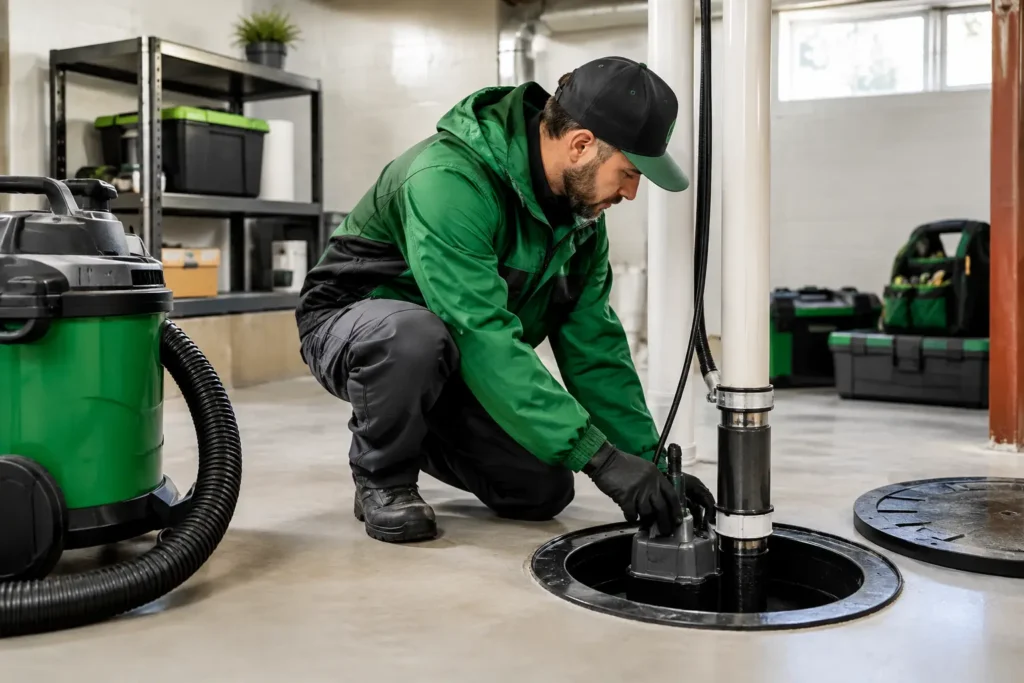
A sump pump is often the last line of defense when groundwater rises around a foundation. It is valuable only if it turns on, discharges properly, and continues operating during a power outage.
Test the pump several times a year by slowly adding water to the pit until the float activates. Confirm that the pump starts, removes water, and sends it through the discharge line outside. Check that the discharge point is clear and that water cannot flow back toward the home or freeze in the line during winter.
A battery backup or secondary pump can provide critical protection during storms, when power outages and high groundwater often occur at the same time. This is particularly worth considering for finished basements, properties with a history of water intrusion, and buildings where a flooded lower level could interrupt operations.
Sump pits should also be clean and accessible. Debris can interfere with the float or pump intake. If the pump runs continuously, makes unusual noise, trips a breaker, or cannot keep up with incoming water, arrange service before the next major storm.
Reduce Plumbing and Sewer Backup Risks
Not all basement flooding comes from rain. A burst supply line, washing machine hose failure, water heater leak, or blocked drain can release significant water quickly. Inspect visible plumbing connections periodically and replace aging appliance hoses with high-quality, properly rated options.
Know where the main water shutoff is located and make sure responsible occupants can access it. Shutting off the water quickly can limit the extent of damage from a plumbing failure. For commercial properties and multifamily buildings, clear shutoff labeling and routine maintenance are especially important because a small failure can affect multiple areas.
Properties in areas prone to municipal sewer surcharging may benefit from a professionally evaluated backwater valve. This device can help prevent wastewater from flowing backward into the building when the public sewer system is overwhelmed. It is not appropriate for every plumbing configuration, and it requires maintenance, so a licensed plumbing professional should determine whether it is a suitable option.
Protect the Basement Interior Without Hiding a Problem
A finished basement should be designed with the possibility of moisture in mind. Store valuables in sealed plastic containers on shelving rather than directly on the floor. Keep electrical panels, furnaces, water heaters, and sump equipment accessible for inspection and emergency service.
When renovating a lower level, select materials that tolerate moisture better than standard carpet and untreated wood. This does not eliminate the need to correct drainage problems, but it can reduce the cost and disruption of a future incident. Avoid installing new finishes over active dampness, staining, or mold growth. Covering the symptom can trap moisture and lead to more extensive repairs later.
Water alarms and smart leak sensors are also useful for areas near water heaters, washing machines, sump pits, and utility sinks. They cannot stop a flood, but early notification can shorten the time between a leak starting and someone taking action.
Use a Seasonal Basement Flooding Checklist
A consistent inspection routine catches many problems early. Before spring rain and hurricane-season storms, walk the property and check the following:
- Gutters are clean, secure, and draining into functional downspouts.
- Downspout extensions and exterior drains move water away from the foundation.
- Soil, landscaping, and hard surfaces direct water away from the building.
- Window wells are clear, covered where appropriate, and draining.
- The sump pump activates, discharges correctly, and has backup power if needed.
- Plumbing connections, appliance hoses, and visible pipes show no signs of leaks.
After a heavy storm, inspect the basement and exterior perimeter again. Pay attention to new staining, musty odors, peeling paint, damp carpet edges, efflorescence on masonry, or soil washout. These are early warnings, not cosmetic issues to ignore.
What to Do When Water Gets In
Even well-maintained properties can experience water intrusion during an unusually severe storm, plumbing failure, or drainage-system breakdown. Safety comes first. Avoid entering standing water if electrical hazards may be present, and do not use household electrical equipment in a wet area.
If the water source is active, stop it when it is safe to do so by shutting off the main water supply or addressing the immediate cause. Photograph affected areas and damaged materials before extensive cleanup when possible. Prompt documentation can help establish the condition of the property and support communication with an insurance carrier.
Then act quickly. Water can migrate beneath flooring, behind baseboards, and into wall cavities even when the visible amount appears limited. Professional water mitigation typically includes moisture inspection, extraction, controlled drying, and detailed documentation to help prevent secondary damage such as mold growth or material deterioration.
For property owners across Maryland, Northern Virginia, Washington, DC, and Pennsylvania, Apollo Construction & Renovation Corp. can assess water damage, document affected areas, and coordinate mitigation and reconstruction when prevention measures are not enough. A dry basement is built through regular attention to drainage and equipment, but fast, organized action matters just as much when conditions change.
Every property and insurance policy is different. Contact Apollo to discuss the work your property may need; your insurer determines coverage.