
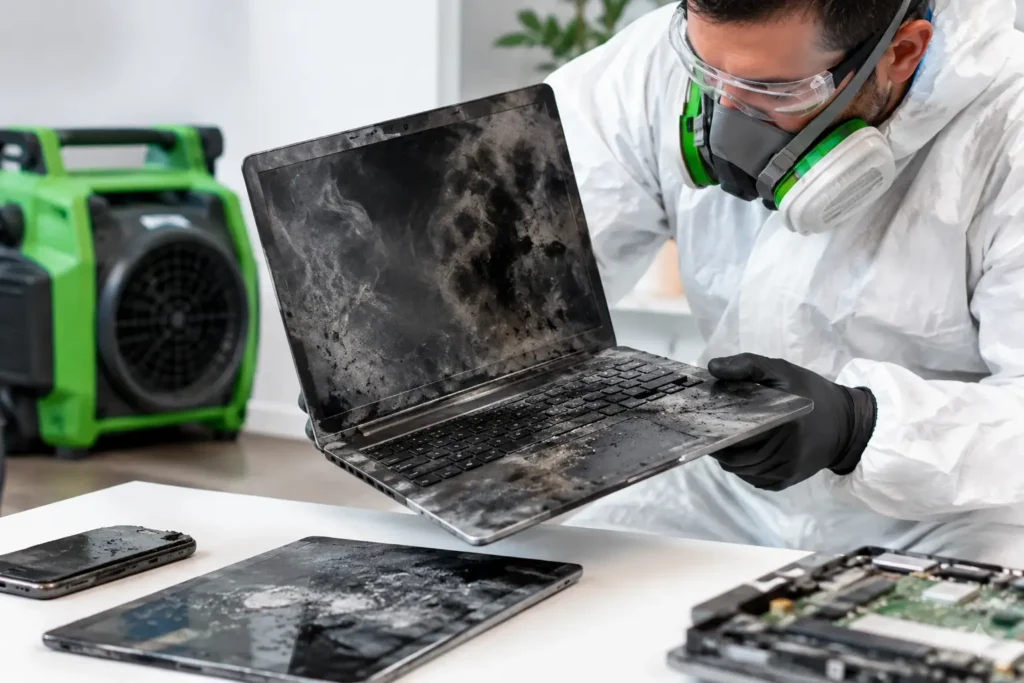
A television that still turns on after a fire may look like good news. It may not be. Can smoke damage affect electronics? Yes. Even when flames never reach a device, smoke can leave behind conductive soot, corrosive residue, moisture, and odor-causing particles that create immediate or delayed failures.
For homeowners, property managers, and business owners, electronics deserve early attention after a fire or smoke event. Waiting to see whether equipment fails can allow residue to settle deeper into vents, circuit boards, connectors, and cooling fans. A professional fire restoration assessment helps protect the property, document affected contents, and identify which items may be safely restored, professionally evaluated, or replaced.
How Smoke Damage Affects Electronics
Smoke is not a single substance. Its makeup depends on what burned, how hot the fire became, how much oxygen was present, and how long the materials smoldered. A small kitchen fire, an electrical fire, and a larger structure fire can each leave very different residues.
Fine soot particles are the primary concern for electronics. They can enter a computer, television, gaming console, security panel, appliance control board, server, or HVAC control system through cooling vents and small openings. Once inside, soot can coat components that were designed to stay clean and dry.
The result may be a short circuit, overheating, inconsistent operation, corrupted data, or complete device failure. Some equipment stops working right away. Other devices appear normal, then fail days or weeks later as residue attracts moisture or corrodes metal contacts.
Smoke can also compromise equipment that is powered off. A device does not need to be running for acidic or oily residues to settle on internal components. That is why visual appearance alone is not a reliable test of whether a device is safe to use.
The type of fire changes the risk
Dry smoke from fast-burning paper or wood can leave a fine, powdery residue that spreads easily through a building. Protein residue from burned food can be difficult to see, but it can leave a persistent odor and film on surfaces. Fires involving plastics, synthetic fabrics, wiring, insulation, or other petroleum-based materials may produce heavier, more corrosive residue.
Electronics exposed to these residues need a case-by-case evaluation. The more complex and valuable the equipment, the more important it is to avoid assumptions. Commercial controls, network equipment, medical-adjacent building systems, security systems, and smart-home components may require specialized inspection beyond standard contents cleaning.
Signs That Smoke May Have Reached Your Devices
Not all smoke damage is obvious. You may see black dust around vents, discoloration on cords, a sticky film on surfaces, or soot inside cabinets and media centers. A strong smoky odor near equipment is another warning sign, especially if it returns after basic surface cleaning.
Operational changes matter too. Watch for screens that flicker, devices that run hotter than usual, unexplained shutdowns, error messages, distorted audio, tripped breakers, or chargers that stop working properly. These symptoms do not prove smoke damage, but they justify professional evaluation.
Do not rely on a quick wipe of the exterior as proof that an electronic item is clean. Soot often travels with air movement and can collect behind vent grilles, beneath covers, and on internal boards that cannot be safely accessed without proper procedures.
What to Do With Electronics After Fire or Smoke Damage
The first priority is safety. If the fire department, electrician, or restoration team has not cleared the affected area, do not enter it to retrieve devices. Once access is approved, avoid turning on, charging, or repeatedly testing smoke-exposed electronics. Energizing contaminated equipment can worsen a short circuit or create a safety hazard.
Instead, document the items in place when possible. Take clear photos of the room, the equipment, visible residue, serial numbers, and any related packaging or accessories. For a commercial property, include network closets, point-of-sale equipment, access-control panels, surveillance systems, appliances, and mechanical controls in the inventory.
Then arrange for the affected contents to be evaluated. The right next step depends on the equipment and the level of exposure. A qualified restoration team can coordinate pack-out, contents inventory, cleaning documentation, and communication needed for an insurance claim. Sensitive or high-value equipment may need assessment by a specialized electronics restoration provider or manufacturer-authorized technician.
Avoid using household cleaners, compressed air, vacuums, or water-based sprays on electronic components. These methods can push particles farther inside, add moisture, scratch delicate surfaces, or leave residues of their own. Never open equipment unless you are qualified to do so and the item is fully disconnected from power.
Can Smoke-Damaged Electronics Be Cleaned?
Sometimes, yes. Professional cleaning can be effective when contamination is limited, the equipment was not exposed to extreme heat or water, and the internal components have not suffered significant corrosion. The goal is not simply to improve appearance or remove odor. It is to remove contamination in a controlled way and determine whether the item can operate reliably.
However, cleaning is not always the best choice. Equipment may need replacement when it has heat damage, melted components, severe soot infiltration, corrosion, water exposure, or unreliable performance after assessment. The decision also depends on age, replacement cost, manufacturer guidance, the device’s purpose, and the consequences of a future failure.
For example, a smoke-exposed television may be economically impractical to disassemble and restore. A commercial server, specialized control panel, or professional-grade audio-visual system may justify a more detailed evaluation because replacement, configuration, and downtime costs are higher.
Data protection deserves separate attention
Computers, external drives, servers, and network-attached storage can hold critical personal or business information. If these devices were exposed to smoke, avoid powering them on simply to check whether files are accessible. Preserve the equipment and consult an appropriate data recovery or electronics specialist if the contents are essential.
During a fire loss, physical restoration and data preservation often need to be coordinated. A careful inventory helps establish what equipment was present, its condition, and its role in the property or business operation.
Why Fast, Organized Restoration Matters
Smoke residues continue to affect materials after the fire is out. In the first hours and days, soot can settle into HVAC pathways, cabinets, insulation, and contents. It can also migrate from one area to another when items are moved without containment or cleaning protocols.
Prompt mitigation protects more than walls and flooring. It helps reduce secondary damage to belongings and equipment. An IICRC-based restoration process typically includes assessing the source and spread of contamination, documenting conditions, stabilizing the property, cleaning affected building materials and contents, controlling odor, and coordinating reconstruction where needed.
For insurance-related losses, detailed documentation is particularly valuable. Photos, inventories, moisture and condition findings where applicable, equipment evaluations, and records of cleaning or replacement recommendations can help create a clearer picture of the loss. Coverage decisions remain with the insurer and policy terms, but organized records can support a smoother claims process.
Apollo Construction & Renovation Corp. helps property owners across the Mid-Atlantic manage fire and smoke recovery with emergency mitigation, contents handling, detailed documentation, and reconstruction coordination. For a home or commercial building, having one accountable restoration partner can reduce confusion while multiple trades and claim requirements are involved.
Protecting Your Property After the Initial Cleanup
Even after visible soot is removed, pay attention to lingering odor, recurring residue, unusual equipment behavior, and HVAC performance. Smoke can circulate through ductwork and settle in areas that were not close to the fire. If the source has not been properly addressed, odors and particles can continue affecting the indoor environment and contents.
Before returning sensitive electronics to an affected room, confirm that the area has been professionally cleaned and that any necessary repairs to electrical systems, drywall, insulation, cabinetry, or HVAC components have been completed. This matters especially after a fire involving water suppression, since moisture and smoke residue together create a greater risk of corrosion.
A fire loss can make every decision feel urgent. Start with safety, preserve evidence of the damage, and avoid testing or cleaning smoke-exposed electronics on your own. A timely professional assessment gives you the clearest path to protect your property, document the loss, and make sound decisions about the equipment you rely on every day.
Every property and insurance policy is different. Contact Apollo to discuss the work your property may need; your insurer determines coverage.