A property can look clean after a fire and still carry a sharp, persistent smoke smell in the walls, HVAC system, insulation, and personal belongings. That odor is more than an inconvenience. It often signals that smoke residues remain on or inside building materials. Understanding what does smoke odor removal involve helps property owners make informed decisions before painting, replacing finishes, or moving back into the space.
Effective odor removal is a structured restoration process, not a fragrance treatment. The work begins with identifying the fire conditions and the paths smoke traveled, then removes residue, treats affected materials, and verifies that the property is ready for reconstruction or occupancy.
What Does Smoke Odor Removal Involve?
Smoke odor removal involves inspection, source removal, detailed cleaning, controlled deodorization, and, when necessary, removal and replacement of materials that cannot be restored. The exact scope depends on the type of fire, how long the smoke circulated, the ventilation conditions, and the materials in the building.
A small kitchen fire, for example, can send oily residues through an entire home if the HVAC system was running. A slow, smoldering fire may leave a particularly heavy odor because it produces dense smoke that settles into porous surfaces. Fires involving synthetic materials can create sticky residues that demand specialized cleaning methods and careful containment.
The objective is not to cover the odor. It is to remove or neutralize the odor-causing particles at their source while protecting the property, its contents, and everyone involved in the restoration process.
The Inspection Comes Before Cleaning
A qualified restoration team starts with a thorough assessment of the affected area. Technicians look beyond visibly charred rooms to identify where smoke traveled through hallways, closets, ceiling cavities, ductwork, and adjacent spaces.
This inspection may include visual documentation, 360-degree imaging, moisture and material condition assessments, and evaluation of the HVAC system. It also helps determine whether the property has water damage from firefighting efforts, which can complicate the restoration plan if not addressed quickly.
The fire’s fuel source matters. Protein fires, such as a burned meal, may leave little visible residue but create a strong, lingering odor. Wood smoke tends to leave dry, powdery soot, while petroleum- or plastic-based fires often create darker, oily films. Each residue responds differently to cleaning agents and deodorization methods.
For insurance-related losses, detailed photographs, room-by-room notes, and a documented scope of work can also support clear communication with the adjuster. Good documentation records the condition of the property before demolition, cleaning, and reconstruction begin.
Securing the Property and Controlling Cross-Contamination
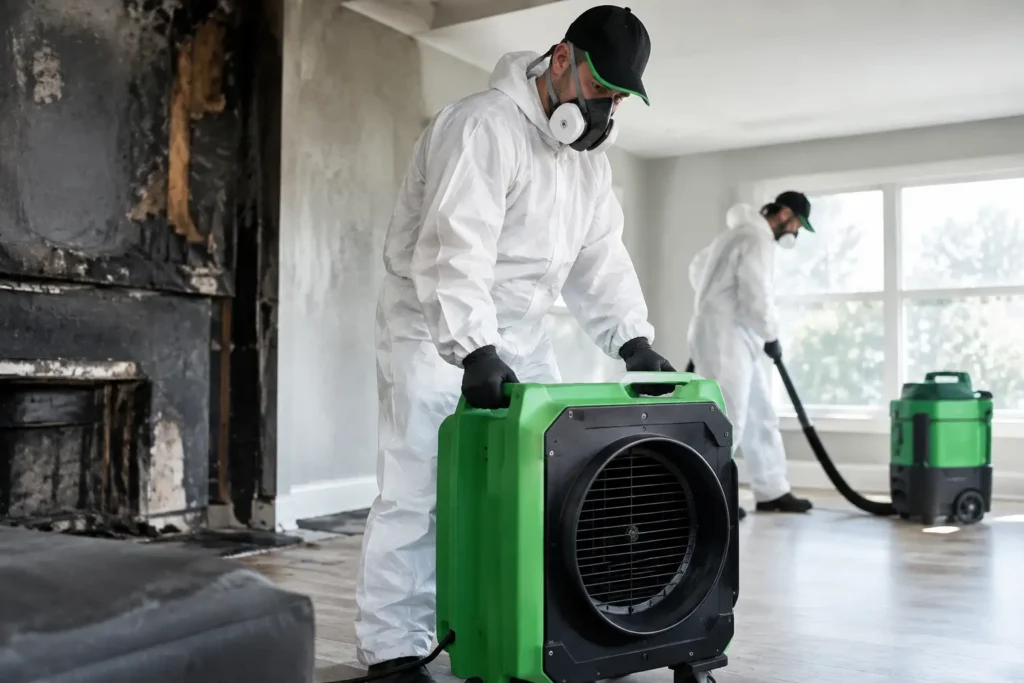
Before intensive cleaning starts, the restoration team may stabilize the property and isolate affected zones. This can include temporary board-up, roof protection, HEPA air filtration, and containment barriers that limit the movement of soot into unaffected rooms.
Smoke particles are extremely small. Walking through a contaminated area, turning on a central HVAC system, or using household fans can spread particles to clean surfaces. Proper containment helps protect areas that may be salvageable without extensive cleaning.
Safety also guides the work. Fire-damaged materials, ash, soot, wet drywall, compromised electrical components, and unstable building elements require trained handling. Property owners should avoid dry sweeping, aggressive scrubbing, or attempting to wash soot off walls with household products. Those efforts can grind residue deeper into surfaces or cause further staining.
Removing Soot and Residue From Surfaces
Cleaning is the foundation of smoke odor removal. If odor-causing residue remains on walls, framing, cabinets, textiles, or contents, deodorization alone will have limited results.
Restoration professionals select methods based on the surface and residue type. Dry cleaning techniques may be used first on certain soot-covered walls and ceilings to lift loose particles without smearing them. Other surfaces may require wet cleaning with specialized products formulated to break down oily or protein-based residues. Hard surfaces, fixtures, appliances, cabinetry, and structural framing each need an appropriate process.
Porous materials require closer evaluation. Upholstery, carpet, draperies, unfinished wood, acoustic ceiling tile, drywall, insulation, and paper goods can absorb smoke deeply. Some can be restored through specialized contents cleaning or off-site treatment. Others may retain odor despite reasonable cleaning efforts and need removal.
This is one of the most important trade-offs in a fire restoration project. Saving a material may appear less expensive at first, but replacement can be the better long-term decision if the odor has penetrated beyond what cleaning can reliably address. A professional scope should explain why a material is being cleaned, sealed, or removed.
HVAC Cleaning Is Often Essential
When smoke passes through a heating and cooling system, the ductwork can distribute odor and residue throughout the building. Replacing air filters alone is rarely enough after a significant smoke event.
HVAC odor removal may include cleaning accessible ducts and components, addressing registers and returns, replacing contaminated filters, and evaluating insulation or other materials near air-handling equipment. The system should not be returned to normal operation until it can run without spreading smoke particles to cleaned areas.
The necessary HVAC scope depends on whether the system was operating during the fire, how close it was to the source, and the extent of visible or suspected contamination. A targeted inspection prevents both missed contamination and unnecessary work.
Deodorization Treats the Odor That Cleaning Cannot Reach
After source removal and cleaning, restoration professionals may use controlled deodorization methods to address residual odor in structural cavities, fabrics, or other difficult-to-reach areas. Depending on the conditions, this can include thermal fogging, hydroxyl treatment, or other professional odor-neutralizing applications.
These methods are selected carefully. They are not interchangeable, and they are not a substitute for removing soot. Some treatments require the area to be unoccupied or require special safety controls. The right approach depends on the building’s occupancy, contents, ventilation, fire type, and the materials being treated.
For example, thermal fogging can help a deodorizing agent reach spaces that smoke reached, such as wall cavities or areas behind trim. Hydroxyl-based treatment can be useful in certain occupied or controlled environments, depending on the equipment and restoration plan. A qualified team will explain the purpose of the treatment, required precautions, and what work must be completed first.
Sealing, Reconstruction, and Contents Recovery
Where smoke residue has been properly cleaned but odor remains within structural materials, a restoration contractor may apply a specialized odor-blocking sealer before reconstruction. This step can be especially valuable on framing, subfloors, or other structural surfaces exposed after damaged drywall, flooring, or insulation has been removed.
Sealing should never be used to trap active soot contamination behind a new finish. The surface must be properly prepared first. Otherwise, odor, staining, and adhesion problems may return after repairs are complete.
Contents require their own restoration plan. Clothing, documents, electronics, furniture, and sentimental items may need pack-out, inventory, specialized cleaning, storage, and return once the property is ready. Separating contents work from structural cleaning helps keep the project organized and protects items while demolition and reconstruction take place.
Once odor removal is complete, reconstruction can address damaged drywall, insulation, flooring, paint, cabinetry, roofing, electrical components, and other affected systems. A full-service contractor can coordinate these phases so the transition from emergency mitigation to final repairs is orderly and well documented.
How Long Does Smoke Odor Removal Take?
The timeline depends on the size of the loss and the materials involved. A limited cooking-related smoke loss may be addressed in days, while a structural fire with HVAC contamination, extensive contents handling, demolition, and reconstruction can require a longer, phased project.
Odor work should not be rushed simply to make a room smell better temporarily. Verification matters. The restoration team should assess the property after cleaning and treatment, identify any remaining odor sources, and confirm that reconstruction materials are not being installed over unresolved contamination.
Why Professional Smoke Odor Removal Matters
Fire and smoke losses frequently involve more than one discipline: emergency mitigation, contents handling, environmental and safety considerations, cleaning, HVAC evaluation, insurance documentation, and rebuilding. Coordinating those steps early reduces the risk of missed contamination and avoidable rework later.
Apollo Construction & Renovation Corp. helps residential and commercial property owners throughout the Mid-Atlantic manage fire and smoke restoration with organized documentation, IICRC-based practices, and complete reconstruction capability. The right response begins with a careful inspection, because a smoke odor should be investigated as a restoration issue, not simply covered with a stronger scent.
Every property and insurance policy is different. Contact Apollo to discuss the work your property may need; your insurer determines coverage.