
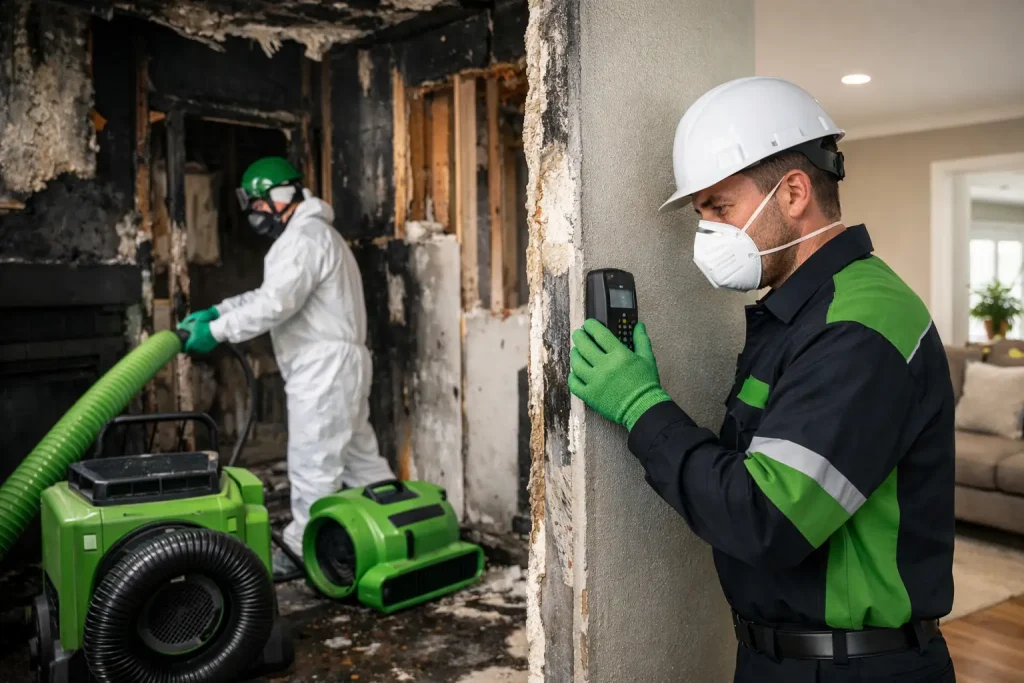
The smell of smoke can linger long after the fire is out, and that is often when the real scope of the damage starts to show. Charred materials are only part of the problem. Soot can spread through rooms untouched by flames, moisture from firefighting efforts can soak walls and flooring, and hidden corrosion can begin almost immediately. That is why hiring the right fire damage restoration contractor matters early – not just for cleanup, but for protecting the property, documenting the loss, and moving recovery forward with structure and speed.
What a fire damage restoration contractor actually does
Many property owners assume fire restoration begins and ends with removing debris and repainting damaged surfaces. In reality, the work is much broader and more technical. A qualified contractor evaluates structural damage, identifies areas affected by smoke and soot, addresses water introduced during suppression efforts, stabilizes unsafe conditions, and plans the reconstruction process from demolition through final repairs.
That process usually begins with an emergency response assessment. The contractor checks for immediate hazards, secures the site if needed, and determines what can be salvaged versus what should be removed. From there, restoration may include board-up services, temporary roof protection, soot and smoke residue removal, odor control, debris disposal, moisture mapping, drying, contents cleaning, demolition, and full reconstruction of damaged areas.
For homeowners, this means fewer gaps between mitigation and rebuilding. For property managers and commercial owners, it means less downtime and better coordination across multiple trades. When one experienced team can manage the loss from initial stabilization through final punch list items, the process is usually more organized and easier to track.
Fire damage is rarely just fire damage
A strong fire damage restoration contractor looks at the whole loss, not only the burn pattern. Heat can compromise framing, windows, roofing components, and mechanical systems. Smoke can travel through HVAC ductwork and settle inside cavities, insulation, and porous finishes. Soot residue can be dry, oily, acidic, or protein-based, and each type behaves differently during cleaning.
Then there is water. Fire suppression often leaves behind soaked insulation, wet drywall, saturated flooring, and elevated humidity. If those conditions are not addressed quickly, secondary damage can build fast. That is one reason fire restoration often overlaps with water mitigation, contents handling, environmental controls, and reconstruction planning.
This is also where experience matters. Two properties can have fires of similar size but very different restoration needs depending on the source, duration, building materials, ventilation, occupancy type, and how quickly response begins.
How to evaluate a fire damage restoration contractor
In a property emergency, speed matters. So does judgment. The right contractor should be able to mobilize quickly without rushing past the details that affect safety, scope, and insurance documentation.
Start by looking for a company that handles both mitigation and reconstruction. If one vendor performs the emergency work and another takes over later, delays and scope disputes can follow. A full-service contractor can document the loss from the beginning, maintain continuity, and reduce the chance that key items get missed between phases.
It also helps to ask how the company approaches documentation. Fire losses often involve adjusters, inventories, repair scopes, photos, moisture readings, and room-by-room condition reporting. Clear records support claim review and help keep the project aligned with the actual damage present. Advanced tools like thermal imaging, 360 imaging, and detailed field reporting are especially useful when conditions are complex or the property is partially occupied.
Credentials and process standards matter as well. A contractor following IICRC-based restoration protocols and OSHA-compliant safety practices brings a more disciplined approach to containment, cleaning, demolition, and reconstruction. That does not mean every project looks the same. It means the work is guided by recognized standards instead of guesswork.
Why communication matters as much as technical skill
After a fire, property owners are often dealing with more than construction decisions. They may be coordinating with insurance representatives, relocating occupants, managing tenant concerns, protecting business operations, or trying to determine what can be saved. A contractor who communicates clearly can reduce confusion at a time when every delay feels bigger.
That communication should be specific. You should know what emergency steps are being taken, what materials are non-salvageable, what cleaning methods are planned, what reconstruction may involve, and what documentation is being gathered for the claim. Vague assurances are not enough when the property has sustained real damage and decisions affect cost, schedule, and habitability.
Good communication also means setting realistic expectations. Some smoke odors can be resolved relatively quickly. Others require deeper cleaning, removal of affected porous materials, HVAC attention, and repeated odor treatment. Some finishes may appear restorable at first and later prove too compromised to retain. A dependable contractor explains those trade-offs early instead of waiting until the project is already off track.
The insurance side of fire restoration
A fire loss can become harder to manage when the restoration contractor and the insurance process move in separate directions. While contractors do not make coverage decisions, the right team can support the claim with organized estimates, damage documentation, photos, and reporting that reflects the actual conditions found on site.
This support becomes especially important when the damage extends beyond visibly burned areas. Smoke migration, hidden moisture, attic contamination, roofing compromise, and affected systems such as HVAC or electrical components may not be obvious in a quick walkthrough. If those conditions are not documented early, they can become points of delay later.
For many owners, this is where a contractor with insurance restoration experience provides real value. The goal is not to complicate the claim. It is to present the loss clearly, keep records consistent, and help move the project from emergency response to approved scope and reconstruction with fewer surprises.
Residential and commercial projects need different planning
A house fire and a commercial fire may involve similar restoration principles, but the response strategy is rarely identical. In a home, the focus may be on returning the space to safe, livable condition while protecting personal contents and maintaining communication with the family throughout the process.
In a commercial building, there may be additional concerns such as business interruption, tenant coordination, code compliance, occupied areas, phased reconstruction, and time-sensitive operational needs. Multi-unit and managed properties can add another layer with shared systems, common areas, and multiple stakeholders involved in decision-making.
That is why project management is not a secondary issue. A contractor should be able to coordinate trades, sequence work properly, and keep the schedule moving without cutting corners on cleaning, drying, safety, or quality.
What the first days should look like
The first 24 to 72 hours after a fire often shape the rest of the project. The site should be stabilized, documented, and protected from further damage. Moisture should be identified and addressed. Smoke and soot conditions should be evaluated room by room. Salvageable contents should be separated from unsalvageable materials. Temporary protections should be installed where needed.
This is also the stage when a contractor begins building the framework for the entire recovery. That includes the initial scope, site conditions, demolition needs, cleaning strategy, drying plan, and reconstruction outlook. When these early steps are handled methodically, later phases tend to move with fewer disruptions.
For property owners in Maryland, Northern Virginia, Washington DC, Delaware, and Pennsylvania, working with a contractor that can respond, document, mitigate, and rebuild under one roof can make a stressful loss far more manageable.
A fire damage restoration contractor should restore confidence too
The right contractor does more than repair burned materials. They bring order to a situation that often feels chaotic. They know when immediate action is needed, when further investigation is warranted, and how to balance speed with thoroughness. They understand that restoring a property also means protecting the people responsible for it – homeowners trying to get back to normal, managers trying to protect tenants, and business owners trying to reopen without avoidable setbacks.
Apollo Construction & Renovation Corp. approaches fire and smoke losses with that full-picture mindset: emergency response, technical documentation, mitigation, reconstruction, and clear communication from start to finish.
If you are evaluating your next step after a fire, look for a contractor that can explain the damage clearly, document it properly, and manage the recovery with urgency and accountability. The best time to bring that team in is before hidden damage has time to become a bigger problem.
Every property and insurance policy is different. Contact Apollo to discuss the work your property may need; your insurer determines coverage.