
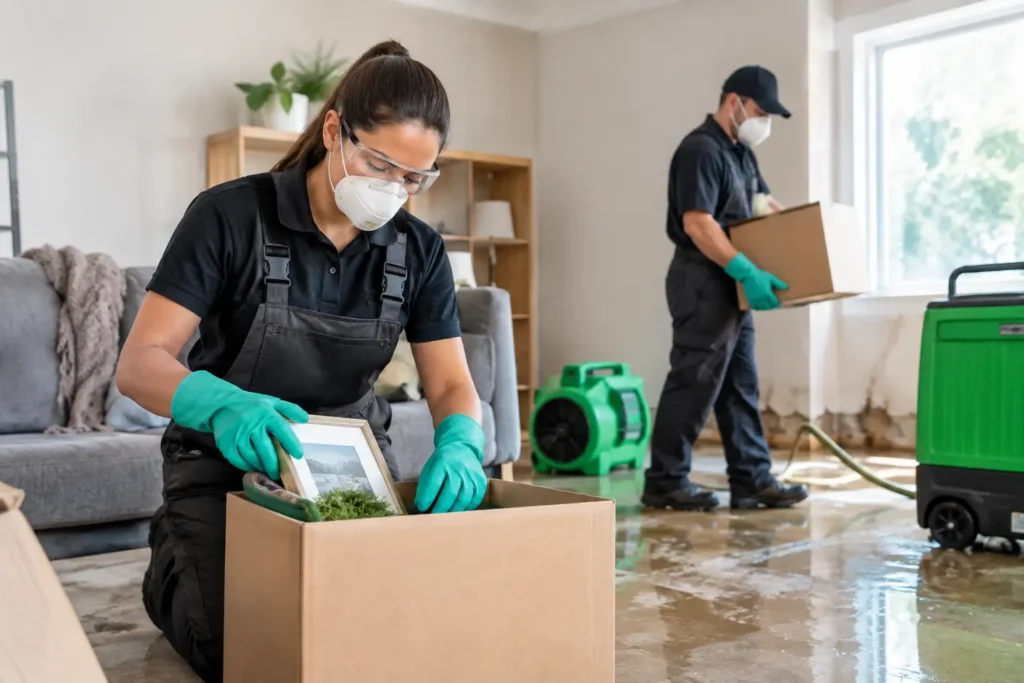
A water loss can turn a living room into a work zone within hours. After a fire, even items that appear untouched may carry smoke residue or odor. In either situation, contents pack out services create the space needed to stabilize the building while protecting the belongings inside it.
A professional pack out is more than moving boxes from one location to another. It is a controlled restoration process that documents affected items, separates salvageable belongings from those requiring specialized evaluation, and prepares the property for mitigation and repairs. For homeowners, property managers, and commercial owners, that organization can prevent avoidable loss and give the insurance claim a clearer foundation.
What Contents Pack Out Services Include
Contents are the personal or business property inside a structure: furniture, clothing, electronics, documents, equipment, inventory, décor, and other movable items. When water, smoke, mold, sewage, or storm damage affects a property, leaving contents in place can make mitigation slower and may expose those items to additional damage.
The scope of a pack out depends on the loss. A localized plumbing leak may require only a few rooms to be cleared. A widespread fire or roof failure may require a full-property inventory, careful removal, cleaning coordination, and secure storage while reconstruction is completed.
The process commonly begins with a walkthrough of the affected areas. Restoration professionals identify immediate hazards, photograph conditions, and record the location and condition of items before they are moved. This documentation matters because it establishes what was present at the time of the loss and helps keep the work organized among the property owner, restoration team, and insurance representatives.
Items are then packed with materials appropriate to their condition and fragility. Furniture may be wrapped and padded. Electronics, documents, and sensitive equipment require extra care because moisture and residue can cause damage that is not always visible on the surface. Damaged items should not be discarded prematurely unless the owner and insurer have completed the appropriate documentation and authorization steps.
When a Pack Out Is the Right Decision
Not every loss requires contents removal. If water is confined to a small area and belongings can be safely moved within the property, an on-site approach may be more efficient. But when contamination, extensive moisture, smoke residue, structural repairs, or limited working space are involved, a pack out is often the safer option.
A professional team may recommend removal when:
- Water has affected carpeted rooms, cabinets, furniture, or contents stored near the floor.
- Fire, soot, or smoke odor has traveled beyond the room where the fire occurred.
- A sewage backup or other contaminated water source has contacted belongings.
- Mold growth or elevated moisture conditions make it unsafe to leave contents in place.
- Roofing or storm damage has left areas exposed to recurring water intrusion.
- Reconstruction will involve demolition, drywall removal, flooring replacement, or work across multiple rooms.
The decision should be based on the source of damage, the extent of exposure, material types, and the reconstruction plan. A clean-water loss handled promptly may allow more contents to remain on site. A loss involving contaminated water or pervasive smoke requires a more cautious approach.
Why Documentation Is Central to a Successful Pack Out
The most valuable part of a contents pack out often happens before the first box leaves the property. Detailed documentation supports clear communication and helps reduce disputes about item condition, location, and handling.
A well-managed inventory can include photographs, item descriptions, room-by-room records, barcodes or tracking labels, and notes about visible damage. For commercial properties, it may also identify business equipment, files, inventory, or furnishings that need priority handling. The level of detail should match the scale and complexity of the loss.
Documentation is also useful for the reconstruction phase. Once crews begin removing wet drywall, insulation, flooring, or damaged building materials, it becomes much harder to verify where individual belongings were located. Early records preserve that context.
For insurance-related losses, property owners should keep copies of communications, inventory information, and receipts for reasonable emergency expenses. Restoration contractors can provide project documentation and work directly with adjusters when appropriate, but coverage decisions and final claim payments remain with the insurance carrier under the terms of the policy.
Cleaning, Storage, and Item Handling After Removal
Once contents are removed, each category of property needs an appropriate next step. Some items may only need cleaning and deodorization. Others may need drying, specialty restoration, further evaluation, or secure storage until the property is ready for return.
Hard-surface furniture and many nonporous items can often be cleaned when addressed promptly. Upholstered furniture, textiles, paper goods, electronics, antiques, and documents require more individualized assessment. The material, duration of exposure, water category, and presence of soot or microbial growth all affect whether restoration is practical.
Storage should protect belongings from additional moisture, dust, unauthorized access, and damage during reconstruction. Before work begins, ask how items will be labeled, whether you will receive an inventory, how access requests are handled, and what condition documentation will be available when contents are returned. Clear answers make a stressful process easier to manage.
A return pack-in should be planned, not rushed. The building must be dry, clean, and ready for occupancy before belongings are brought back. Returning contents too early can reintroduce dust, odor, or moisture exposure and create unnecessary handling costs.
How Pack Outs Help Mitigation and Reconstruction Move Faster
Restoration work follows a sequence for a reason. Emergency mitigation focuses on stopping the source, extracting water when needed, drying affected materials, and stabilizing unsafe conditions. Reconstruction follows after the property has been properly evaluated and the necessary repairs are defined.
Contents left in place can block access to walls, floors, cabinetry, and other affected building materials. They can also interfere with drying equipment, moisture inspections, demolition, and cleaning. Removing them in an organized way gives technicians room to perform moisture mapping, thermal imaging, cleaning, and repairs without putting personal property at unnecessary risk.
For commercial properties, this can also help managers make practical decisions about continuity. Essential records, equipment, or inventory may need to be identified early so that operations can relocate or resume in a controlled manner. Every property has different priorities, which is why the initial walkthrough and inventory process should be tailored to the loss.
Questions to Ask Before Authorizing Contents Pack Out Services
Property owners should feel informed before their belongings leave the premises. Ask who will perform the inventory, how each item will be tracked, where items will be stored, and how damaged or questionable items will be handled. It is also reasonable to ask what cleaning methods are proposed for specific categories, especially electronics, heirlooms, artwork, documents, and business equipment.
Confirm who will communicate with your insurance adjuster and how updates will be provided. A clear point of contact reduces confusion when mitigation, contents handling, and reconstruction are happening at the same time. If there are items you need for daily life, work, or medical accessibility, identify them during the first walkthrough so the team can discuss available options.
Do not attempt to clean soot-covered items with household products or move heavy, wet furnishings through a damaged structure without assessing safety first. Water can weaken flooring, electrical conditions may be hazardous, and improper cleaning can set stains or spread contamination.
A Controlled Process Protects More Than Belongings
A pack out is one part of property recovery, but it affects every stage that follows. Proper inventory protects accountability. Careful packing and storage reduce the chance of secondary damage. An empty, accessible work area allows mitigation and reconstruction crews to perform their work correctly.
Apollo Construction & Renovation Corp. coordinates contents handling as part of a full restoration plan for water, fire, smoke, storm, mold, and other covered property losses. With organized documentation, IICRC-based restoration practices, and clear project communication, property owners can focus on recovery while the next steps are managed with care.
If your property has been affected by water, fire, smoke, or storm damage, request help early. The sooner contents are assessed and the structure is stabilized, the more options you may have to protect what matters while repairs move forward.
Every property and insurance policy is different. Contact Apollo to discuss the work your property may need; your insurer determines coverage.