
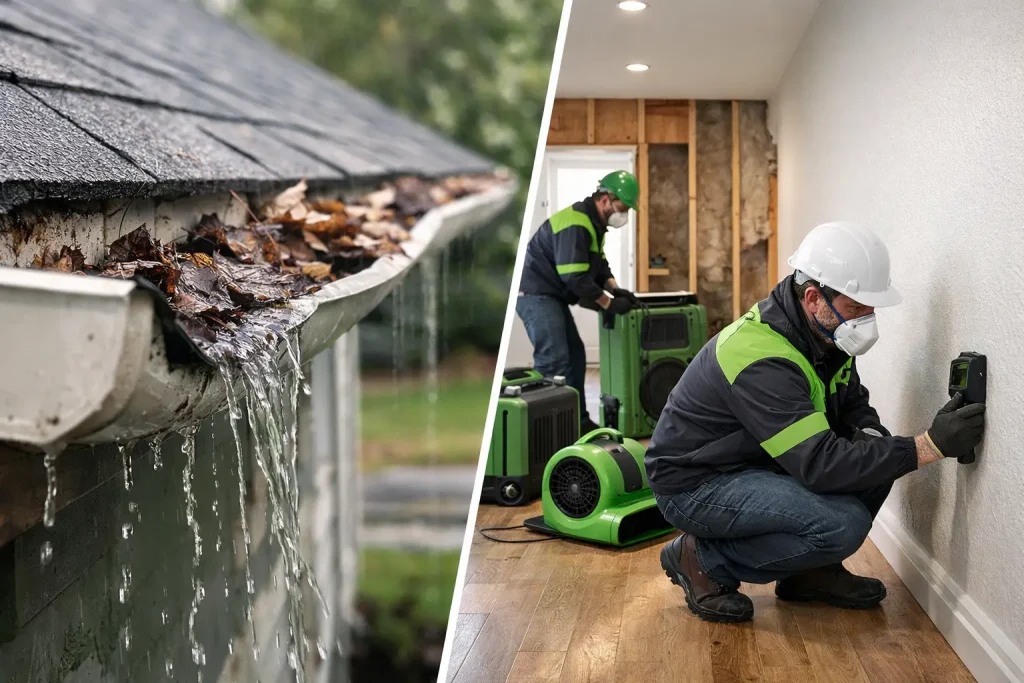
A bent gutter after a storm might look minor, but it can be the first sign of a much larger exterior damage claim. Gutter damage insurance coverage often depends on one key question: was the damage caused by a sudden covered event, or by wear, age, and lack of maintenance? That distinction affects whether your insurer pays for repairs, denies the claim, or asks for more documentation.
When gutter damage insurance coverage usually applies
In many cases, insurance covers gutters when they are damaged by a specific event such as wind, hail, a fallen tree limb, or another sudden loss. If a storm tears sections loose from the fascia, dents aluminum runs, or causes downspouts to separate from the home, that may fall under a standard homeowners policy subject to the policy terms, exclusions, and deductible.
The strongest claims usually tie the gutter damage to a documented weather event or another clearly identifiable cause of loss. That matters because gutters are part of the building exterior, and exterior damage is often reviewed in context. If the roof, fascia, soffit, siding, or windows also show related storm impact, the gutter claim may be easier to support.
This is where property owners sometimes get caught off guard. They assume visible damage is enough. Insurers are usually looking deeper than that. They want to know not just that the gutters are damaged, but why they are damaged and whether the cause is covered.
When gutter damage may not be covered
Insurance typically does not pay for gutters that fail because they are old, rusted, clogged, poorly pitched, or pulling away over time. If fasteners loosen after years of expansion and contraction, if seams have been leaking for a long period, or if deferred maintenance caused the system to deteriorate, coverage may be limited or denied.
The same issue comes up when gutters were already near the end of their service life before the storm. A weather event may have exposed the problem, but exposure is not the same as causation. Adjusters often look for signs of pre-existing wear, corrosion, prior repairs, and maintenance history.
That does not mean every denial is correct. It does mean the details matter. A gutter system can have some age and still sustain sudden storm damage that qualifies for coverage. The question is whether the covered event directly caused the loss being claimed.
What insurance adjusters usually look for
A gutter claim is rarely evaluated in isolation. Adjusters often inspect the full exterior envelope to determine whether the damage pattern is consistent with wind, hail, impact, or falling debris. They may compare the condition of the gutters to the roof covering, drip edge, fascia, soffit, and siding.
For example, if a windstorm struck the property, they may look for lifted roofing materials, displaced flashing, creased shingles, detached downspouts, and directional damage along the same elevation. If hail is involved, they may look for impact marks on soft metals, screens, roof vents, and other exterior surfaces.
Documentation also plays a major role. Photos taken soon after the loss, weather date information, repair history, and inspection notes can all help establish timeline and cause. In larger or more complex claims, a detailed field inspection can make the difference between a vague allegation of damage and a well-supported insurance submission.
Gutter damage insurance coverage and related property damage
One of the most important parts of a gutter claim is understanding what else may have been affected. Gutters do not just move water away from the roofline. When they are crushed, detached, or overwhelmed after a covered event, the resulting water intrusion can affect fascia boards, soffits, siding, trim, windows, foundations, and interior areas near exterior walls.
That does not mean every downstream issue is automatically covered. It does mean the original gutter damage should be assessed in the broader context of the property. If a storm compromised the gutter system and that failure contributed to additional covered damage, the full scope needs to be documented early and clearly.
This is especially important for commercial properties, multifamily buildings, and HOAs, where drainage systems may connect across long elevations and one failed section can affect multiple units or common areas. In those cases, organized reporting and complete damage mapping are critical.
The difference between repair and replacement
Not every approved claim leads to full gutter replacement. If the insurer determines that only one section or elevation was damaged by a covered peril, they may allow a localized repair. If matching materials are unavailable, if the system is no longer serviceable in part, or if the damage is spread across multiple areas, the scope may shift.
This is one of the most common points of friction in exterior claims. A property owner may see a continuous system that should perform and look uniform, while the insurer may focus narrowly on the visibly affected sections. Neither side should make assumptions. The condition of the full system, material availability, code considerations, and integration with roofing and trim all matter.
A thorough inspection helps determine whether a spot repair is reasonable or whether replacement is the more durable and code-compliant solution.
What to do after storm-related gutter damage
Start by documenting the condition of the property as soon as it is safe to do so. Take clear photos of detached sections, dents, bent hangers, separated downspouts, overflow staining, and any related roofline or siding damage. If there is active leaking or water intrusion, temporary protective measures may be necessary to prevent additional damage.
Then report the loss promptly. Delays can create avoidable claim issues, especially if more weather hits the property or repairs are attempted before the damage is properly inspected. Keep records of when the damage was first observed, what weather event may have caused it, and any emergency mitigation performed.
It is also wise to have the property inspected by a qualified restoration or exterior damage professional who understands both construction and insurance documentation. A good inspection does more than identify what is broken. It helps establish cause, scope, urgency, and the relationship between the gutter damage and any connected building components.
Why documentation matters so much
Insurance claims are built on evidence. That is true for major roof losses and just as true for gutters. The challenge is that gutter damage can be dismissed as cosmetic, maintenance-related, or isolated unless the documentation shows otherwise.
Useful claim support often includes date-stamped photos, close-up and overview images, notes on displaced materials, visible impact or storm patterns, and documentation of associated damage to roofing, fascia, soffit, siding, or interior finishes. In some cases, moisture mapping or thermal imaging may be appropriate if water intrusion is suspected beyond the exterior line.
For property owners, that level of detail reduces guesswork. For adjusters, it creates a clearer basis for review. For the repair contractor, it supports a scope that addresses the actual condition of the property instead of only the most obvious symptoms.
Common misconceptions about gutter claims
A lot of people assume that if a storm happened recently, all visible exterior damage must be covered. That is not always how policies work. Coverage depends on cause, condition, timing, and policy language.
Another common misconception is that if the gutters are damaged, the roof must be covered too, or vice versa. Sometimes both are part of the same loss. Sometimes only one system shows compensable damage. Each component still has to be evaluated on its own facts while being considered as part of the building envelope.
There is also a tendency to treat gutters as a low-priority item. That can be a costly mistake. A failed gutter system can redirect water behind siding, into soffits, and along the foundation line. What starts as a metal repair can turn into a larger restoration issue if the drainage problem is left unresolved.
Getting the scope right from the beginning
The best time to clarify gutter damage insurance coverage is early, before temporary fixes become permanent and before small failures lead to larger water issues. A complete inspection can identify whether the loss appears storm-related, whether connected building materials were affected, and whether repair or replacement is the more appropriate path.
For homeowners and property managers, the practical goal is simple: protect the property, document the damage, and avoid guessing. If the damage came from a covered event, the claim should be supported with clear facts and a well-defined scope. If the issue is maintenance-related, it is still better to know that quickly and address it before more serious damage develops.
Apollo Construction & Renovation Corp. works with property owners facing storm and exterior damage claims where gutters, roofing, siding, and water intrusion are often connected. When the inspection is thorough and the documentation is organized, the recovery process tends to move faster and with fewer surprises.
If your gutters were damaged after a storm, treat it like part of the property protection system, not a minor trim issue. A careful assessment now can prevent a much bigger repair later.
Every property and insurance policy is different. Contact Apollo to discuss the work your property may need; your insurer determines coverage.