
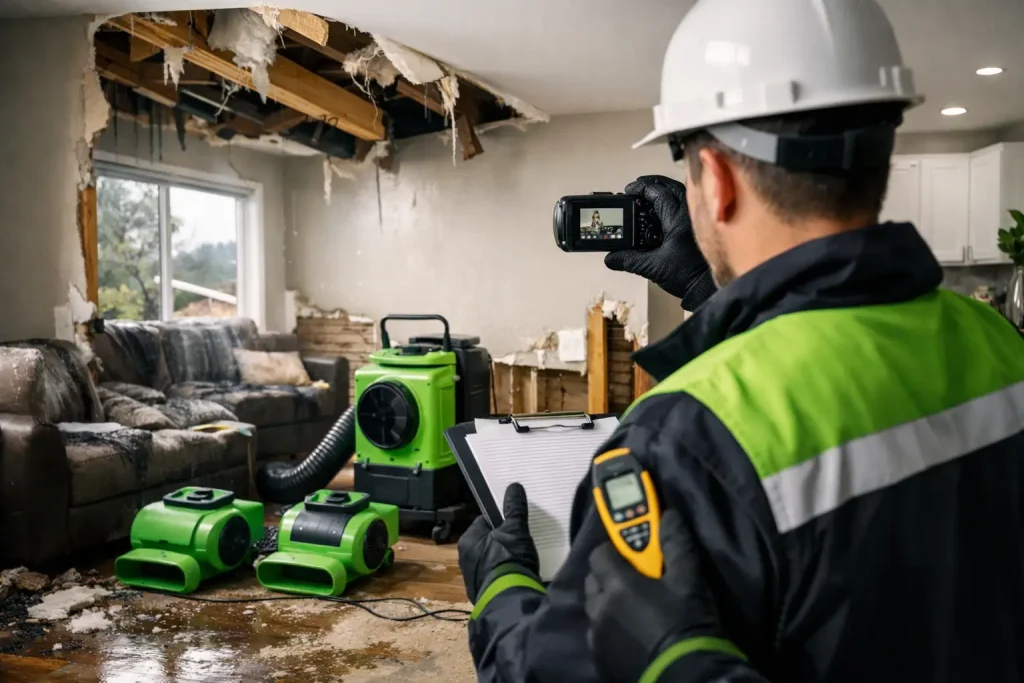
A windstorm can loosen shingles, drive rain beneath siding, and flood a finished room long before the full extent of damage is visible. Knowing how to document storm damage in the first hours and days after an event can protect your property, create a clear record for your insurer, and help the restoration process move forward without avoidable delays.
Your first priority is safety. Do not enter areas with standing water near electrical equipment, climb onto a roof, touch downed power lines, or disturb damaged ceilings that may collapse. If conditions are unsafe, stay clear, contact the appropriate emergency utility or public safety resource, and arrange a professional inspection.
Start Documenting Storm Damage Before Cleanup
Once it is safe to do so, document the property in its current condition before moving furniture, removing soaked materials, or making permanent repairs. Insurers generally need to understand what happened, where the damage occurred, and how the storm affected the building and its contents. A thorough record helps answer those questions.
Use your phone or camera to capture wide shots first. Photograph each affected side of the property, including the roofline from the ground, exterior walls, gutters, downspouts, windows, doors, fences, sheds, and any detached structures. Then move closer to capture details such as missing shingles, lifted flashing, dented metal, torn screens, cracked siding, fallen branches, or water entering around openings.
Inside, photograph every affected room from multiple angles. Show the relationship between the source of water and the resulting damage whenever possible. For example, capture a stained ceiling below a roof leak, wet flooring near a failed window, or water-damaged drywall along an exterior wall. Include both the broad view of the room and close-ups of warped materials, staining, buckling, or visible moisture.
Video can add useful context. Walk slowly through each affected area and narrate the date, room, and damage you see. Avoid editing the footage. Original files with date and time information can be especially helpful when questions arise later.
Create a Clear Damage Log
Photos alone do not tell the entire story. Pair them with a simple written log that records what you observed and when you observed it. Start with the date and approximate time of the storm, including hail, high winds, heavy rain, fallen trees, or flooding conditions that affected your property.
For each damaged area, note the location, the material involved, and the visible condition. A useful entry might read: “March 14, second-floor bedroom: water staining and active dripping from ceiling near exterior wall; carpet wet approximately four feet from window.” Keep the wording factual. You do not need to determine the cause or estimate the cost at this stage.
Also record each action you take to protect the property. If you place a tarp over an opening, move undamaged belongings away from water, or arrange emergency water extraction, write down the date, time, company involved, and reason for the work. Save invoices, receipts, work authorizations, and any emergency service reports.
Document What Cannot Be Seen Easily
Storm damage is often concealed behind finishes or beneath roofing materials. Water can travel along framing, insulation, electrical pathways, and drywall before it becomes visible. A ceiling stain may represent an active roof leak, wind-driven rain intrusion, or water that has migrated from a different area.
This is where a qualified restoration or roofing inspection can provide valuable documentation. Professional reports may include moisture mapping, thermal imaging, 360-degree imaging, photographs of inaccessible conditions, and an assessment of affected materials. These records can establish the scope of damage more clearly than surface photos alone.
Protect the Property Without Destroying Evidence
Reasonable emergency measures can prevent additional damage, but permanent repairs should generally wait until the insurer has had an opportunity to assess the loss or has provided direction. The right approach depends on the severity of the damage and the terms of your policy.
If rain is entering through a roof opening, temporary protection may be necessary. If water is present indoors, prompt mitigation is often necessary to reduce further damage and the risk of microbial growth. Take photos before work begins, during the emergency protection or mitigation process, and after the area has been stabilized.
Do not discard damaged items immediately unless they pose a health or safety concern or your insurer instructs you to do so. If materials must be removed during emergency mitigation, photograph them, identify where they came from, and retain samples or documentation when practical. Certified restoration teams can document demolition, drying progress, moisture readings, and contents handling as part of an organized mitigation file.
How to Document Storm Damage to Personal Property
Storm losses can affect more than the building. Furniture, electronics, clothing, appliances, business inventory, and stored belongings may all need to be included in the claim. Work room by room so the task stays manageable.
Photograph each damaged item in place before moving it, then take closer images that show the condition, model number, serial number, or identifying label when available. Create an inventory with the item description, brand, approximate age, purchase price if known, and current condition. Receipts, bank statements, prior photos, manuals, and warranty documents can support ownership and value.
For commercial properties, separate damaged inventory, equipment, furniture, and building components in the log. Property managers should also document affected common areas, tenant spaces, mechanical rooms, roof access points, and any emergency actions taken to protect occupants or the building.
Avoid guessing on values or causes. If you are unsure, write “unknown” and preserve the item for review. Accuracy and consistency are more useful than a rushed, incomplete estimate.
Notify Your Insurer and Keep Communications Organized
Report the loss to your insurance carrier as soon as practical. Have your policy number, loss date, property address, and a brief description of the damage ready. Ask for the claim number and record the name and contact information of each representative you speak with.
Keep a communication log that includes calls, emails, inspection appointments, and requested documents. After phone conversations, note the date, time, person you spoke with, and the main points discussed. Store photos, videos, invoices, reports, and correspondence in one digital folder with backups. Clear file names such as “Kitchen ceiling – March 14” make a large claim easier to manage.
Be careful not to delay needed emergency mitigation while waiting for an adjuster if water intrusion is active. Your policy may require reasonable steps to prevent further loss. A professional restoration contractor can help document conditions before and during mitigation while following appropriate safety and drying practices.
When a Professional Inspection Is Especially Important
Some storm damage is obvious, but other conditions require trained evaluation. Schedule a professional inspection when you see signs of roof damage, active leaks, ceiling staining, sagging drywall, damaged siding, fallen trees, water entering through windows or doors, or moisture affecting finished spaces.
An inspection is also worthwhile after hail or high winds even when damage is not immediately visible from the ground. Roofing components can be compromised without creating an immediate leak, and delayed water intrusion may cause more extensive interior damage over time. A qualified inspector can safely evaluate the roof, exterior envelope, and affected interior areas without asking a property owner to take unnecessary risks.
Apollo Construction & Renovation Corp. supports residential and commercial property owners across the Mid-Atlantic with emergency mitigation, detailed damage documentation, roofing and exterior inspections, and full reconstruction planning. For insurance-related storm losses, organized records and a properly documented scope can help keep the recovery process focused on the property’s actual condition.
Common Documentation Mistakes to Avoid
The most frequent mistake is cleaning up before taking photographs. Another is capturing only close-up damage without showing where it occurred in the building. Both can make it harder to connect the visible issue to the overall loss.
Property owners also sometimes rely on a single inspection, overlook exterior damage, or fail to track emergency expenses. Storm damage can involve several building systems at once, including roofing, gutters, siding, insulation, drywall, flooring, electrical components, and contents. Thorough documentation should follow the damage wherever it leads, not stop at the first visible stain.
Finally, do not attempt unsafe inspections or repairs. A roof that appears accessible from a ladder can still have loose materials, hidden soft spots, or unstable edges after a storm. Professional evaluation protects both the property and the people responsible for it.
When the weather clears, preserve the evidence, address active water intrusion, and get qualified help early. A calm, organized record gives you a stronger starting point for restoring the property safely and completely.
Every property and insurance policy is different. Contact Apollo to discuss the work your property may need; your insurer determines coverage.