
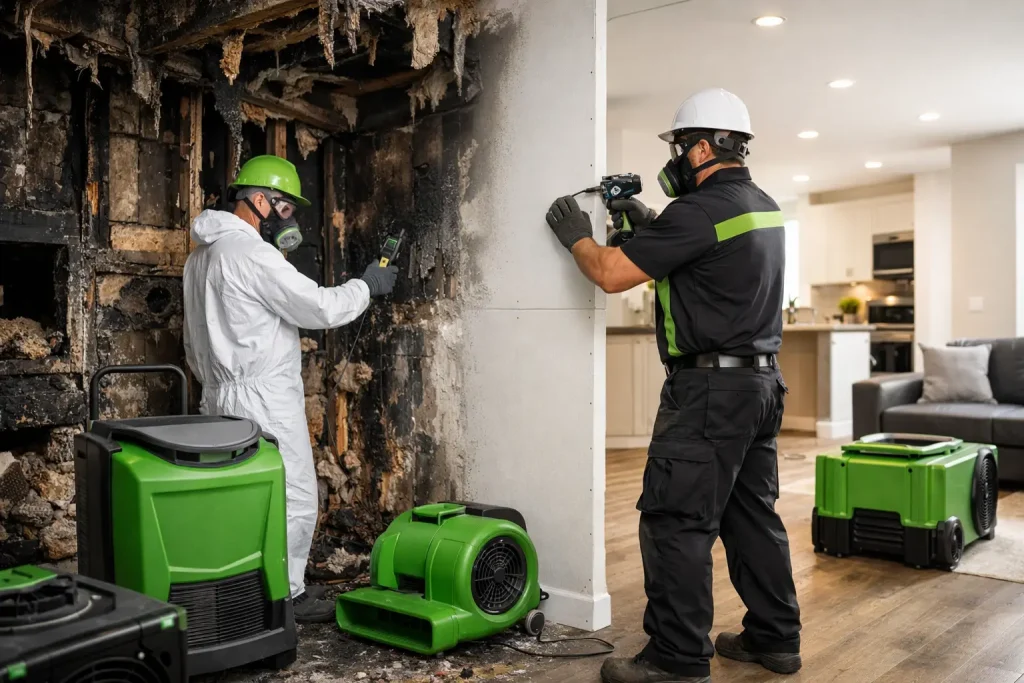
The first 24 hours after a fire are rarely just about burned materials. Soot keeps spreading, smoke odor settles deeper into porous surfaces, and water used to extinguish the fire can start a second layer of damage almost immediately. If you are trying to understand how to repair fire damage, the right answer is not to start rebuilding right away. The right answer is to stabilize the property, document the loss, and make sure cleanup happens in the correct order.
Fire damage repair is rarely a single trade job. Even a smaller loss can affect framing, insulation, drywall, electrical systems, HVAC components, flooring, contents, and indoor air quality at the same time. That is why a proper restoration plan matters. Done correctly, it protects the structure, supports the insurance process, and prevents avoidable problems later.
How to repair fire damage in the right order
The sequence matters as much as the repair itself. Many property owners want to remove damaged materials and start replacing finishes immediately, but fire restoration is more controlled than that. The property should first be cleared for safe entry, and any active hazards need to be addressed before demolition or cleaning begins.
That often includes emergency board-up, roof tarping if the fire compromised the exterior, and temporary shoring if there is structural instability. Utilities may also need to remain off until qualified professionals inspect the electrical, gas, and mechanical systems. Entering too soon or working around hidden hazards can put occupants and crews at risk.
Once the site is stable, documentation becomes critical. Photos, room-by-room condition records, damaged contents inventories, and repair scope notes help establish what was affected by fire, smoke, soot, and suppression efforts. This step is not just administrative. It directly supports accurate estimating, claim coordination, and a more organized rebuild.
Start with a professional damage assessment
A fire does not need to consume an entire room to create serious repair needs. Smoke can travel well beyond the burn area, and different types of soot behave differently depending on the fuel source, burn temperature, and ventilation conditions. What looks like a light cosmetic issue may involve deeper contamination inside insulation, ductwork, or wall cavities.
A proper assessment typically looks at structural damage, smoke migration, moisture from firefighting efforts, odor penetration, and the condition of salvageable contents. It should also identify whether any materials need specialized handling. Older buildings, for example, may require added caution if hazardous materials are present during demolition.
This is where experienced restoration contractors bring real value. A good assessment does not overstate damage, but it also does not ignore hidden issues just because the room looks mostly intact. That balance matters for both safety and cost control.
Emergency mitigation comes before final repairs
One of the biggest mistakes after a fire is treating cleanup like normal remodeling debris removal. Fire losses are restoration projects first and reconstruction projects second. Before permanent repairs begin, the property usually needs mitigation to stop ongoing damage.
That can include water extraction, drying equipment, soot stabilization, debris removal, and containment to prevent cross-contamination. If smoke residue is allowed to spread through unaffected areas during cleanup, the scope of damage grows quickly. Soft goods, HVAC systems, and adjacent rooms may all be affected.
Odor control also starts early. Smoke odor is not solved with surface cleaning alone, and it does not disappear because visible soot has been removed. Depending on the materials involved and the extent of the loss, odor treatment may include cleaning, sealing, air scrubbing, and targeted deodorization methods.
Cleaning smoke and soot the right way
Soot is more damaging than many people realize. It can stain finishes, corrode metals, discolor plastics, and etch glass if left in place. It also spreads easily when handled incorrectly. Dry wiping with the wrong cloth or using household cleaners on certain residues can make staining worse rather than better.
Different surfaces require different methods. Hard surfaces may be cleaned and restored, while porous materials such as insulation, upholstered furniture, ceiling tiles, and some types of carpet padding may need to be removed if contamination is too deep. Painted walls and wood trim often need evaluation because not all smoke residues respond to the same cleaning process.
HVAC cleaning is another area where shortcuts create long-term issues. If soot enters the duct system, running the equipment before proper cleaning can recirculate contamination throughout the building. In commercial properties and multifamily settings, this issue can become especially disruptive.
Repairing structural and interior damage
Once mitigation and cleaning are underway, the actual reconstruction scope becomes clearer. Some fire-damaged materials can be cleaned, sealed, and restored. Others must be removed and replaced because their structural integrity or finish quality has been compromised.
Framing may need repair if charring reduced load capacity. Drywall often requires partial or full replacement in affected areas. Insulation frequently has to be removed because it can hold odor and contamination even when the wall cavity looks dry. Flooring decisions depend on the material, the level of heat exposure, and whether smoke or water reached the subfloor.
Electrical systems deserve particular caution. Heat and smoke can damage wiring, outlets, fixtures, and panels beyond what is visible on the surface. The same is true for HVAC, plumbing components near the source area, and roofing assemblies affected by direct flame or ventilation cuts made during emergency response. This is not the place for guesswork.
What can be saved and what should be replaced?
This is one of the most common questions after a fire, and the honest answer is that it depends. Cost matters, but so do safety, odor retention, finish quality, and the likelihood of long-term performance problems.
Some hardwood flooring can be refinished, while some laminate products cannot. Cabinets may be restorable if damage is light and smoke exposure is limited, but heavily affected units often need replacement. Contents such as clothing, electronics, documents, and furniture may require specialized off-site cleaning and evaluation.
A disciplined restoration team helps property owners make these calls based on condition, not assumptions. That approach can preserve what is truly salvageable without leaving behind materials that continue to smell, stain, or fail later.
Insurance coordination affects the repair process
If the fire loss is part of an insurance claim, repairs should be organized with documentation in mind from day one. That means detailed scope writing, photos before and after demolition, moisture and damage records where relevant, and clear notes separating direct fire damage from smoke, soot, and suppression-related effects.
Property owners are often under pressure to make quick decisions, but speed should not come at the expense of clarity. Missing documentation can delay approvals or create disputes about what needs to be repaired. On the other hand, a well-documented project tends to move more efficiently because the scope is easier for adjusters and stakeholders to review.
For homeowners, this can reduce stress during an already difficult process. For commercial properties and property managers, it can also support tenant communication, scheduling, and business continuity planning.
When fire damage repair is not a DIY project
Minor cosmetic cleanup after a very small incident may seem manageable, but actual fire damage repair usually reaches beyond what is visible. Hidden smoke spread, compromised electrical components, moisture behind finishes, and structural concerns can all exist even when a room looks only lightly affected.
There is also the issue of safety compliance. Demolition, odor control, contents handling, and rebuild work should follow appropriate restoration and construction standards. Property owners should be especially cautious about entering damaged areas too soon, turning utilities back on without inspection, or attempting to paint over smoke damage before proper cleaning and sealing are completed.
For most fire losses, the safest path is a coordinated restoration plan handled by qualified professionals who can manage mitigation, documentation, and reconstruction together.
Choosing the right restoration partner
If you are evaluating who should handle the work, look for a contractor that understands both emergency response and full reconstruction. Fire recovery is smoother when one team can coordinate mitigation, debris removal, cleaning, repairs, and insurance-related documentation instead of handing the project off between multiple vendors.
Ask how the damage will be documented, how smoke and odor issues will be addressed, and how hidden damage will be evaluated before rebuilding begins. A reliable contractor should be able to explain the sequence clearly, communicate expected trade-offs, and keep the project organized from stabilization through final repairs.
For property owners across Maryland, Northern Virginia, Washington DC, Delaware, and Pennsylvania, that kind of coordinated response can make a difficult situation far more manageable.
Fire recovery is never just about replacing what burned. It is about restoring the property in a way that is safe, complete, and well-documented so you can move forward with confidence.
Every property and insurance policy is different. Contact Apollo to discuss the work your property may need; your insurer determines coverage.