
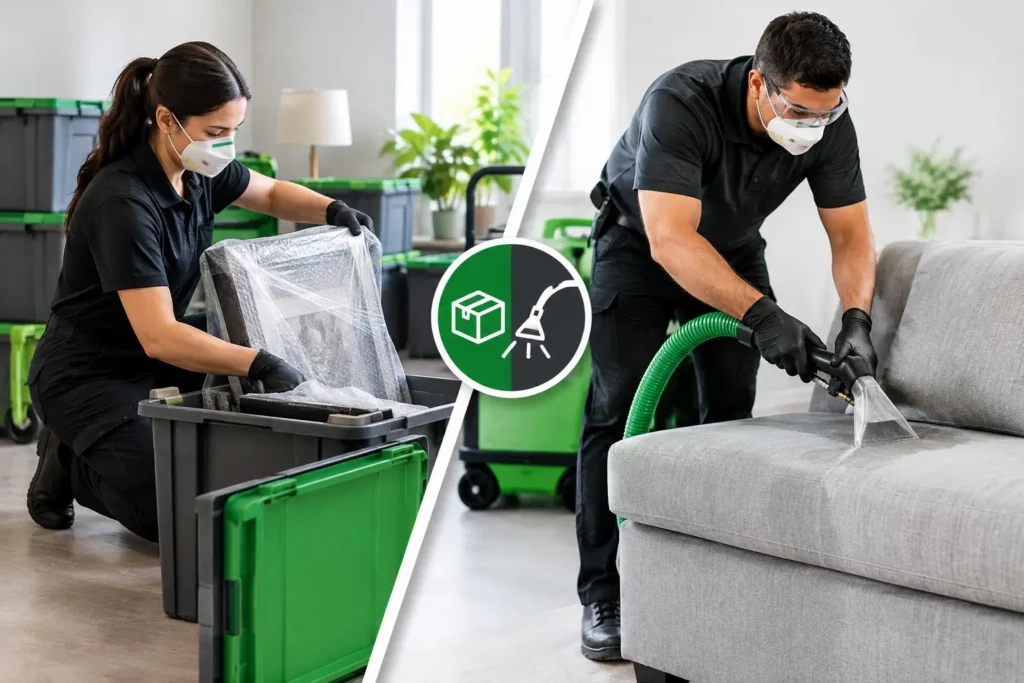
A wet living room, a smoke-affected office, or a mold discovery can leave more than the building materials at risk. Furniture, electronics, documents, clothing, and inventory may all need immediate attention. The choice between pack out versus onsite cleaning affects how quickly the property can be stabilized, how well contents can be restored, and how clearly the loss is documented for insurance purposes.
Neither approach is automatically better. The right decision depends on the type of damage, the condition of the building, the value and sensitivity of the contents, and whether the affected area can be safely used during restoration.
What Is a Pack Out?
A pack out is the controlled removal of personal property or business contents from a damaged area. Restoration professionals inventory, photograph, label, pack, and transport eligible items to a secure cleaning or storage facility. There, contents can be evaluated, cleaned, deodorized, dried, repaired, and stored until the property is ready for their return.
Pack-outs are common after significant water damage, fire and smoke damage, mold contamination, sewage backups, or large reconstruction projects. They are also useful when flooring, drywall, cabinetry, or other building components must be removed and replaced. Clearing the affected space gives mitigation and reconstruction crews access to do their work properly without placing contents at further risk.
A professional pack out is not simply moving boxes out of the way. Each item should be handled through an organized chain of custody. Detailed inventories, condition documentation, room-by-room labeling, and photo records help property owners understand what was removed and help support clear communication with the insurance carrier and adjuster.
When a Pack Out Makes Sense
A pack out is often the stronger option when the building itself is unsafe, heavily contaminated, or undergoing extensive demolition and reconstruction. For example, if a supply-line leak has saturated flooring and walls across several rooms, furniture may need to be removed so technicians can dry structural materials thoroughly and prevent hidden moisture from remaining behind.
It can also be appropriate after a fire. Smoke residues can travel well beyond the room where the fire started, settling into upholstery, textiles, cabinets, electronics, and stored belongings. Offsite cleaning may allow for more controlled deodorization and specialized treatment than a damaged home or commercial space can provide.
For commercial properties, a pack out can protect furniture, records, equipment, and inventory while repairs proceed. It may also help property managers keep restoration work organized across multiple units or common areas.
What Is Onsite Cleaning?
Onsite cleaning means restoration technicians clean and treat contents where they are located. This approach is generally used when items can remain safely in place, the damage is limited, and the building has been stabilized enough to support the work.
For a minor water event contained to one area, onsite cleaning may be practical. Affected surfaces and contents can be evaluated, cleaned, dried, and protected without the added handling involved in transporting them elsewhere. The same can be true for light smoke residue in a room that is otherwise structurally sound and accessible.
Onsite cleaning is often less disruptive for items that are large, built in, difficult to move, or closely tied to daily operations. Examples can include certain office systems, display fixtures, appliances, large furniture, and contents that need to remain available to the owner when conditions allow.
The Limits of Cleaning Items in Place
Convenience should not override proper restoration conditions. Cleaning contents onsite may not be suitable if humidity remains elevated, demolition is underway, contamination is present, or the area cannot be secured from dust and debris. An item can look clean at the end of the day yet still be exposed to odor, moisture, or construction-related damage if it stays in the wrong environment.
There are also practical limitations. Specialized cleaning systems, controlled drying environments, and deodorization equipment may be more effective at a dedicated facility. Delicate textiles, electronics, documents, artwork, and heavily smoke-affected items often require methods that cannot be replicated in a partially damaged structure.
Pack Out Versus Onsite Cleaning: The Key Decision Factors
The decision begins with a careful inspection, not a one-size-fits-all recommendation. Restoration teams assess the source and category of water, the spread of smoke or soot, visible contamination, moisture conditions, structural damage, and the nature of the affected contents.
Safety and contamination come first. Contents exposed to sewage, mold growth, asbestos-related disturbance, or extensive fire residue may need specialized handling. Some items can be restored, while others may be unsafe or impractical to clean. Technicians should follow applicable safety practices and established restoration protocols rather than relying on surface appearance alone.
The scope of building repairs matters. If a kitchen must be fully removed after a major leak, leaving dishes, small appliances, and furnishings nearby can slow the project and increase the chance of additional damage. A pack out provides a clear work area and allows reconstruction to move forward more efficiently.
The contents themselves influence the method. A solid wood table, a laptop, a family photo album, and upholstered furniture each respond differently to water, smoke, and cleaning processes. Some items benefit from immediate onsite stabilization. Others need controlled offsite drying, ultrasonic cleaning, deodorization, or specialized restoration evaluation.
Access and continuity also matter. A homeowner may be able to remain in part of the home during a contained loss. A business may need certain records or equipment available to continue operating. When conditions are safe, selective onsite cleaning or a partial pack out can reduce disruption while still protecting the property.
Documentation Protects the Recovery Process
Whether items stay onsite or leave the property, documentation is essential. Before cleaning or moving begins, the restoration team should create a clear record of affected contents and their observable condition. Photos, 360-degree imaging, itemized inventories, moisture documentation, and room designations create an organized picture of the loss.
For insurance-related restoration, this record can help establish what was affected and what actions were taken to prevent further damage. It also gives homeowners, property managers, adjusters, and restoration teams a shared reference point throughout the project.
Property owners can help by identifying high-value, sentimental, or business-critical items early. Point out antiques, original documents, specialty equipment, and items that may require separate evaluation. Do not attempt to clean smoke residue, mold-affected belongings, or wet electronics without professional direction. Improper handling can spread residues, set stains, or make restoration more difficult.
A Hybrid Approach Is Often the Best Answer
Many losses do not require an all-or-nothing choice. A restoration plan may include onsite cleaning for stable, low-risk items and a pack out for contents that need specialized care or would interfere with repairs.
For instance, after a localized plumbing leak, unaffected furniture in an adjacent room may be cleaned and protected in place. Water-affected rugs, electronics, and contents from the damaged room may be transported for evaluation and treatment. This targeted approach can control costs, reduce handling, and keep the mitigation process moving without compromising the condition of the contents.
The same principle applies to fire restoration. Lightly affected hard surfaces may be cleaned onsite, while textiles, soft goods, and items with embedded smoke odor are handled offsite. The right plan follows the evidence found during inspection, not a preset preference for one method.
What Property Owners Should Expect From a Professional Contents Plan
A qualified restoration contractor should explain why a pack out, onsite cleaning, or hybrid approach is recommended. You should know what will be moved, how items will be identified, where they will be stored, how cleaning decisions are made, and how the return process will be coordinated with reconstruction.
At Apollo Construction & Renovation Corp., contents handling is coordinated with mitigation, documentation, and rebuilding so the property recovery plan stays organized from the first inspection through final placement. For homeowners and commercial decision-makers across the Mid-Atlantic, that coordination can reduce unnecessary delays during an already stressful loss.
The immediate goal after property damage is not to move everything or clean everything as fast as possible. It is to protect what can be saved, create safe conditions for restoration, and make decisions based on the damage in front of you. A careful contents assessment at the start can prevent avoidable loss and help the entire recovery move forward with greater confidence.
Every property and insurance policy is different. Contact Apollo to discuss the work your property may need; your insurer determines coverage.