
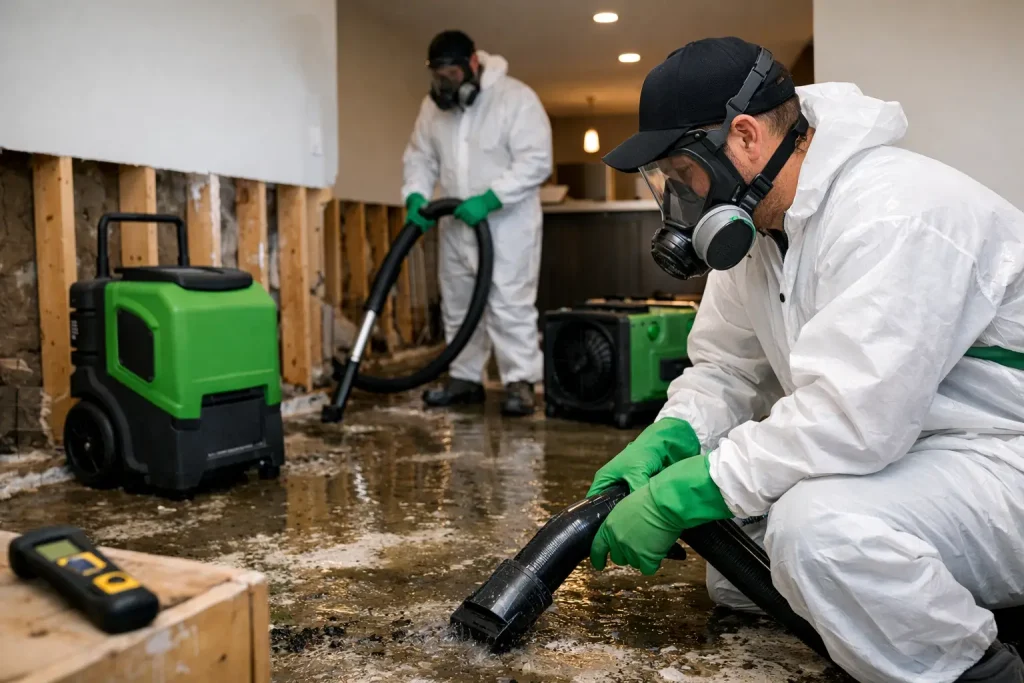
A sewage backup is not a standard plumbing cleanup. When contaminated water reaches flooring, walls, contents, or HVAC-adjacent areas, a qualified sewage backup cleanup contractor can help control the damage, protect occupants, and create the documentation needed for a well-organized recovery. The first few hours matter, but safety matters more: keep people and pets away from the affected area and arrange professional help as soon as possible.
Sewage-related losses can be caused by a blocked main line, failed sewer lateral, overwhelmed municipal systems, toilet overflows involving waste, or stormwater entering through drains. The visible water is only part of the problem. Contaminants can spread into porous materials, beneath flooring, and behind baseboards, where incomplete drying or improper removal can lead to continuing damage.
Why Sewage Backups Require a Different Response
Water losses are often categorized by their source and level of contamination. Sewage and wastewater events generally require more stringent handling than a clean supply-line leak. A restoration team must assess where the water traveled, identify materials that may be affected, establish containment when appropriate, remove unsalvageable porous materials, and thoroughly clean and dry the remaining structure.
This is not a situation for a shop vacuum, household fans, or surface disinfectant alone. Improper cleanup can spread contaminants to unaffected rooms or leave moisture trapped below finished materials. In commercial properties, an unplanned response can also interrupt operations, affect tenants, and complicate communication with property managers and insurers.
A professional contractor brings restoration procedures, trained technicians, protective equipment, commercial extraction and drying equipment, and a defined project plan. Just as important, the team should communicate clearly about what is being removed, what can potentially be restored, and what the next phase of repairs will involve.
What to Do Before the Cleanup Team Arrives
Your priority is to prevent exposure and limit additional property damage without putting yourself at risk. If water is still entering the building, contact a qualified plumber or the appropriate utility authority to address the source. Do not enter standing water if electrical hazards may be present, and do not attempt to remove contaminated materials without proper protection and training.
If it is safe to do so, move unaffected valuables from nearby dry areas. Avoid walking through the affected space and then into clean rooms, as footwear can track contaminants throughout the property. Take a few photographs or videos from a safe location before cleanup begins. These initial images can help establish the extent of the loss for your own records and insurance claim.
For a condominium, apartment building, office, retail space, or other managed property, notify the property manager promptly. A backup may involve common plumbing systems or affect neighboring units, so early coordination can reduce delays.
What a Sewage Backup Cleanup Contractor Should Handle
The right contractor does more than extract water. The work should begin with an inspection that identifies the water source, affected rooms, material types, and likely migration paths. Moisture meters, thermal imaging, and detailed moisture mapping can help reveal conditions that are not visible on the surface.
Emergency Extraction and Containment
After evaluating the site, technicians extract contaminated water and establish controls to limit cross-contamination. Depending on the layout and extent of damage, this may include isolating the work area, using protective barriers, and managing airflow carefully during demolition and drying.
The goal is not to make the room look clean quickly. It is to control the loss correctly so contaminants and moisture do not travel farther through the building.
Removal of Affected Materials
Porous materials that have absorbed contaminated water may not be suitable for restoration. Carpet, padding, insulation, certain drywall sections, particleboard cabinetry, and other absorbent materials may need removal based on the category of water, duration of exposure, and level of contamination.
The decision is not identical in every loss. A small, quickly addressed event may affect fewer materials than a backup that sat for hours or traveled beneath multiple floor finishes. A knowledgeable contractor explains the reasoning behind each recommendation and documents the affected conditions before materials are removed.
Cleaning, Drying, and Verification
Once affected materials are removed as needed, the remaining structural surfaces are cleaned using appropriate restoration methods. Professional drying equipment is then positioned based on the structure, moisture readings, and environmental conditions. Technicians should monitor progress, adjust equipment when necessary, and document drying results rather than relying on appearance alone.
Drying is especially important around wall cavities, subfloors, framing, and cabinets. A floor may feel dry underfoot while moisture remains below it. Thorough monitoring helps determine when the structure is ready for reconstruction.
Reconstruction Under One Project Plan
Cleanup is only the first stage. Many sewage backups require drywall replacement, insulation, flooring, baseboard installation, cabinet repair, painting, plumbing work, or more extensive rebuilding. Working with a full-service restoration and reconstruction contractor can reduce the handoffs between separate vendors.
Apollo Construction & Renovation Corp. coordinates mitigation, documentation, and reconstruction so property owners can move from emergency response to completed repairs with a clearer plan. For homeowners and property managers, that continuity can make a stressful loss easier to manage.
Documentation Can Make the Recovery More Organized
Insurance coverage for sewer and drain backups depends on the policy, endorsements, cause of loss, deductibles, and other policy-specific conditions. A contractor should not promise coverage or tell you what your insurer will approve. What a qualified restoration partner can do is provide clear, timely documentation that supports the claim process.
Useful project records may include initial photographs, 360-degree imaging, moisture readings, material inventories, affected-area diagrams, daily drying logs, and detailed estimates for mitigation and repairs. This information gives adjusters and property owners a clearer picture of what occurred and why specific work was necessary.
Notify your insurer promptly after the loss, follow the reporting instructions in your policy, and keep copies of communications, invoices, and photos. If emergency work is needed to protect the property, waiting for every claim detail to be resolved can allow damage to worsen. A restoration contractor experienced in insurance-related losses can help organize the information while the claim is reviewed.
Choosing the Right Contractor After a Backup
When comparing providers, look beyond a low initial estimate or a promise to finish quickly. Sewage cleanup requires judgment, safety controls, and careful documentation. Ask whether the company performs both mitigation and reconstruction, how it documents moisture and affected materials, and how it communicates with property owners, managers, and insurance representatives.
You should also confirm that the contractor is licensed and insured for the work being performed and follows recognized restoration and workplace safety practices. IICRC-based protocols, trained technicians, and OSHA-compliant jobsite procedures are meaningful indicators that the team understands the seriousness of a contaminated-water loss.
For commercial and multifamily properties, ask about project coordination. There may be tenant notices, access restrictions, after-hours needs, contents handling, or phased repairs to consider. The best approach depends on the building, the scale of damage, and whether operations must continue during restoration.
Preventing the Next Sewer Backup
Some backups are caused by sudden failures that cannot be predicted, but routine maintenance can reduce certain risks. Have recurring drain issues evaluated instead of repeatedly relying on temporary clearing. Keep grease, wipes, hygiene products, and other non-flushable materials out of drains. Properties in areas with recurring stormwater pressure may also benefit from a plumbing professional’s assessment of drainage and backflow protection options.
After a prior loss, inspect the completed repairs and keep the restoration documentation in a safe place. Records of the cause, affected areas, and completed work can be useful if questions arise later or if you need to review maintenance needs with a property manager, plumber, or insurer.
A sewage backup can disrupt a home or business without warning, but the response does not need to be chaotic. Keep the area isolated, address the source, document conditions safely, and bring in a qualified restoration team that can manage cleanup and rebuild with care.
Every property and insurance policy is different. Contact Apollo to discuss the work your property may need; your insurer determines coverage.