
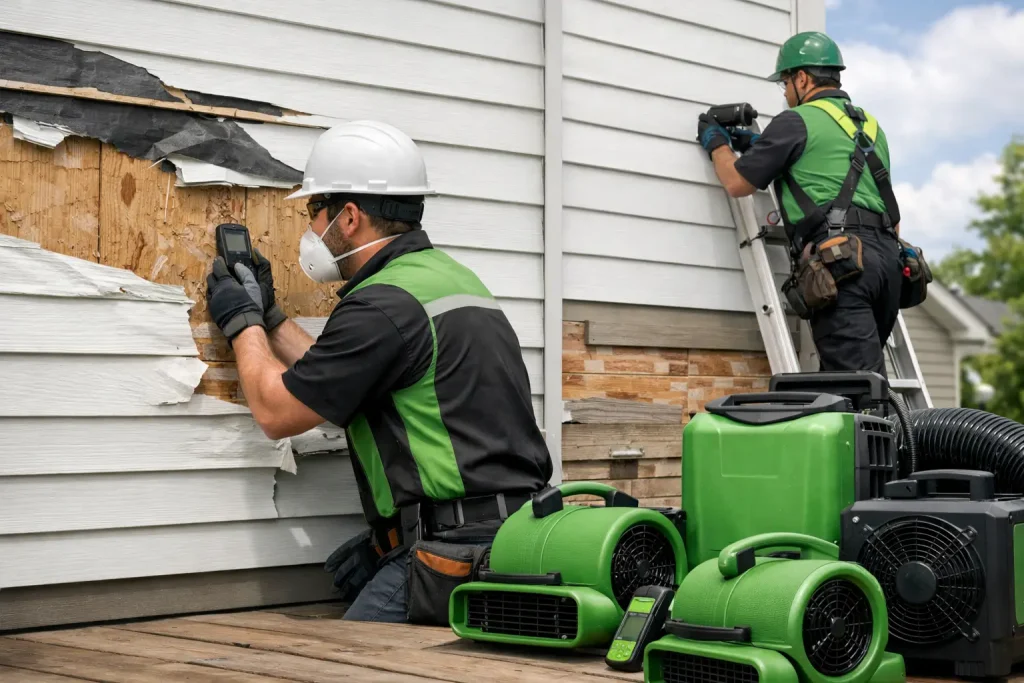
A loud storm passes, the wind dies down, and then you notice a panel hanging loose or missing from the side of the building. That is when wind damage siding repair becomes more than a cosmetic issue. Even a small opening in the exterior can let in rain, expose underlayment, and create a much larger restoration project if it is not addressed quickly.
Siding is your property’s first shield against weather. When wind breaks that shield, the damage can spread quietly behind the surface. Homeowners, property managers, and commercial owners often focus first on what they can see from the yard, but the bigger concern is usually what the wind and rain may have done underneath.
Why wind damage siding repair should happen quickly
Wind rarely damages just one piece in isolation. A strong gust can loosen fasteners, crack panel edges, pull sections away from the wall, and create pressure points that weaken surrounding materials. Vinyl can unhook. Fiber cement can crack or shift. Aluminum can dent and separate at seams. Wood siding can split, lift, or begin taking on moisture after the storm.
Once siding is compromised, water intrusion becomes the next risk. Moisture can move behind the cladding and affect sheathing, insulation, framing, drywall, and interior finishes. What starts as a repair to the exterior envelope can turn into a mitigation and reconstruction issue if the opening is left exposed through another rain event.
That is why response time matters. Fast action helps protect the structure, reduces the chance of hidden moisture, and preserves documentation if an insurance claim is involved.
What wind damage looks like after a storm
Some storm damage is obvious. Entire panels may be missing, corners may be flapping, or pieces may be found in the yard. Other signs are easier to miss, especially from the ground.
Look for siding that appears warped, lifted, cracked, or detached at the seams. You may also notice trim blown loose around windows and doors, exposed house wrap, bent flashing, or small impact marks from wind-driven debris. On commercial buildings and multifamily properties, damage can be spread across multiple elevations, especially at corners and rooflines where wind pressure is strongest.
Inside the property, fresh staining, a draft near exterior walls, peeling paint, or damp drywall can point to a siding failure that allowed water in during the storm. If the building already has roof or gutter damage, the likelihood of related siding damage goes up.
Start with safety, then protect the opening
The first step is not a ladder. It is a safe visual assessment from the ground. After a storm, siding damage may be paired with downed power lines, unstable roof edges, broken glass, or debris overhead. If conditions are not safe, keep clear of the area and call a qualified restoration or exterior repair contractor.
If a section is open and rain is expected, temporary protection may be needed to reduce further damage. That could include securing loose material or professionally installing temporary coverings until permanent repairs can begin. The goal is simple: stop more water from entering the wall assembly.
For larger losses, especially on commercial properties or buildings managed by HOAs, quick site stabilization is as important as the repair itself. Protecting the envelope early can make a major difference in the overall scope of reconstruction.
Document the damage before repairs begin
Good documentation helps everyone involved, especially if the storm damage may be covered by insurance. Take clear photos of all affected elevations, close-ups of broken or missing panels, and any related interior signs such as moisture stains or wet materials. If debris struck the siding, photograph that too.
It also helps to note the date of the storm, when the damage was discovered, and whether any temporary measures were put in place. Professional inspection reports, moisture readings, and condition photos can strengthen the record and help support the repair scope.
This is one area where experienced restoration contractors add real value. Detailed documentation, organized inspections, and clear communication can help move the process forward with fewer surprises.
What a proper wind damage siding repair involves
A true repair is not just snapping a new panel into place and calling it done. The damaged section has to be evaluated in context. Contractors should inspect nearby siding, trim, flashing, and the wall assembly for hidden issues caused by wind uplift or water intrusion.
Inspecting beneath the surface
If siding pulled away during the storm, the underlayment and sheathing may have been exposed. That means the repair may involve more than exterior materials. Wet insulation, damaged wrap, deteriorated sheathing, or compromised fasteners all need to be identified before new siding is installed.
When moisture is present, drying and mitigation may be necessary before reconstruction starts. Skipping that step can trap moisture inside the wall and lead to staining, material deterioration, or microbial growth later.
Matching materials and restoring performance
The visible part of wind damage siding repair is material replacement, but matching matters. Color fade, discontinued product lines, and age-related wear can make exact replacement difficult. In some cases, a localized repair blends well. In others, a full elevation or broader replacement may be the better solution for both appearance and weather protection.
The right approach depends on the siding type, the extent of damage, and product availability. Vinyl often allows sectional replacement if surrounding materials remain intact. Fiber cement and engineered wood may require more precise removal and reinstall work to maintain water management details. Older aluminum or discontinued profiles can create matching challenges that affect repair strategy.
Reinstalling with the right attachment and clearance
Storm repairs should restore the siding’s ability to handle future weather, not just improve appearance. That means proper fastening, spacing, overlap, flashing integration, and manufacturer-aligned installation practices all matter. Siding installed too tightly, too loosely, or without the right clearances is more likely to fail again under wind load.
This is where craftsmanship and inspection discipline make a difference. A rushed patch may look fine at first and still leave the building vulnerable.
Repair or replace? It depends on the damage pattern
Not every storm calls for full replacement. If damage is limited to one area and matching material is available, a targeted repair may be efficient and cost-effective. On the other hand, if multiple elevations are affected, water has entered the wall system, or the siding is older and brittle, broader replacement may make more sense.
For multifamily and commercial properties, consistency across elevations, tenant disruption, and long-term maintenance planning also come into play. A repair that saves money today but leaves mismatched materials or recurring vulnerabilities may not be the best operational choice.
That is why a detailed inspection matters more than assumptions. The right scope should reflect both visible damage and what conditions exist behind the siding.
Insurance considerations for storm-related siding damage
When wind damages siding, insurance questions often follow quickly. Coverage depends on the policy, the cause of loss, the age and condition of materials, and whether there is related damage to other parts of the property. Accurate inspection and documentation are essential.
Property owners should avoid making permanent repairs before the damage is thoroughly documented, unless emergency work is necessary to prevent further loss. Temporary protection is usually the immediate priority. After that, a clear repair scope, supporting photos, and records of storm-related conditions can help support the claim process.
For many owners, the most helpful partner is a contractor who understands both construction and insurance documentation. When inspections, photos, moisture findings, and repair details are organized from the start, the process tends to move more efficiently.
Choosing the right contractor for wind damage siding repair
Storm repair work should be handled by a licensed, insured contractor with experience in exterior restoration, water intrusion risk, and insurance-related documentation. Siding damage is often connected to roofing, gutters, flashing, trim, and interior moisture issues, so it helps to work with a company that can evaluate the full picture rather than one visible section.
Ask how the contractor will inspect for hidden moisture, what temporary protection they can provide, and whether they can document the loss in a way that supports claim review. For larger or more complex storm events, that level of organization matters.
Apollo Construction & Renovation Corp. approaches storm-related exterior damage with that broader restoration mindset, helping property owners move from emergency protection to complete repair with clear communication throughout the process.
Protect the property before the next storm arrives
The real risk with wind-damaged siding is not just what happened during the last storm. It is what can happen before the next one. A loose panel, a broken seam, or exposed sheathing can give the weather a second chance to do more damage. Acting quickly, documenting thoroughly, and repairing the assembly correctly helps protect both the building and the recovery process. If your siding has been hit by wind, treat it like the building envelope issue it is and get it inspected before a small opening becomes a much larger loss.
Every property and insurance policy is different. Contact Apollo to discuss the work your property may need; your insurer determines coverage.