
A pipe bursts behind a wall, a roof leak soaks an older ceiling, or fire damage exposes damaged flooring. The immediate question is often who pays for asbestos removal when a repair project uncovers a material that cannot be safely disturbed. The answer depends on why the asbestos must be removed, who owns the property, and what the insurance policy actually covers.
Asbestos abatement is not a routine demolition task. When suspect materials are damaged or need to be disturbed during repairs, proper testing, containment, removal, disposal, and clearance procedures can become necessary to protect occupants and workers. A clear, well-documented scope helps property owners understand both the safety requirements and the available paths for payment.
Who Pays for Asbestos Removal After a Covered Loss?
When asbestos-containing material is damaged by a sudden, covered event, the property insurance policy may pay for the reasonable cost to remove it when removal is necessary to access, mitigate, or repair the covered damage. For example, a covered water loss may require the removal of asbestos-containing floor tile, pipe insulation, or ceiling texture before wet materials can be safely addressed and the affected area rebuilt.
This does not mean every asbestos discovery is automatically covered. Most property policies are designed to respond to direct physical damage caused by a covered peril, not to pay for pre-existing hazardous materials that were intact before the loss. The key question is usually whether asbestos abatement is directly required because of the covered damage and repair work.
Coverage also depends on policy limits, endorsements, exclusions, deductibles, and the insurer’s determination of the loss. Some policies include a specific pollution, contaminant, or debris-removal limit that affects asbestos-related expenses. Others may address the work under building ordinance or law coverage when current regulations require a different repair approach. The policy language and the documented facts of the loss matter more than a general assumption that insurance will or will not pay.
When the Property Owner Pays
A homeowner, commercial property owner, or association commonly pays out of pocket when asbestos removal is elective, preventive, or unrelated to a covered event. If intact asbestos-containing materials are found during a planned kitchen remodel, flooring replacement, or renovation, the renovation budget generally carries the cost.
The same is often true when a building inspection identifies asbestos in materials that are still in good condition and will not be disturbed. Asbestos is not automatically an emergency simply because it is present. The risk increases when materials are friable, damaged, deteriorating, or likely to be disturbed by demolition, repairs, or renovation work.
Owners may also be responsible when a loss falls below the deductible, is excluded by the policy, or results from a long-term condition rather than a sudden and accidental event. A slow leak that has gone unaddressed, for instance, can create coverage questions that differ from a sudden plumbing failure. Every claim should be reviewed on its individual facts.
Landlords, Tenants, and Commercial Properties
For rental properties, the owner or landlord is typically responsible for maintaining the building and arranging required asbestos abatement in common areas and building systems. Lease terms can affect responsibility for improvements inside a tenant’s space, but a tenant should never disturb suspected asbestos-containing materials or arrange unqualified removal.
In commercial buildings, responsibility may involve the property owner, tenant, management company, and their respective insurers. A triple-net lease, for example, may assign certain maintenance or repair costs to the tenant, while the owner remains responsible for structural components or environmental compliance. The lease, insurance requirements, and cause of damage should be reviewed before work begins beyond emergency stabilization.
For condos and HOAs, the dividing line may be the association’s governing documents. Damage to a shared roof, corridor, riser, or other common element may be handled differently from damage inside an individual unit. Early coordination between the unit owner, association, carrier, and restoration contractor prevents delays and conflicting scopes.
What Documentation Supports an Insurance Claim?
Asbestos-related costs are easier to evaluate when the project file clearly shows why the work was necessary. After a covered event, documentation should connect the damage, the suspect material, the testing results, and the required repair path.
A complete file commonly includes photos of the loss, moisture readings or other mitigation records, a diagram of affected areas, laboratory results from properly collected samples, an abatement proposal, and an itemized reconstruction estimate. If water, fire, or storm damage made materials unsafe to retain or prevented access to damaged building components, that relationship should be documented clearly.
This is especially important in older homes and commercial buildings, where materials such as resilient flooring, mastic, drywall joint compound, ceiling texture, pipe insulation, duct insulation, and roofing components may require testing before disturbance. Age alone does not confirm asbestos, and visual inspection alone cannot rule it out. Testing by an appropriate professional provides the information needed to plan work safely.
Apollo Construction & Renovation Corp. helps property owners organize damage documentation, coordinate the mitigation and abatement sequence, and develop a clear repair scope for insurance review. Detailed project records reduce uncertainty for owners, adjusters, and property managers while helping the work move forward in the right order.
Why Abatement Cannot Be Treated as an Add-On
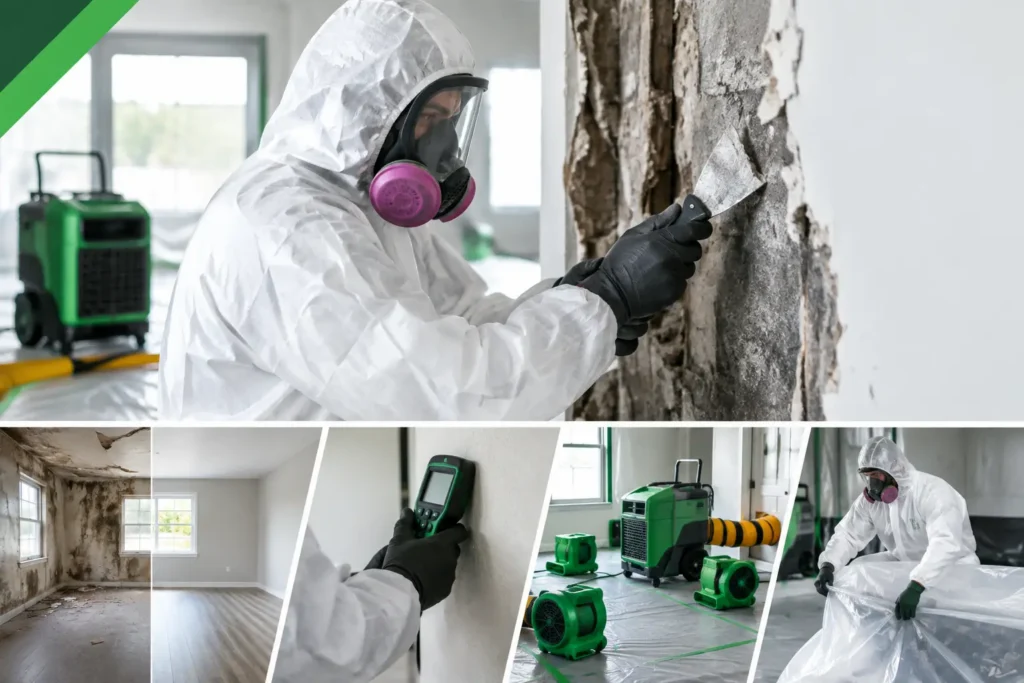
When asbestos is confirmed, the repair plan changes. Wet drywall cannot simply be removed, and damaged flooring cannot simply be pulled up, if those materials contain asbestos. The affected area may require controlled containment, specialized work practices, proper waste handling, and clearance steps before reconstruction can safely begin.
Trying to skip that process can spread contamination, delay the claim, and create a larger restoration issue. It can also complicate occupancy decisions for homes, offices, multifamily buildings, and retail spaces. The short-term temptation to save money by treating asbestos like ordinary debris can create far greater costs later.
The practical trade-off is timing. Testing and abatement can add steps before rebuilding, but they provide a defined path forward. A qualified restoration and reconstruction team can sequence emergency mitigation, environmental work, and repairs so that the property is protected without beginning demolition before the proper scope is known.
Steps to Take When Asbestos May Be Involved
If property damage has exposed or disturbed an older building material, pause any nonessential demolition in that area. Keep occupants away from visibly damaged suspect materials when possible, and do not sweep, sand, drill, cut, or remove them yourself.
Next, report the loss promptly if insurance may be involved. Explain the source of damage and identify the areas affected. Ask the carrier how it wants estimates, testing results, and abatement documentation submitted, but do not wait to address urgent conditions such as active water intrusion or unsafe structural damage.
A qualified contractor can help separate immediate stabilization from the environmental scope. For example, stopping a leak, extracting standing water, or securing a damaged roof may be urgent, while demolition of suspect materials should wait for the appropriate assessment. This approach protects the property while preserving the documentation needed for a fair coverage review.
The Bottom Line on Paying for Asbestos Removal
Insurance may pay when asbestos abatement is a necessary part of repairing a documented, covered loss. Owners generally pay when removal is part of elective renovation, deferred maintenance, or a condition unrelated to covered damage. Landlords, tenants, associations, and commercial owners may have additional obligations shaped by lease terms and governing documents.
The most useful next step is not guessing who will be responsible. Document the damage, avoid disturbing suspect materials, obtain appropriate testing, and build a clear scope that explains what must be removed and why. With the right safety process and organized claim support, a difficult discovery can become a manageable part of restoring the property.
Every property and insurance policy is different. Contact Apollo to discuss the work your property may need; your insurer determines coverage.