
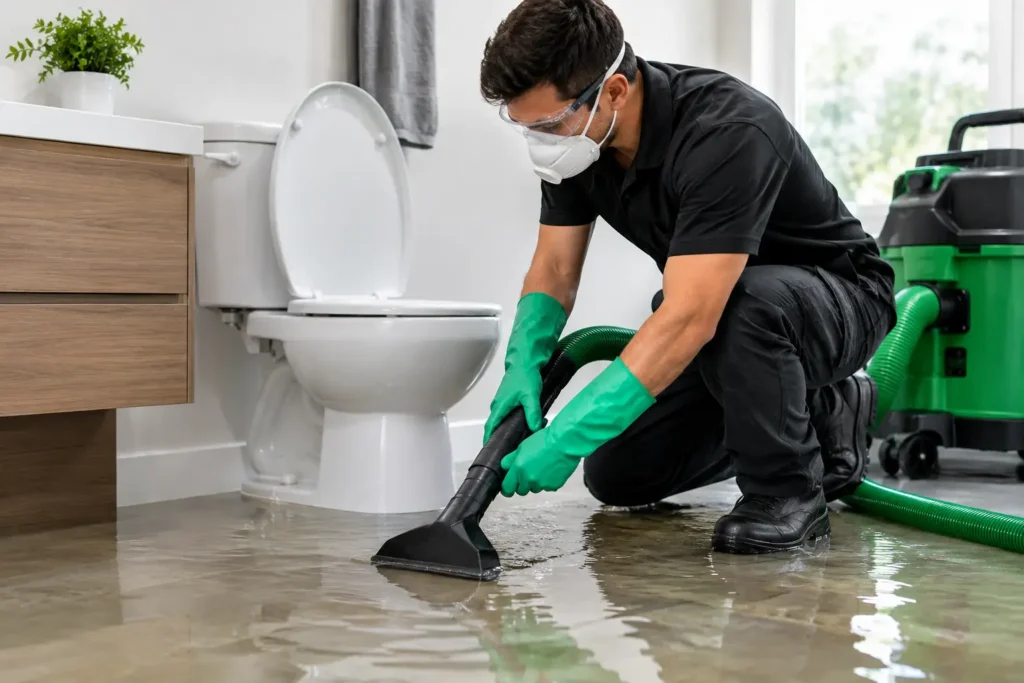
A toilet overflow can turn a routine plumbing issue into a property damage emergency in minutes. Toilet overflow cleanup is not just about removing visible water. The source of the overflow, the water’s contamination level, the flooring materials involved, and how long moisture remains in place all affect the right recovery plan.
A small overflow caught immediately may be limited to surface cleaning and targeted drying. An overflow that reaches carpet, baseboards, drywall, cabinets, lower-level ceilings, or neighboring units may require professional mitigation and documentation. Acting quickly protects your property, supports a cleaner restoration process, and helps prevent hidden moisture from becoming a larger repair.
What to Do Immediately After a Toilet Overflows
Your first priority is to stop additional water from entering the room. If it is safe and accessible, close the toilet’s shutoff valve behind or beside the fixture by turning it clockwise. If the toilet continues to run or the valve cannot be reached without stepping through contaminated water, shut off the home’s main water supply if you know where it is located.
Keep people and pets out of the affected area. Do not walk through the water and then across clean flooring, especially if the overflow may involve sewage or a drain backup. Contaminants can spread quickly through foot traffic, shoes, towels, and cleaning tools.
Avoid using electrical equipment near standing water. If water is close to outlets, extension cords, appliances, or electrical fixtures, leave the area undisturbed and contact a qualified restoration professional. Do not attempt to remove wet drywall, pull up flooring, or use household fans until the contamination risk and moisture path have been evaluated.
If possible, take a few clear photos or videos from a safe location before cleanup begins. Document the toilet, the affected rooms, visible water migration, damaged contents, and flooring. This early record can be useful when discussing the loss with a plumber, property manager, or insurance carrier.
Why Toilet Overflow Cleanup Is More Than Mopping
The right response depends on what came out of the toilet. A clean-water overflow caused by a supply line or tank issue is very different from an overflow caused by a clogged drain, a sewer backup, or a failed plumbing line carrying waste. Water that has contacted the toilet bowl, entered through a drain backup, or contains visible waste should be treated as contaminated.
Contaminated water can affect porous materials that cannot be reliably cleaned and restored, including carpet padding, insulation, some upholstered contents, and portions of drywall. Hard, nonporous surfaces may be cleanable when addressed promptly, but the decision should account for how long the water sat, where it traveled, and the material condition.
Moisture also moves beyond what is visible. It can wick into baseboards and walls, migrate beneath luxury vinyl plank or laminate flooring, soak into subflooring, and travel through floor penetrations into ceilings below. A dry-looking floor does not confirm that the assembly underneath is dry. Professional moisture mapping and thermal imaging help identify affected areas so drying and repairs are based on evidence rather than guesswork.
When to Call a Professional Restoration Team
Call for professional help immediately when the overflow involves sewage, drain backup water, multiple rooms, carpeted areas, or water that has entered walls, cabinets, or a lower level. The same applies when the source is unknown, when the toilet repeatedly overflows, or when a commercial restroom affects customers, tenants, employees, or common areas.
A qualified restoration team can coordinate the response after the plumbing source is controlled. That typically includes assessing contamination, extracting water with appropriate equipment, protecting unaffected areas, removing unsalvageable materials when necessary, cleaning and disinfecting affected structural surfaces, and establishing a documented drying plan.
For property managers and commercial owners, a fast, organized response can limit downtime and reduce disruption. In multifamily buildings, water may affect units below or adjacent to the source, so inspection should extend beyond the bathroom where the overflow began.
Apollo Construction & Renovation Corp. provides emergency mitigation and reconstruction support for residential and commercial property losses throughout Maryland, Northern Virginia, Washington DC, and Pennsylvania. The goal is not to rush through a surface cleanup. It is to stabilize the property, document the damage, and create a clear path to proper restoration.
What Professional Toilet Overflow Cleanup Should Include
A professional response begins with a site assessment. Technicians identify the likely water category, inspect materials in and around the affected area, and determine whether water has traveled below flooring or into nearby building components. The scope may be modest for a quickly contained, clean-water incident, or it may require controlled removal and specialized cleaning for a contaminated loss.
Water Extraction and Contamination Control
Standing water should be extracted promptly using professional equipment designed for water mitigation. Containment measures may be used to reduce cross-contamination between affected and unaffected rooms. Technicians use appropriate personal protective equipment and follow established safety practices while handling impacted materials.
For a sewage-related event, simply spraying a disinfectant over wet surfaces is not an adequate restoration plan. Contaminated porous materials may need removal, while salvageable structural materials require detailed cleaning and treatment. The work should be based on the actual conditions at the property, not a one-size-fits-all checklist.
Moisture Mapping and Structural Drying
After extraction and initial cleaning, technicians use moisture meters, thermal imaging, and other diagnostic tools to locate retained moisture. Drying equipment is then placed according to the affected materials and the conditions of the space. Floors, walls, subfloors, and cavities may require different drying approaches.
Technicians should monitor the drying process and document readings as materials return toward appropriate moisture levels. This matters because premature repairs can trap moisture behind new finishes, while unnecessary demolition can increase both cost and disruption. The right scope is based on verified damage and drying results.
Repairs and Reconstruction After Mitigation
Once the area is clean and dry, reconstruction can begin. Depending on the loss, this may involve replacing drywall, insulation, baseboards, flooring, vanity components, ceiling materials, or damaged finishes in rooms below. If a plumbing repair is needed, it should be completed before final restoration so the underlying cause is addressed.
Using one experienced contractor for mitigation and reconstruction can simplify communication and reduce handoffs. It also helps ensure that repair decisions reflect the documented conditions discovered during the initial response.
Should You File an Insurance Claim?
Coverage for toilet overflows varies by policy, cause of loss, endorsements, deductibles, and the resulting damage. A sudden accidental overflow may be handled differently from a long-term maintenance issue or a sewer backup. Property owners should review their policy and speak with their insurance carrier or agent for guidance on their specific situation.
Before repairs begin, keep photos, videos, invoices, mitigation records, and a list of affected rooms and contents. Detailed documentation can help explain the extent of the damage. A restoration contractor experienced in insurance-related property losses can provide moisture records, drying documentation, photos, and an organized repair scope to support the claims process, without making assumptions about coverage.
Avoid These Common Cleanup Mistakes
The most common mistake is treating every toilet overflow like a minor spill. Mopping visible water while ignoring wet baseboards, flooring seams, or the room below can leave moisture and contamination behind. Another is using household fans before the affected materials have been assessed, which can spread contaminants in a sewage-related loss.
Do not delay because the water seems to have stopped. The plumbing issue may still be active, and trapped moisture becomes harder to address as time passes. It is also wise to avoid replacing flooring or closing walls until drying has been verified and the source has been corrected.
A toilet overflow is stressful, but the next steps can be straightforward: stop the water if it is safe, isolate the area, document what you see, and bring in qualified help when contamination or hidden moisture is possible. A careful response now helps protect the structure, the people using the space, and the quality of the repairs that follow.
Every property and insurance policy is different. Contact Apollo to discuss the work your property may need; your insurer determines coverage.