
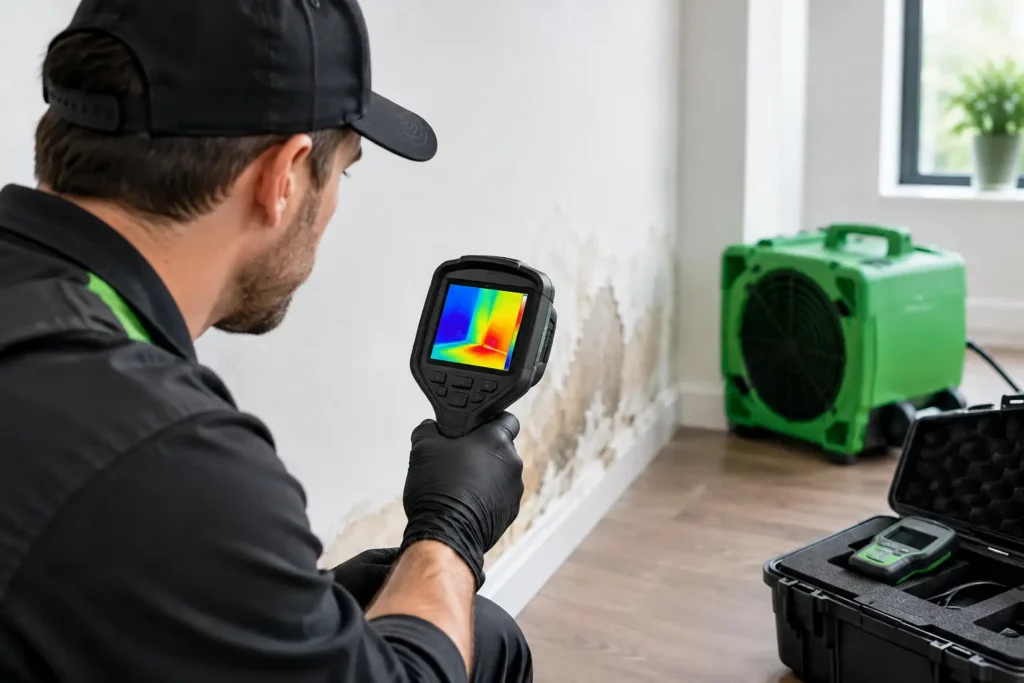
A ceiling stain or wet carpet rarely tells the full story after a leak, overflow, roof failure, or storm. A moisture mapping inspection review identifies where water has traveled, which materials are affected, and what must be dried, removed, or monitored before repairs begin. That documentation turns a visible problem into a clear restoration plan.
For homeowners, property managers, and commercial owners, this process can prevent a common and costly mistake: repairing surfaces before the underlying structure is dry. Fresh paint, new flooring, or replaced drywall will not solve trapped moisture behind a wall, beneath a floor, or inside an insulation cavity.
What Is Moisture Mapping?
Moisture mapping is a structured inspection process used to locate, measure, and document moisture in building materials. Restoration technicians establish a dry baseline in unaffected areas, then compare readings throughout the impacted space. The results are recorded in a diagram, digital report, photographs, and often supporting thermal or 360-degree imaging.
The finished map may show elevated readings in drywall, baseboards, hardwood flooring, subfloors, insulation, ceilings, cabinetry, or structural framing. It helps define the actual boundaries of a loss, which are often wider than the area that looks wet.
Water does not stay where it first appears. It follows gravity, moves through seams and openings, wicks into porous materials, and can travel below finished surfaces. A supply-line leak under a kitchen sink, for example, may affect the cabinet base, adjacent drywall, flooring, subfloor, and the ceiling below. Moisture mapping helps the restoration team follow that path with evidence rather than assumptions.
Why a Moisture Mapping Inspection Review Matters
An inspection is only valuable when the findings guide the next decision. The review is where the team evaluates the map, determines the drying strategy, and explains what the readings mean for the property.
This is especially important during insurance-related restoration work. Clear moisture documentation can establish the observed condition at the time of inspection, support the scope of mitigation, and show why specific drying equipment, material removal, or monitoring visits are necessary. It does not determine coverage, but it gives the property owner and insurer a factual record of the damage and response.
A thorough review also protects the building from premature reconstruction. Drywall may feel dry on the painted face while its lower edge, insulation, or framing remains wet. Carpet can look normal after a surface cleaning while the pad and subfloor hold moisture underneath. Without measured verification, concealed water can contribute to odors, material deterioration, mold growth, and repeat repairs.
What Technicians Check During the Inspection
A qualified restoration inspection begins with the source of water. If the leak, roof opening, plumbing issue, or exterior intrusion is still active, it must be addressed before drying efforts can succeed. The team then identifies the affected materials and evaluates how far moisture has migrated.
Moisture readings and material condition
Technicians use moisture meters to compare wet materials to dry control areas. Pin-type meters can measure moisture within wood and other materials, while non-invasive meters help scan broader areas with minimal disruption. Readings are interpreted in context because a number alone does not tell the entire story. Material type, construction method, ambient conditions, and the known dry standard all matter.
The inspection also considers whether materials are likely restorable. Some components can often be dried in place when addressed quickly and appropriately. Others may require removal because they are heavily saturated, contaminated, delaminated, structurally compromised, or unable to dry within acceptable conditions.
Thermal imaging as a screening tool
Thermal imaging can help identify temperature differences that may indicate moisture, missing insulation, or air movement. It is useful for directing the inspection toward areas that need further testing. However, a thermal camera does not measure moisture by itself. A cooler wall section can result from several conditions, so moisture meter readings are needed to confirm whether water is present.
This distinction matters. Good documentation relies on multiple observations, not a single image or device.
Hidden areas and migration paths
Water can move behind baseboards, under flooring, through ceiling cavities, and along framing. During a moisture mapping inspection review, technicians may check adjoining rooms, lower levels, closets, wall cavities, and areas beneath the original source. In commercial properties, the review may extend to neighboring suites, common areas, mechanical spaces, and multiple floors.
Not every affected assembly needs to be opened immediately. The right approach depends on access, moisture levels, material type, contamination level, and drying response. When readings and conditions support in-place drying, controlled equipment and daily monitoring may reduce disruption. When moisture is trapped or materials cannot be effectively dried, selective removal may be the safer and more efficient option.
How the Findings Shape a Drying Plan
Moisture mapping is not simply paperwork. It directs the mitigation work. Once the affected area is defined, the restoration team can place air movers, dehumidifiers, air filtration equipment, and other drying tools where they will be most effective. The plan should address both the wet materials and the room conditions required to dry them.
Daily or scheduled monitoring is equally important. Technicians recheck moisture readings, temperature, and relative humidity to confirm the drying process is moving in the right direction. Equipment may be adjusted as conditions change. A material that remains elevated after initial drying may require additional time, a different approach, or limited removal to reach concealed moisture.
This measured process is more reliable than setting equipment and returning days later without verification. It also helps avoid over-drying unaffected areas or using unnecessary equipment where it is not needed.
What Property Owners Should Expect in the Documentation
A professional moisture mapping report should be understandable even if you are not familiar with restoration terminology. It typically identifies the loss area, affected materials, moisture readings, dry standards or comparison areas, equipment used, and monitoring results. Photographs and diagrams help show where the damage was found and how conditions changed during mitigation.
Ask the restoration provider to explain the findings in plain language. You should understand which areas are wet, what can be dried, what may need removal, and what the next steps are before reconstruction begins. If the work involves an insurance claim, organized documentation can also help keep conversations with the adjuster focused on observed conditions and necessary restoration work.
Keep in mind that the extent of damage can change as materials are accessed. A wall cavity may reveal additional wet insulation, or flooring removal may show moisture in the subfloor. This is not automatically a sign that the initial inspection was incomplete. Some conditions cannot be confirmed without safely opening an assembly, especially after a hidden or long-term leak.
When to Schedule an Inspection
Do not wait for visible mold, persistent odors, or warped finishes to investigate suspected water intrusion. Schedule an inspection promptly after a burst pipe, appliance leak, sewage backup, roof leak, storm damage, overflowing fixture, or water intrusion from an adjacent unit. Fast action gives more materials a chance to be dried and can limit disruption to the property.
An inspection is also wise when you notice staining, soft drywall, buckling floors, peeling paint, unexplained humidity, or a musty odor. These signs do not always confirm active moisture, but they warrant a professional assessment before cosmetic repairs are made.
For properties across Maryland, Northern Virginia, Washington, DC, and Pennsylvania, Apollo Construction & Renovation Corp. uses documented moisture mapping, thermal imaging, and IICRC-based mitigation practices to evaluate water damage and guide the next phase of recovery. The goal is not to create unnecessary demolition. It is to identify the actual affected area, dry what can be saved, and document the work needed to restore the property properly.
When water affects a building, the most valuable next step is a clear picture of what is wet and what is not. Requesting a timely inspection gives you that picture before hidden moisture has the opportunity to become a larger repair.
Every property and insurance policy is different. Contact Apollo to discuss the work your property may need; your insurer determines coverage.