
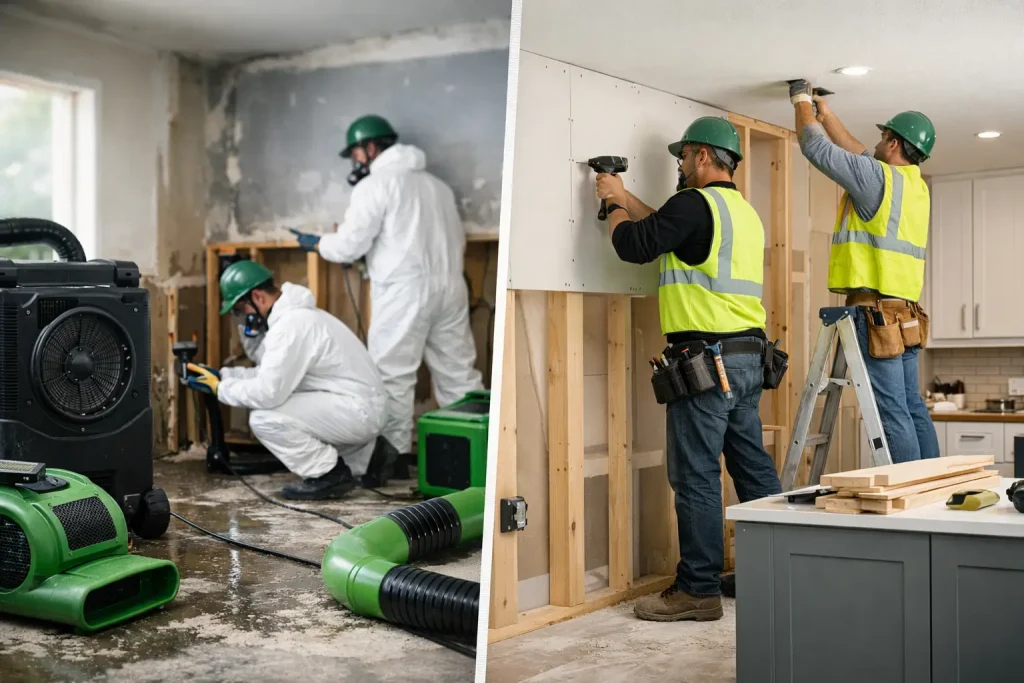
A burst pipe can soak insulation and flooring long before water becomes visible in the next room. A roof leak can travel through framing before it stains a ceiling. In these moments, understanding mitigation vs reconstruction services helps property owners make faster, better decisions. The two services work together, but they solve very different problems: mitigation stops damage from getting worse, while reconstruction restores what the loss damaged or required crews to remove.
For homeowners, property managers, and commercial property owners, knowing the difference can also make the insurance restoration process easier to follow. The work often happens in phases, with separate scopes, documentation, approvals, and schedules. A qualified restoration partner should explain each stage clearly, protect the property first, and keep the project organized through final repairs.
Mitigation vs Reconstruction Services: The Critical Difference
Mitigation is the emergency and stabilization phase of a property loss. Its purpose is to control the source of damage when possible, prevent secondary damage, remove unsalvageable materials, and create safe drying or cleaning conditions. It is not cosmetic repair work. It is the work that protects the building from becoming a larger, more expensive problem.
Reconstruction begins after the property is stable and the required mitigation work is complete. This phase rebuilds damaged areas and returns the structure to its pre-loss condition based on the approved scope of work. Reconstruction can include drywall, insulation, flooring, trim, cabinets, painting, roofing components, plumbing repairs, electrical work, and other construction services.
The simplest way to think about it is this: mitigation addresses the emergency; reconstruction addresses the recovery.
What Mitigation Services Typically Include
The exact mitigation plan depends on the cause, size, and duration of the damage. Water from a clean supply line requires a different response than a sewage backup, and fire damage may require a different combination of cleaning, odor control, demolition, and contents handling.
For water damage, mitigation often starts with stopping the source of water, extracting standing water, protecting unaffected areas, and documenting conditions. Technicians may use moisture meters, thermal imaging, and moisture mapping to identify wet materials behind walls, under flooring, or within ceilings. Air movement, dehumidification, and controlled drying are then used to reduce moisture to appropriate levels.
When materials cannot be properly dried, cleaned, or safely retained, crews may remove affected drywall, insulation, carpet, padding, baseboards, or other building components. This can feel alarming to a property owner, especially when a room appears more damaged after demolition. However, targeted removal is often necessary to expose concealed moisture, prevent mold growth, and allow the structure to dry correctly.
Fire and smoke mitigation may involve emergency board-up, roof tarping, soot cleaning, odor control, HEPA filtration, and removal of damaged materials. Storm mitigation can include temporary protection from rain and wind after roof, siding, window, or structural damage. In environmental loss situations, proper containment, safety procedures, and specialized remediation may be required before rebuilding can begin.
Mitigation should be guided by recognized restoration practices, safety requirements, and clear documentation. This documentation may include photographs, 360 imaging, moisture readings, equipment logs, material removal records, and detailed reporting that supports communication with the insurance carrier and adjuster.
Why mitigation cannot wait
Water does not remain in one place. It can wick into drywall, migrate below flooring, affect insulation, and create conditions for microbial growth. Smoke residue can continue to cause odor and surface damage when left untreated. A compromised roof can allow every additional rain event to expand the loss.
Prompt mitigation protects salvageable materials and helps establish a clear record of the initial condition. Waiting to act may increase repair costs, extend the project timeline, and create avoidable complications. Property owners should call for professional help as soon as it is safe to do so, particularly after significant water intrusion, fire and smoke damage, storm damage, or sewage contamination.
What Reconstruction Services Include
Once drying, cleaning, remediation, and required inspections are complete, reconstruction puts the property back together. The scope can be limited to one bathroom after a supply-line leak or extend to several rooms, a complete roof system, or major portions of a commercial building after a severe loss.
Reconstruction commonly includes replacing drywall and insulation, installing flooring, rebuilding cabinets or vanities, repainting, restoring trim, repairing framing, and reconnecting plumbing, electrical, or HVAC components. Exterior reconstruction may involve roofing, siding, gutters, windows, fascia, or structural repairs caused by wind, falling trees, or water intrusion.
This phase requires a construction mindset as well as restoration experience. Materials need to be selected, trades coordinated, permits addressed when necessary, and work completed in the proper sequence. For example, installing new flooring before moisture concerns are resolved can create a second loss. Closing walls before required inspections or testing are complete can delay the project and complicate documentation.
A full-service contractor can coordinate these moving parts under one organized project plan. That continuity matters because the team completing reconstruction should understand what was removed, why it was removed, and what conditions must be met before materials are replaced.
Reconstruction is not always identical replacement
Insurance restoration generally focuses on repairing covered damage according to the policy and approved scope. Depending on code requirements, material availability, matching concerns, and the age of the building, the final reconstruction plan may involve practical decisions along the way.
Some property owners also choose to make upgrades during reconstruction, such as selecting a different flooring style, updating a vanity, or improving a kitchen layout. These improvements may be possible, but they should be clearly separated from covered restoration work. A professional contractor can help define the restoration scope and identify any elective upgrades so expectations and costs remain transparent.
Why the Two Phases Are Often Separated
Property owners sometimes expect a contractor to begin rebuilding immediately after water extraction or debris removal. In most losses, that is too soon. Materials must reach acceptable drying conditions, contaminants may need to be addressed, and the insurance scope may need review before permanent repairs begin.
Separation between mitigation and reconstruction also allows each phase to be documented accurately. The mitigation team records emergency conditions, affected materials, drying progress, and stabilization work. The reconstruction team then develops the repair plan based on the completed mitigation, visible damage, approved scope, and any required inspections.
The timeline depends on the loss. A small, clean-water leak may dry quickly and require limited repair. A storm-related roof failure, a fire loss, or widespread water damage can involve longer drying periods, engineering input, environmental work, material lead times, and multiple trades. Clear communication is essential because a proper restoration process is not measured only by how quickly walls are closed. It is measured by whether the property is safely dried, correctly repaired, and built to last.
How Mitigation and Reconstruction Work With an Insurance Claim
Insurance carriers commonly need information from both phases. Mitigation documentation supports the emergency response and explains why drying equipment, material removal, containment, cleaning, or temporary protection was necessary. Reconstruction documentation supports the cost to repair or replace damaged building components.
A contractor should never promise a particular claim outcome, since coverage, deductibles, depreciation, exclusions, limits, and final payment decisions are determined by the policy and carrier. However, thorough documentation and professional communication can help make the process easier to understand. Detailed photos, measurements, moisture records, inspection findings, and organized estimates give adjusters a clearer picture of the work performed and the repairs required.
For commercial properties and managed communities, organized reporting is especially valuable. Property managers may need updates that help them coordinate occupants, protect common areas, track approvals, and plan around business operations. Homeowners benefit from the same clarity when they are trying to understand what happens next and when their living space will be usable again.
Choosing a Contractor for Both Phases
Using separate vendors for emergency mitigation and rebuilding is sometimes necessary, but it can create gaps in communication. The reconstruction contractor may not know why materials were removed, while the mitigation company may not be involved when repair decisions are made. A single qualified provider can reduce those handoffs and keep the project moving from initial inspection through final walkthrough.
Look for a contractor with emergency response capability, restoration training, strong construction experience, proper licensing and insurance, and a documented process for communicating with property owners and insurance representatives. The team should be able to explain what is urgent, what can wait, what will be removed, and what must happen before reconstruction starts.
Apollo Construction & Renovation Corp. provides mitigation, restoration, and reconstruction support for residential and commercial losses throughout the Mid-Atlantic region. From moisture documentation and emergency stabilization to full repairs across multiple trades, the focus is on protecting the property first and managing the recovery with clear communication and accountable workmanship.
When damage affects your property, do not wait for visible stains, odors, or warped materials to tell you the problem has grown. Request a professional assessment promptly, preserve the evidence of the loss, and let a qualified restoration team create a practical path from emergency mitigation to a fully repaired space.
Every property and insurance policy is different. Contact Apollo to discuss the work your property may need; your insurer determines coverage.