
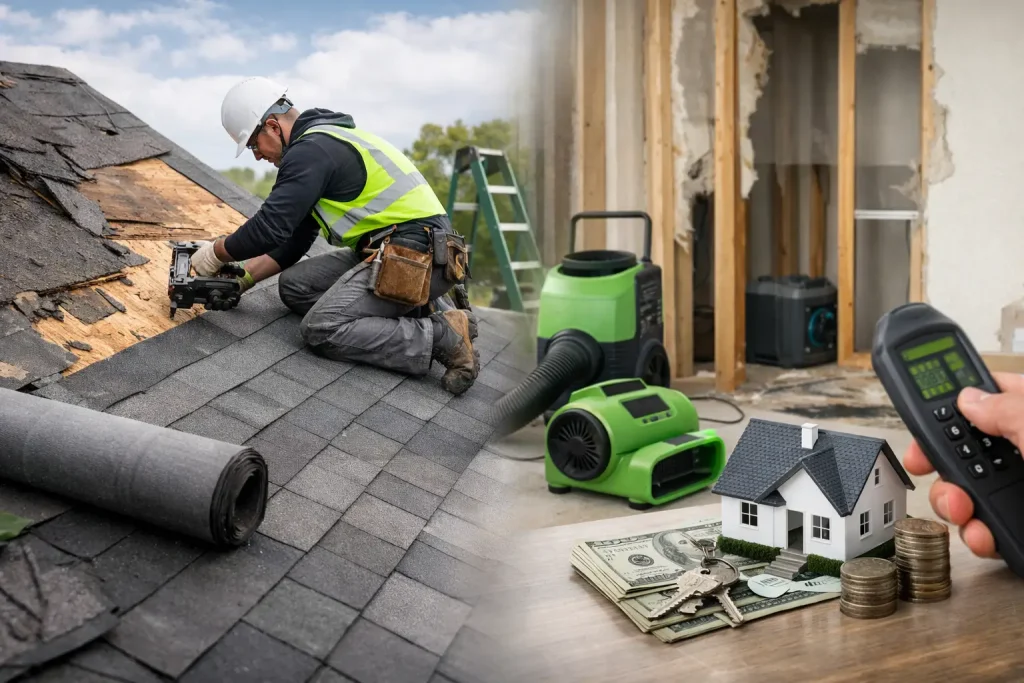
A leaking roof rarely shows up at a convenient time. For many property owners, the real stress starts after the inspection, when the scope is clear and the question becomes how to pay for it. Understanding roof replacement financing options early can help you make a sound decision, avoid delays, and protect the rest of the building from preventable damage.
The right path depends on why the roof needs replacement, how quickly the work must happen, and whether insurance is involved. A storm-damaged roof may follow a very different financial path than an aging roof that has simply reached the end of its service life. That distinction matters because it affects both your out-of-pocket cost and your timeline.
When roof replacement financing options matter most
Roof replacement is one of those projects where waiting can increase the total loss. A compromised roof can lead to interior water damage, wet insulation, mold growth, damaged drywall, electrical issues, and business interruption in commercial settings. What starts as a roofing problem can quickly become a larger restoration project.
That is why financing should be part of the first conversation, not the last. If funding is unclear, owners often postpone decisions while the property condition gets worse. A dependable contractor should be able to explain the project scope clearly, identify whether the damage may be insurance-related, and help you understand the practical payment paths available.
Insurance may be the first place to look
If the roof was damaged by wind, hail, fallen debris, or another covered event, insurance may cover part or all of the replacement, subject to your policy terms, deductible, depreciation, and limits. This is often the most important distinction in the entire process. If the roof failure is tied to a sudden covered loss, financing may be needed only for the deductible, upgrades, or non-covered items. If the roof is simply old and worn out, insurance usually will not pay for full replacement.
This is where documentation matters. Photos, inspection findings, moisture readings, and a detailed scope can support the claim and reduce confusion during review. Property owners should be careful not to assume coverage before the claim is evaluated, but they should also not dismiss the possibility if the roof damage followed a clear storm event.
For some owners, the best financial outcome is a coordinated approach: insurance for covered damage and a separate payment plan or loan for uncovered improvements. That can make sense when code-required upgrades, ventilation corrections, or related exterior work fall outside the claim.
Common roof replacement financing options
Contractor financing
Many roofing and reconstruction contractors offer financing through third-party lenders. This can be a practical choice because the approval process is often faster than a traditional bank loan, and it is designed specifically for home improvement work.
The main advantage is speed. If the roof needs prompt replacement, contractor-arranged financing may help move the project forward without a long underwriting timeline. Some programs offer promotional terms, fixed monthly payments, or deferred interest periods. The trade-off is that rates and terms vary widely based on credit profile and lender structure. Owners should always review the annual percentage rate, repayment period, fees, and what happens if promotional terms expire.
Home equity loans and HELOCs
For homeowners with available equity, a home equity loan or home equity line of credit can be one of the lower-cost borrowing options. These products usually carry more favorable rates than unsecured financing because the loan is backed by the property.
A home equity loan works well when you know the project cost and want predictable fixed payments. A HELOC offers more flexibility if the full scope is still being finalized or if related repairs may be added. The downside is timing. These products can take longer to secure, and not every emergency roof situation allows for that delay.
Personal loans
Unsecured personal loans are another common option, especially for owners who want funding quickly without using home equity. Approval can be relatively fast, and the funds can often be used for roofing, siding, gutters, and related repairs.
The convenience is appealing, but interest rates are usually higher than secured loans. This option can still make sense if the roof replacement is urgent and the borrower plans to repay the balance aggressively. It is less attractive when the monthly payment would strain cash flow.
Credit cards
Using a credit card for a full roof replacement is usually the most expensive route unless a short-term promotional rate is available and the balance can be paid off quickly. For smaller roofing repairs, emergency tarping, or deductible payments, it may serve as a temporary bridge.
The problem is not access to funds. The problem is carrying a large balance at high interest. A credit card should usually be viewed as a short-term tool, not a long-term roof financing strategy.
Savings and reserve funds
Paying from savings avoids interest and keeps the project simple. For commercial properties, reserve funds may already be set aside for capital improvements like roofing. Financially, this is often the cleanest option.
Still, using cash is not always the safest business or household decision. Draining emergency reserves to pay for a roof can leave you exposed if another loss happens soon after. In some cases, preserving liquidity matters more than avoiding financing costs.
How to compare roof replacement financing options without getting burned
The monthly payment matters, but it should not be the only number you evaluate. A low monthly payment spread over a long term can cost far more than a shorter loan with a slightly higher installment. Look at the full repayment amount, interest rate, term length, fees, and whether there are penalties for early payoff.
You also want to compare financing to the actual roofing scope. If one proposal looks much cheaper, make sure it includes the same tear-off, underlayment, flashing, decking repairs, ventilation work, and disposal. Financing a poorly defined project creates risk. A lower price up front can become a higher total cost if change orders appear later.
For insurance-related work, make sure the payment structure aligns with the claim process. Some projects involve an initial payment, deductible, and then additional funds after adjuster approval or recoverable depreciation release. Clear documentation and organized billing can make a major difference.
Financing decisions should match the reason for replacement
If the roof has storm damage
Focus first on inspection, documentation, temporary protection, and claim review. In these cases, financing may only need to cover your deductible or non-covered scope. Speed matters because exposed roofing systems can allow further water intrusion.
If the roof is aging out
You have more room to compare lenders, payment terms, and scheduling windows. This is usually the time to evaluate whether a higher-quality material or system upgrade makes financial sense over the long term. Spending less today is not always cheaper if the roof performs poorly or requires earlier replacement.
If you manage a commercial property
Cash flow, tenant impact, and business continuity often drive the decision. Financing may be used to avoid a large capital outlay all at once, especially when multiple building systems need attention. The best choice is often the one that preserves operations while addressing the roofing risk promptly.
Why contractor guidance matters
Property owners do not just need a price. They need a clear scope, honest assessment, and a realistic explanation of what is covered, what is urgent, and what payment paths fit the situation. That is especially true after storm damage, when insurance questions and repair timing can overlap.
An experienced contractor can help separate emergency stabilization from permanent replacement, identify code-related items, and organize the documentation needed for a smoother claim and reconstruction process. In practice, that reduces confusion and helps owners make decisions with better information.
Apollo Construction & Renovation Corp. works with property owners dealing with roofing failures, storm damage, and insurance-related reconstruction across the Mid-Atlantic, and that experience matters when timing, documentation, and financial clarity all need to come together quickly.
A practical way to move forward
If your roof may need replacement, start with a professional inspection and a written scope. Then ask three direct questions: Is this likely insurance-related, what needs to happen immediately to protect the property, and which financing path fits the timeline and budget without creating more strain than the roof problem itself.
A solid roof protects more than shingles and decking. It protects the rest of the building, your budget, and your ability to move forward with confidence. The best financing choice is the one that lets you fix the problem properly, without unnecessary delay or avoidable surprises.
Every property and insurance policy is different. Contact Apollo to discuss the work your property may need; your insurer determines coverage.