
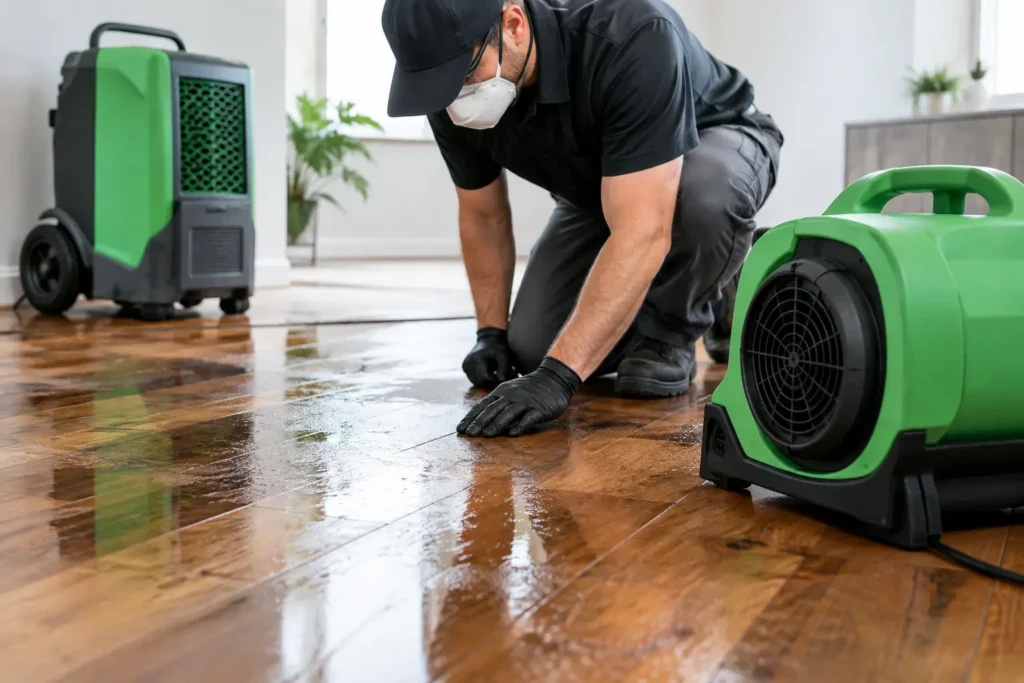
A hardwood floor can look only slightly damp at first, then cup, buckle, stain, or separate days later as trapped moisture moves through the wood and subfloor. Whether you can salvage wet hardwood flooring depends less on how wet it looks and more on how quickly the water source is stopped, how far moisture traveled, the type of water involved, and whether the floor can be dried correctly.
For homeowners and property managers, the priority is not guessing whether boards will flatten on their own. It is protecting the structure, documenting the loss, and getting accurate moisture readings before irreversible damage develops.
When Can You Salvage Wet Hardwood Flooring?
Hardwood is not automatically a total loss after a plumbing leak, appliance overflow, roof leak, or localized water intrusion. Many floors can be saved when the water is clean, the affected area is limited, and professional drying begins promptly. Solid hardwood often has a better chance of recovery than engineered flooring because it can sometimes be sanded and refinished after it has fully stabilized.
The condition beneath the boards matters just as much as the visible surface. Water can migrate through seams, absorb into the subfloor, travel under baseboards, and wet adjacent drywall or insulation. A floor that appears dry from above may still hold damaging moisture below.
A restoration team should inspect the affected area with moisture meters, moisture mapping, and thermal imaging where appropriate. These tools help identify the actual wet boundary rather than relying on appearance alone. Documentation also provides a clear record of conditions for the property owner and, when applicable, the insurance claim.
Signs the Floor May Be Recoverable
A favorable outcome is more likely when the boards remain firmly attached, the damage is confined to a small area, and the water exposure was brief. Minor cupping – where board edges rise slightly – can sometimes improve as controlled drying brings the wood back toward its normal moisture content.
The floor may also be a candidate for restoration if there is no persistent odor, no microbial growth, and no sign that the subfloor has swollen or deteriorated. Once the materials have reached stable moisture levels, a flooring professional can determine whether refinishing will address remaining discoloration, raised grain, or minor movement.
Signs Replacement May Be the Better Decision
Severe buckling is a more serious warning sign. This occurs when boards lift away from the subfloor or push against one another because the wood has expanded beyond available space. Delamination in engineered hardwood, black staining from prolonged exposure, loose boards, and a compromised subfloor can also make replacement more practical than repair.
Contaminated water changes the decision as well. Water from a sewage backup or other unsanitary source requires a more cautious approach. Porous materials can retain contamination even after surface drying, so affected flooring and related materials may need removal under appropriate safety procedures.
The age and construction of the floor also matter. Matching an older species, stain, plank width, or finish may be difficult. In some cases, selective replacement and refinishing can blend the repair. In others, replacing a larger continuous area produces the most consistent result.
What to Do Immediately After Hardwood Gets Wet
The first hours after water damage can significantly affect the scope of repair. If water is still entering the property, shut off the source when it is safe to do so, or contact the appropriate plumbing, roofing, or emergency service professional. Avoid walking repeatedly across standing water, especially near electrical outlets, equipment, or damaged ceilings.
Move furniture, rugs, and other items off the wet floor if it can be done safely. Wet area rugs can hold moisture against the wood and leave dye transfer or staining behind. Do not pull up boards, drill holes, run high heat, or begin aggressive sanding. These actions can create additional damage, disturb materials that need assessment, and make a later repair more difficult.
Photograph the visible conditions before cleanup changes the scene. Record the source of water if known, affected rooms, damaged personal property, and any changes in the flooring. Then contact your insurance carrier as appropriate and arrange for professional water mitigation. Fast action is useful, but thorough documentation and proper drying are what support an organized recovery.
Why Air Drying Alone Often Falls Short
Opening windows and placing household fans in a room may dry the surface, but it rarely controls the moisture below hardwood flooring. Wood dries unevenly, and rapid surface drying can leave wet layers underneath. This can contribute to cupping, cracking, gaps, or later movement as the flooring continues to equalize.
Professional mitigation uses measured drying rather than guesswork. Depending on the assembly and moisture conditions, technicians may use carefully positioned air movement, dehumidification, containment, and specialty drying equipment designed to address moisture in the flooring system. The goal is not simply to make the room feel dry. It is to bring the wood, subfloor, and surrounding materials back to acceptable, documented moisture levels.
Daily monitoring is often necessary. Moisture readings show whether drying is progressing, whether water has migrated beyond the original area, and whether the plan needs to change. This approach prevents the common mistake of reinstalling baseboards, beginning repairs, or moving furniture back before hidden moisture has been addressed.
The Difference Between Solid and Engineered Hardwood
Solid hardwood is made from a single piece of wood. It can absorb a substantial amount of water, expand, and cup, yet may still be repairable if dried before structural damage occurs. Because it has a thicker wear layer, it can often tolerate refinishing after the drying process is complete and the boards have had time to stabilize.
Engineered hardwood has a real wood veneer over layered backing materials. Its performance varies widely by product quality and construction. Some engineered floors tolerate limited moisture exposure well, while others can delaminate when water reaches the layers beneath the veneer. Once delamination occurs, sanding will not restore the floor’s structural integrity.
Laminate and wood-look vinyl are different products altogether. They may resemble hardwood but require their own assessment. Laminate commonly swells at seams after water exposure, while certain vinyl products can survive water but still conceal moisture beneath them or damage to the subfloor.
Timing Matters Before Repairs Begin
It is understandable to want the floor repaired immediately, particularly in an occupied home, rental property, office, or retail space. However, installing new flooring or refinishing wet hardwood too soon can create costly repeat work. Wood needs time to reach equilibrium with the indoor environment after mitigation.
A qualified restoration and reconstruction contractor coordinates the sequence: stop the loss, inspect and document conditions, remove unsalvageable materials if necessary, dry the structure, verify moisture levels, and then plan repair or replacement. This process also helps protect adjacent finishes such as trim, cabinetry, drywall, and transitions to other floor types.
For insurance-related damage, detailed records of moisture readings, photographs, drying equipment, affected materials, and repair recommendations can help clarify the scope of work. Coverage decisions remain with the insurer and depend on the policy and cause of loss, but organized documentation gives all parties a more complete picture of what occurred.
A Practical Path Forward After Water Damage
If you are deciding whether to repair or replace a wet hardwood floor, do not make that decision based on appearance alone. Request a professional inspection that evaluates the flooring, subfloor, water category, extent of migration, and the condition of nearby materials. Ask for clear findings and a repair plan that explains what can be dried, what may require removal, and what must be monitored before reconstruction begins.
Apollo Construction & Renovation Corp. provides emergency mitigation, moisture documentation, reconstruction planning, and flooring repairs for water-damaged properties throughout the Mid-Atlantic region. Our team follows IICRC-based restoration practices and coordinates the work needed to move from active damage to a stable, finished space.
A wet hardwood floor is a time-sensitive problem, but it is not always a replacement project. Stop the water, protect the area, document the loss, and let measured drying and a qualified assessment determine the right path for your property.
Every property and insurance policy is different. Contact Apollo to discuss the work your property may need; your insurer determines coverage.