
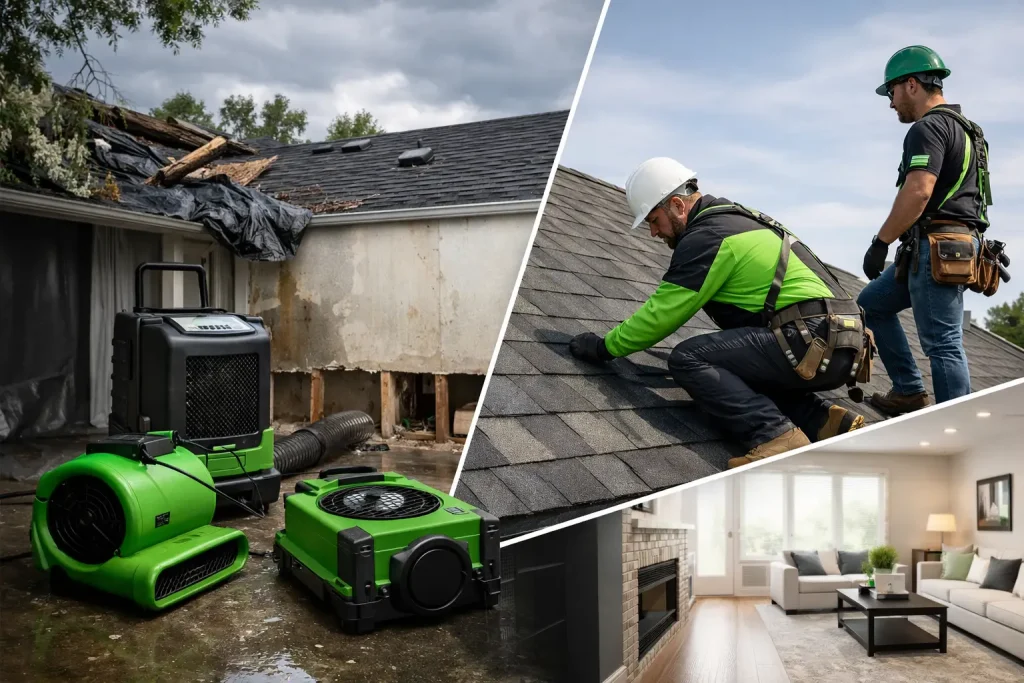
A storm rolls through at 2 a.m., and by morning you notice shingles in the yard, a water stain on the ceiling, or gutters hanging loose. That is when a storm damage roof insurance claim stops being a paperwork issue and becomes a property protection issue. What you do in the first 24 to 48 hours can affect both the condition of your home and the strength of your claim.
Roof claims are rarely just about the roof. Wind can lift shingles without causing an immediate leak. Hail can bruise roofing materials in ways that are easy to miss from the ground. Damage to flashing, siding, gutters, fascia, and attic insulation may all be part of the same loss. If the response is slow or the documentation is thin, valid damage can be overlooked and the claim process can become more difficult than it needs to be.
What matters most after storm damage
The first priority is safety. If there is active leaking, ceiling sagging, fallen tree impact, or visible structural movement, the property needs immediate attention. A damaged roof can allow water to travel far beyond the original entry point, affecting drywall, insulation, flooring, electrical systems, and contents.
The second priority is mitigation. Insurance policies generally expect property owners to take reasonable steps to prevent further damage after a covered loss. That does not mean performing risky repairs yourself. It means arranging emergency protection such as tarping, temporary sealing, water extraction, or interior containment when needed. Waiting too long can turn a manageable roof loss into a larger restoration project.
The third priority is documentation. Before temporary repairs begin, gather clear photos and video if it is safe to do so. Capture wide shots of each roof slope from the ground, close-ups of fallen materials, gutter damage, dented metal components, interior stains, attic moisture, and any debris from the storm. Time-stamped documentation helps establish the condition of the property and supports the sequence of events.
How a storm damage roof insurance claim usually works
A storm damage roof insurance claim typically begins when the property owner reports the loss to the carrier. The insurer assigns a claim number and schedules an adjuster inspection or requests initial documentation. That sounds simple, but the real outcome often depends on how thoroughly the damage is identified and presented.
In many cases, the adjuster is evaluating a high volume of claims after a major weather event. Some damage is obvious. Some is not. Hail hits may show up on soft metals, vents, downspouts, and gutters before they are easily visible on the roofing surface. Wind damage may involve lifted or creased shingles, compromised seal strips, displaced ridge caps, or damaged flashing. If only the most visible issues are discussed, the full scope can be missed.
That is why a professional inspection matters early in the process. A qualified contractor can assess storm-related conditions, identify related components that may also be affected, and provide organized documentation to support the claim. For homeowners and property managers, this reduces guesswork. For adjusters, it creates a clearer picture of the loss.
What insurance companies usually look for
Insurance carriers generally want to confirm three things. First, that there was a specific storm event capable of causing the reported damage. Second, that the observed conditions are consistent with that event. Third, that the damage is covered under the policy terms.
That last point is where many property owners get frustrated. Coverage is not based on whether damage exists alone. It also depends on policy language, exclusions, age and condition of the roof, prior repairs, maintenance history, and whether the issue was sudden storm damage or long-term wear. A roof can have both storm damage and age-related deterioration at the same time. Sorting out which is which requires a careful inspection, not assumptions from the ground.
It also depends on the extent of the damage. Sometimes the covered scope is limited to a repair. In other situations, matching issues, manufacturer availability, code requirements, or broad slope damage may support more extensive replacement. This is one reason broad statements like every storm means a full roof replacement are not helpful. The right answer depends on the roof system, the storm, and the documented condition of the property.
Common mistakes that weaken a roof claim
The biggest mistake is delay. Waiting weeks to report damage can create questions about whether later weather or neglected mitigation made the loss worse. Even if the damage is legitimate, a delayed timeline can complicate the claim.
Another common problem is incomplete documentation. A few cell phone photos of missing shingles may not capture collateral damage to flashing, vents, gutters, interior finishes, or detached structures. The stronger the file, the easier it is to explain the claim.
A third issue is making permanent repairs too quickly. Emergency stabilization is necessary, but major repairs completed before the carrier documents the damage can remove evidence that supports coverage. The goal is to protect the property without erasing the proof.
There is also the problem of focusing only on exterior damage. Roof leaks often show up in the attic, insulation, ceiling cavities, and wall assemblies. Moisture mapping, thermal imaging, and interior inspection can reveal the broader effect of the storm. This matters because roof losses can become water damage claims as well if intrusion is not addressed properly.
Storm damage roof insurance claim documentation that helps
Good claim support is organized, specific, and easy to review. That usually includes date of loss information, weather context, photos, inspection notes, measurements, and records of emergency services performed to protect the building. If interior damage is present, it should be documented as part of the same event when applicable.
For larger residential or commercial losses, more detailed records can make a real difference. Inspection reports, moisture readings, attic findings, elevation photos, and line-item repair scopes provide a more complete picture than a basic estimate alone. If there are code-related items, they should be identified clearly. If temporary drying or containment is needed, those actions should be documented with the same level of care as the roof damage itself.
This is where an experienced restoration contractor adds value beyond basic roofing work. The roof may be the point of impact, but the project often involves mitigation, interior protection, reconstruction planning, and insurance reporting support. Coordinating those pieces early helps control both property damage and claim friction.
When to call a contractor during the claim process
The best time to call is as soon as storm damage is suspected. A professional inspection before or at the start of the claim helps establish the scope, protect the property, and reduce the chance of missed items. It also gives the owner a clearer understanding of whether the issue appears minor, moderate, or severe.
If the insurance inspection has already happened and the scope seems incomplete, a contractor can still review the damage and provide supporting documentation. That does not mean arguing for damage that is not there. It means making sure the condition of the property is documented accurately and that related components are not overlooked.
For homeowners, this support is often reassuring because roof claims can move quickly while the situation at the property is still evolving. For commercial owners and property managers, early coordination is even more important. Multi-unit buildings, retail sites, and office properties may have hidden water migration, tenant concerns, and operational risks that go beyond the roof assembly itself.
Repair or replacement depends on the actual condition
One of the most common questions is whether a damaged roof can be repaired or must be replaced. The honest answer is that it depends. A limited section with matching materials available and no widespread compromise may be repairable. A roof with brittle materials, widespread wind uplift, multiple elevations affected, discontinued shingles, or code-related limitations may point in another direction.
Age also matters, but not in a simple way. An older roof is not automatically excluded from coverage, and a newer roof is not automatically fully covered. What matters is whether storm-created damage is present and how the policy responds to that loss. The inspection has to distinguish recent storm effects from normal aging, thermal cracking, foot traffic, installation issues, and deferred maintenance.
A better claim process starts with a better response
The most effective roof claims are not built on pressure or guesswork. They are built on timely action, clear documentation, professional inspection, and proper mitigation. That approach protects the property first and supports the claim second, which is exactly how the process should work.
For property owners in Maryland, Northern Virginia, Washington DC, Delaware, and Pennsylvania, working with a contractor that understands both restoration and insurance documentation can remove a lot of unnecessary stress. Apollo Construction & Renovation Corp. approaches storm losses with that full-scope mindset, from emergency protection through inspection support and reconstruction planning.
If you suspect storm damage, do not wait for a ceiling stain to get worse or for the next storm to test the roof again. Get the condition documented, protect the structure, and make decisions based on what the damage actually shows – not what it looks like from the driveway.
Every property and insurance policy is different. Contact Apollo to discuss the work your property may need; your insurer determines coverage.