A ceiling stain rarely tells the whole story. By the time water shows on drywall, moisture may already be moving through insulation, framing, or flooring where you cannot see it. That is where the answer to what is thermal imaging inspection becomes especially practical for homeowners, property managers, and commercial building owners dealing with leaks, storm damage, or unexplained building issues.
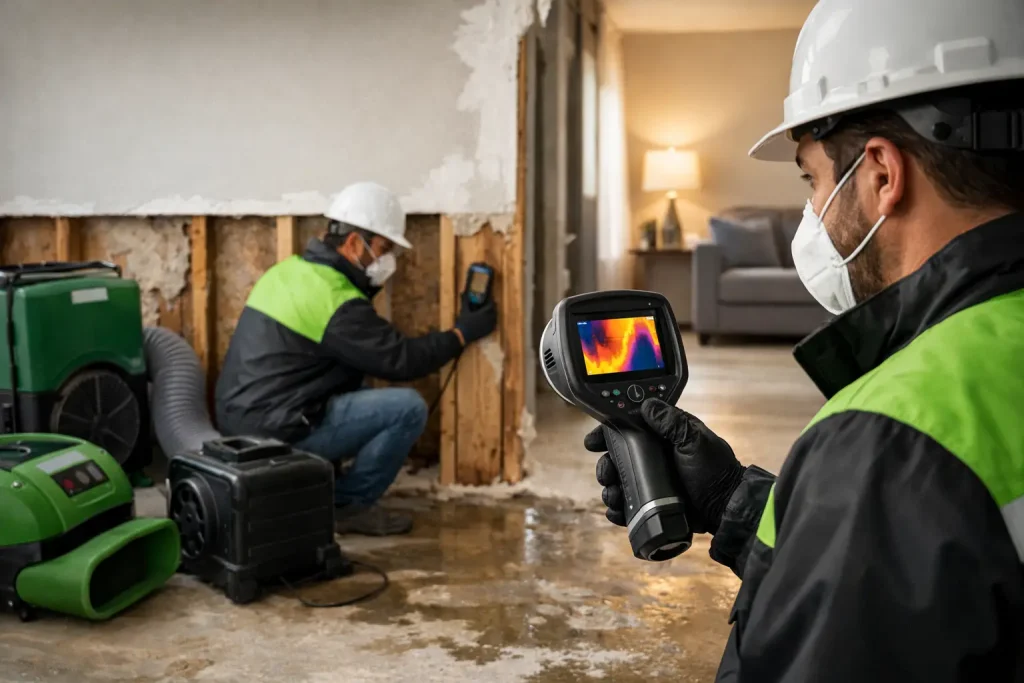
A thermal imaging inspection uses an infrared camera to detect temperature differences across surfaces. Those temperature variations can point to hidden moisture, missing insulation, air leaks, overloaded electrical components, or areas where building materials are drying unevenly after a loss. The camera does not see through walls in a literal sense. What it does is identify heat patterns on the surface, giving trained inspectors a fast, non-invasive way to spot conditions that may require further testing or immediate mitigation.
What Is Thermal Imaging Inspection Used For?
In property restoration and construction, thermal imaging is used to locate problems that are easy to miss during a standard visual inspection. If a roof leak travels down inside a wall cavity, the damage path may not be visible until materials begin to stain, swell, or fail. Infrared imaging can help identify cooler or warmer areas that suggest trapped moisture or temperature loss before the damage becomes more obvious.
This matters during emergency response because speed affects the scope of repairs. In a water damage event, a restoration team may use thermal imaging alongside moisture meters and moisture mapping to determine how far water has migrated. That helps define containment areas, target demolition only where needed, and document conditions for the property owner and insurance-related file.
It is also valuable outside of active emergencies. Thermal imaging may be used during roofing assessments, building envelope inspections, post-mitigation verification, and electrical evaluations. In commercial properties, it can help identify overheating circuits, panel concerns, or insulation deficiencies that affect efficiency and long-term building performance.
How Thermal Imaging Inspection Works
Every surface emits infrared energy based on its temperature. A thermal camera captures that energy and translates it into an image showing temperature differences. Warmer and cooler areas appear as contrasting colors or shades, depending on the camera settings.
The camera itself does not diagnose the problem. It shows patterns. The inspector’s job is to interpret those patterns correctly, compare them to known building conditions, and confirm findings with other tools. A cool spot on a wall, for example, might suggest moisture intrusion, but it could also reflect an HVAC duct behind the surface, an insulation gap, or even sunlight patterns changing the wall temperature earlier in the day.
That is why professional thermal imaging is most effective when paired with building science knowledge and restoration experience. Reading the image is only part of the process. Understanding what could cause that thermal anomaly, and what should happen next, is what makes the inspection useful.
Why trained interpretation matters
Infrared cameras are powerful, but they are not magic. False positives can happen, and some issues simply cannot be confirmed by temperature variation alone. Moisture meters, hygrometers, visual inspection, and sometimes selective opening are still important. A dependable inspection process uses thermal imaging as one layer of evidence, not the only one.
Common Problems Thermal Imaging Can Help Detect
One of the most common uses is finding hidden moisture after a plumbing leak, appliance overflow, roof failure, or storm event. Wet materials often cool differently than dry materials because of evaporation and heat transfer. That can create a visible thermal pattern on ceilings, walls, and floors, helping inspectors trace the affected area.
Thermal imaging is also useful for insulation and energy-loss issues. If one room is consistently harder to heat or cool, the cause may be missing insulation, air infiltration around windows and doors, or thermal bridging in certain assemblies. The camera can reveal those inconsistencies quickly.
Electrical issues are another important application. Overheating breakers, wiring connections, or equipment components can show elevated temperatures before a failure occurs. In the right setting, an infrared inspection can support proactive maintenance and reduce the chance of more serious damage.
In roofing, especially on flat or low-slope systems, thermal imaging may help identify areas where moisture is trapped beneath the membrane. That can support targeted repairs rather than broader replacement, although results depend on roof type, weather conditions, and timing.
What Thermal Imaging Cannot Do
A common misconception is that thermal imaging provides a complete diagnosis on its own. It does not. It cannot tell you the exact amount of water inside a wall, whether mold is present, or whether a material is structurally sound just from the image alone. It also cannot replace direct moisture readings, lab testing, or a full restoration assessment.
Conditions matter too. Surface temperature changes can be influenced by weather, HVAC use, direct sunlight, appliance operation, and occupancy patterns. In some cases, a thermal camera may show little or no useful contrast even though a problem exists. In others, it may show an anomaly that turns out to be normal building variation.
That does not make the technology unreliable. It means proper use requires context, experience, and confirmation. For property owners, that is the key trade-off. Thermal imaging is fast, non-destructive, and highly useful, but it works best as part of a broader inspection process.
When Property Owners Should Request a Thermal Imaging Inspection
You do not need visible damage to justify an infrared inspection. If you smell mustiness after a leak, notice paint bubbling, see recurring stains, or feel unexplained temperature differences between rooms, thermal imaging may help narrow down the source. It can also be a smart step after storms, roof damage, plumbing failures, or sprinkler discharges, especially when the full extent of migration is unclear.
For commercial buildings and multifamily properties, thermal imaging can support maintenance planning and loss documentation. Property managers often need a clearer picture of affected areas before opening walls, relocating occupants, or coordinating multiple trades. A well-documented inspection helps create a more organized scope of work and reduces guesswork.
It can also be valuable after mitigation work. If drying equipment has been running for several days, infrared imaging can help identify remaining wet zones or temperature differences that suggest certain materials still need attention. That can support a more efficient path to reconstruction.
What to Expect During the Inspection
A professional inspector will usually begin with the known problem area, whether that is a ceiling leak, wet flooring, exterior wall concern, or electrical issue. The space is then scanned with an infrared camera while the inspector evaluates building conditions, material types, and possible sources of thermal variation.
If suspicious areas appear on the camera, the next step is usually confirmation. That may include a moisture meter reading, humidity checks, visual documentation, and notes on the probable cause. In restoration work, the findings are often used to build a moisture map, define the drying plan, and document conditions in a way that supports communication with adjusters and stakeholders.
The inspection itself is typically non-invasive unless confirmation requires selective access. That means less unnecessary demolition and a more targeted response. In many cases, that saves time and helps preserve unaffected finishes.
Why Thermal Imaging Matters in Restoration Work
When water, storm, or building damage is involved, hidden conditions are what drive cost and disruption. If moisture is missed behind cabinets, inside wall cavities, or beneath flooring, the property can continue deteriorating long after the visible surface appears dry. That is why experienced restoration contractors use technology to support faster, more accurate decisions.
For a company like Apollo Construction & Renovation Corp., thermal imaging is part of a larger documentation and response strategy. It supports organized inspections, clearer communication, and more precise restoration planning. For the property owner, that means fewer assumptions, better visibility into the problem, and a stronger foundation for mitigation and repairs.
Choosing the Right Inspector
Not every person holding an infrared camera will deliver the same value. The quality of the inspection depends on training, field experience, and the ability to connect thermal patterns to real building conditions. In a loss situation, it also helps to work with a contractor who understands mitigation protocols, insurance documentation, and reconstruction sequencing.
Ask how the findings will be verified, documented, and used. A useful inspection should lead to action, whether that means drying, repair, further testing, or simply ruling out a concern. The goal is not to produce impressive images. It is to make informed decisions that protect the property.
When a problem is hidden, waiting for clearer evidence usually means waiting for more damage. Thermal imaging gives property owners a way to catch what the eye misses and move forward with more confidence.
Every property and insurance policy is different. Contact Apollo to discuss the work your property may need; your insurer determines coverage.