
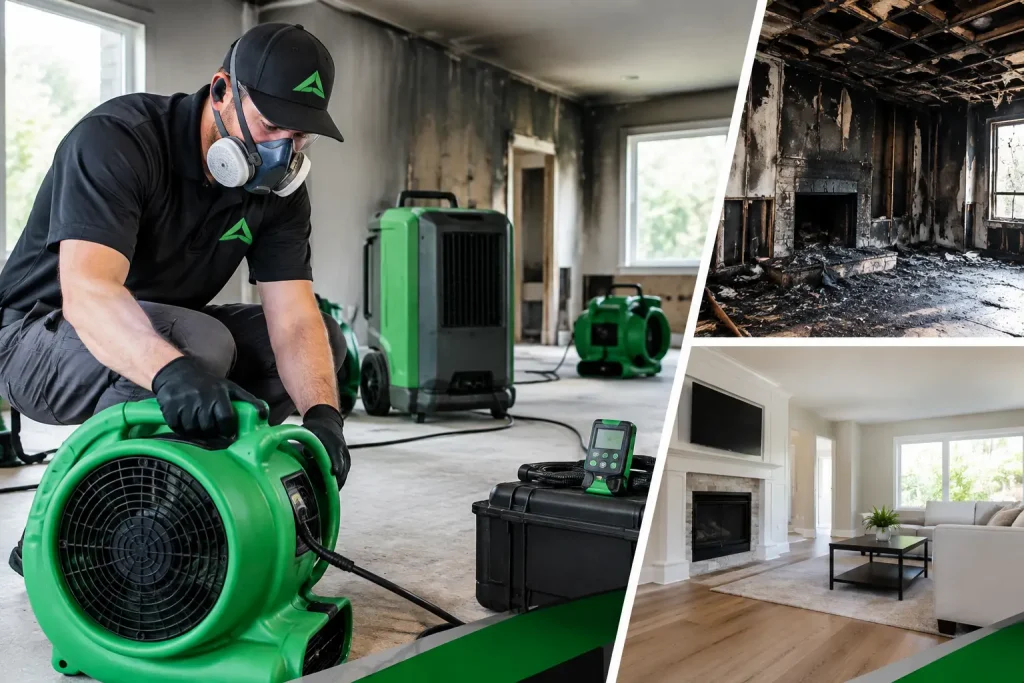
Smoke odor is not simply an unpleasant reminder of a fire. It is evidence that soot particles and odor-causing residues may still be present in building materials, contents, and HVAC components. The best smoke odor removal methods address those residues at their source instead of covering them with fragrance. For homeowners, property managers, and commercial owners, early, organized restoration can protect the building, reduce disruption, and support a well-documented insurance claim.
Why Smoke Odor Can Remain After Fire Cleanup
Smoke travels farther than flames. It can move through open doors, wall cavities, ductwork, insulation, carpeting, and porous furnishings. Even a contained kitchen fire can leave odor in rooms that did not appear visibly damaged.
The type of fire matters. Protein smoke from burned food often leaves a strong, greasy odor with little visible residue. Wood and paper fires can create dry soot that spreads widely, while synthetic materials may produce sticky residues that adhere to painted surfaces, plastics, and fabrics. Each condition calls for a different cleaning approach.
Odor also becomes more difficult to remove when soot is allowed to remain. Heat can drive particles into finishes and fabrics, while air movement from fans or an operating HVAC system can distribute contamination. That is why a professional assessment should begin before broad cleaning, repainting, or deodorizing work starts.
The Best Smoke Odor Removal Methods Start With Source Removal
Effective smoke restoration follows a sequence: inspect the loss, contain affected areas, remove residues, clean air-handling components, and then deodorize materials that can be restored. Skipping to odor treatment before cleaning the source may provide short-term relief, but the smell often returns.
Inspect, document, and protect the property
A restoration team first identifies where smoke traveled and what surfaces were affected. This can include visible soot inspection, odor mapping, moisture checks when firefighting water was used, and documentation for the property owner and insurance carrier. Contents such as furniture, electronics, documents, artwork, and clothing may need separate evaluation.
Safety comes first. Fire-damaged materials, compromised electrical systems, wet ceilings, and possible asbestos-containing materials in older buildings require careful handling. Property owners should avoid disturbing soot-covered surfaces or entering areas that have not been cleared as safe.
Remove soot using the correct cleaning method
Soot is not ordinary dust. Wiping it with a wet rag or household cleaner can smear oily residue deeper into paint, upholstery, and carpet fibers. Dry soot may respond to specialized dry cleaning sponges and HEPA-filtered vacuuming. Sticky or wet soot often requires appropriate professional cleaning agents, controlled agitation, and detailed rinsing.
Walls, ceilings, trim, cabinets, flooring, and fixtures each require material-specific treatment. Painted drywall may be cleaned and sealed if the residue has not penetrated deeply. Unfinished wood, heavily damaged insulation, swollen drywall, and severely contaminated porous materials may need removal and replacement. The correct decision depends on the material, the smoke type, the age of the residue, and whether cleaning can return the surface to an acceptable condition.
Clean contents, not just the structure
Smoke odor frequently stays behind in items people use every day. Upholstered furniture, draperies, rugs, clothing, bedding, books, and soft goods can hold odor long after surfaces look clean. Electronics also require specialized handling because soot is corrosive and moisture-sensitive.
Professional contents cleaning may involve controlled washing, textile cleaning, HEPA vacuuming, ultrasonic cleaning for suitable nonporous items, or off-site pack-out services. A detailed inventory and photo documentation help keep the process organized, especially when a claim involves many items. Do not place smoke-damaged contents back into a cleaned room until both the room and the contents have been properly addressed.
Address the HVAC system before turning it back on
An HVAC system can recirculate smoke particles throughout the property. If smoke entered return vents or ducts, running the system without evaluation may spread odor into areas that were initially less affected.
A qualified professional can assess the air handler, coils, blower components, filters, ductwork, and registers. Filter replacement alone is rarely a complete solution after significant smoke exposure. The appropriate scope may range from component cleaning to full duct cleaning, depending on the fire conditions and extent of contamination. HVAC work should be coordinated with the overall restoration plan so cleaned areas are not recontaminated.
Professional Deodorization Methods That Actually Work
Once residues have been removed, professional deodorization can treat remaining odor molecules in materials and enclosed spaces. The best method depends on the type of smoke, the materials involved, occupancy needs, and the condition of the building.
Thermal fogging uses a deodorizing agent dispersed in an extremely fine mist designed to reach areas smoke may have reached. Hydroxyl treatment can help reduce odors in occupied or sensitive environments when set up and monitored correctly. Ozone treatment may be appropriate in certain vacant, controlled settings, but it requires strict safety procedures and should never be used while people, pets, or plants are present.
These processes are tools, not substitutes for cleaning. If residue remains on framing, contents, ductwork, or porous finishes, deodorization may only mask the issue temporarily. A reliable restoration contractor will explain why a method is recommended, where it will be used, and what access or vacancy requirements apply.
Seal and rebuild when odor has penetrated materials
After proper cleaning and drying, odor-blocking sealers can be used on eligible surfaces to help prevent residual odors from migrating through new finishes. This step is especially valuable before repainting or reconstructing fire-affected rooms. Applying paint or primer without cleaning and sealing first can trap residue and lead to recurring odor concerns.
Reconstruction may include replacing drywall, insulation, flooring, cabinetry, trim, or other materials that cannot be restored effectively. While replacement can feel disruptive, it is sometimes the more durable and cost-conscious path when smoke has deeply penetrated porous building materials.
What Property Owners Should Avoid After Smoke Damage
A few common actions can make restoration harder. Avoid using candles, air fresheners, or heavily scented cleaners as a primary solution. They may conceal odor during a walkthrough without removing the residue causing it.
Do not aggressively scrub walls, vacuum soot with a standard household vacuum, wash smoke-damaged textiles in a home washer without guidance, or repaint before the surface is cleaned and evaluated. These efforts can spread soot, set stains, or increase the scope of damage. It is also wise to limit unnecessary traffic through affected rooms and keep windows and doors managed according to the restoration plan, since uncontrolled airflow can move particles into clean areas.
If water was used to extinguish the fire, do not overlook moisture damage. Wet drywall, insulation, flooring, and framing can create a separate mitigation issue. A complete fire restoration plan evaluates both smoke contamination and moisture conditions before repairs begin.
When to Call a Smoke Restoration Professional
Professional help is recommended when odor remains after basic ventilation, soot is visible, smoke entered multiple rooms, the HVAC system was operating during the fire, or the loss involves commercial space, shared building systems, or insurance documentation. The same applies when furnishings, electronics, or sensitive contents may be affected.
Apollo Construction & Renovation Corp. helps property owners across the Mid-Atlantic coordinate fire and smoke mitigation, contents handling, documentation, cleaning, deodorization, and reconstruction under one organized restoration plan. Experienced technicians can identify what is cleanable, what requires replacement, and how to document the work clearly for the next phase of recovery.
A property should smell clean because the source of the smoke damage has been removed, not because the odor has been covered. Prompt evaluation gives you the clearest path to a safer, more complete recovery and helps protect the repairs you make next.
Every property and insurance policy is different. Contact Apollo to discuss the work your property may need; your insurer determines coverage.