
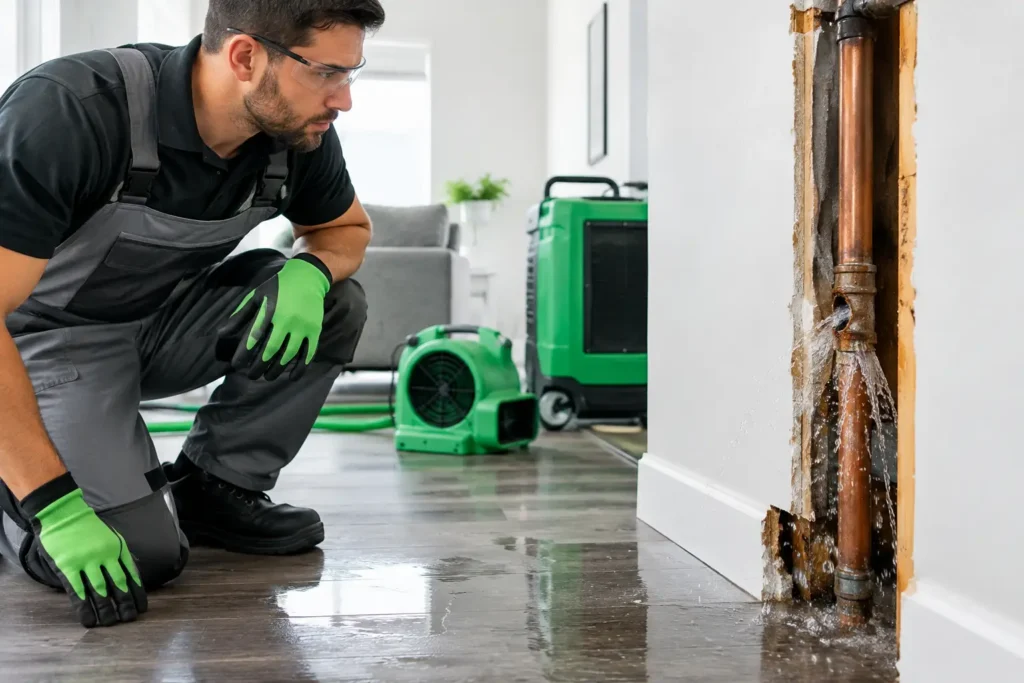
A burst pipe can release gallons of water before anyone notices, soaking insulation, flooring, wall cavities, furniture, and electrical components. When burst pipe water damage occurs, the first few hours can strongly affect the scope of repairs, the risk of mold growth, and the quality of the insurance documentation available for your claim.
The priority is simple: stop the water source if it is safe to do so, protect people from hazards, and begin professional mitigation as quickly as possible. A visible puddle is rarely the full picture. Water can travel beneath finished floors, behind baseboards, through ceilings, and into neighboring units before surface damage becomes obvious.
What to Do Immediately After a Pipe Bursts
If you can safely reach the local shutoff valve, turn off the water supply to the affected fixture or pipe. If the break is significant or you cannot identify the local valve, shut off the main water supply to the building. Do not enter rooms with standing water where electrical outlets, appliances, wiring, or a breaker panel may be affected.
Move people, pets, important documents, electronics, and dry belongings away from the affected area when it can be done safely. Take clear photos and video of the broken pipe, the source area, and visible damage before moving items or starting cleanup. These records can help establish the cause and initial condition of the loss.
Call a qualified emergency water mitigation contractor and notify your insurance carrier or agent according to your policy requirements. If the pipe is still actively leaking, a licensed plumber may also be needed to make the source repair. Mitigation and plumbing serve different purposes: the plumber stops the failure, while the restoration team addresses the water that has already entered the structure.
Avoid using household fans, shop vacuums, or a standard wet vacuum around potentially affected electrical areas. Also avoid removing wet drywall, ceiling materials, or flooring without an assessment. Premature demolition can create safety concerns, disturb materials that may require specialized handling, and make it harder to document the damage accurately.
Why Burst Pipe Water Damage Spreads Beyond the Leak
Water follows gravity, seams, framing, and the paths of least resistance. A pipe failure under a kitchen sink may affect only the cabinet and nearby flooring if caught immediately. A burst supply line on an upper floor, however, can send water through a ceiling assembly and into multiple rooms below.
The extent of damage depends on several variables: how long the pipe leaked, the water pressure, the location of the failure, the materials affected, and how quickly drying begins. Porous materials such as drywall, insulation, particleboard cabinets, carpet padding, and some wood flooring can retain moisture even after surfaces feel dry.
That is why professional assessment matters. Technicians use moisture meters, thermal imaging, and moisture mapping to identify wet materials that cannot be confirmed by sight alone. The goal is not simply to remove standing water. It is to return affected structural materials to an appropriate drying condition while documenting the process from start to finish.
What Professional Water Mitigation Typically Includes
A structured mitigation response begins with an inspection of the affected rooms, the water source, and surrounding building materials. The restoration team identifies safety concerns, determines where water traveled, and creates a drying plan based on the type and extent of the damage.
Extraction comes first when there is standing water or saturated carpet. Removing water quickly reduces the moisture load inside the property and helps limit additional absorption. Technicians may then remove non-salvageable materials when necessary, protect unaffected areas, and place commercial-grade air movers and dehumidifiers to dry the structure.
Drying equipment is only part of the process. Reliable mitigation requires daily or scheduled monitoring, moisture readings, equipment adjustments, and records showing drying progress. This information helps property owners understand what is happening in their home or building and provides useful support for insurance discussions.
At Apollo Construction & Renovation Corp., emergency mitigation is performed with IICRC-based drying practices, detailed moisture documentation, and a clear plan for the next phase of recovery. When repairs are needed, coordinating mitigation and reconstruction through one experienced team can reduce handoffs and help keep the project organized.
Understanding the Water Category Matters
Not every pipe break presents the same sanitation concerns. Water from a clean supply line is often initially classified differently from water involving a drain line, sewage backup, appliance discharge, or water that has remained in place long enough to become contaminated.
This distinction affects the protective measures, cleaning methods, materials that can be saved, and scope of demolition. A clean-water loss caught early may allow more materials to be dried in place. Water that is contaminated, or that has traveled through unsanitary areas, may require more extensive removal and cleaning.
Do not assume that clear-looking water is harmless. A restoration professional can evaluate the source and conditions on site, then apply the appropriate safety and cleaning protocol. This is especially important in commercial properties, multi-family buildings, and homes with affected HVAC components or concealed cavities.
How to Protect Your Insurance Claim Documentation
Insurance coverage depends on the cause of loss, policy language, maintenance history, and other claim-specific facts. A sudden and accidental pipe break may be handled differently than a long-term leak or deterioration issue. Your contractor should not promise coverage, but thorough records can help make the facts of the loss easier to review.
Keep photos, videos, invoices, emergency contact records, and a written timeline of when the leak was discovered and what actions were taken. Save damaged materials until your carrier or adjuster advises otherwise, unless they present a safety issue or removal is necessary to prevent further damage. Record major items that were affected, including their approximate age and condition if known.
Professional mitigation records may include moisture maps, equipment logs, photos, thermal images, drying reports, and an itemized scope of work. These documents help show why specific mitigation steps were necessary. For larger losses, organized documentation is particularly valuable when water has affected multiple rooms, units, or building systems.
When Reconstruction Can Begin
Repairs should not begin simply because the floor looks dry. Reconstruction should follow confirmation that the affected structure has been adequately dried and that the source of the water has been repaired. Rebuilding too early can trap moisture behind finishes and create avoidable problems later.
The reconstruction scope may range from replacing a small section of drywall and baseboard to rebuilding ceilings, flooring, cabinetry, insulation, and painted finishes. In more extensive losses, coordination may also be needed for plumbing, electrical, HVAC, contents cleaning, or specialty materials.
A complete restoration plan considers both the immediate repair and the long-term performance of the property. Matching existing finishes matters, but so do proper material installation, code-conscious repairs, and addressing any conditions that contributed to the failure.
Reducing the Risk of Another Pipe Failure
Some burst pipes result from freezing temperatures, while others are caused by aging supply lines, failed fittings, corrosion, excessive pressure, or damage during construction or remodeling. Once the emergency is controlled, ask a qualified plumbing professional to identify the likely cause and recommend appropriate repairs.
For properties exposed to freezing weather, protect vulnerable pipes in crawl spaces, exterior walls, garages, and unheated areas. Maintain adequate heat, insulate exposed piping where appropriate, and know where the main water shutoff is located before an emergency occurs. Property managers should also make sure occupants know who to contact after hours and how to report a leak quickly.
A burst pipe is disruptive, but fast, organized action can protect more of what matters. Stop the source when safe, document the conditions, and bring in qualified mitigation professionals before hidden moisture turns a plumbing emergency into a larger restoration project.
Every property and insurance policy is different. Contact Apollo to discuss the work your property may need; your insurer determines coverage.