
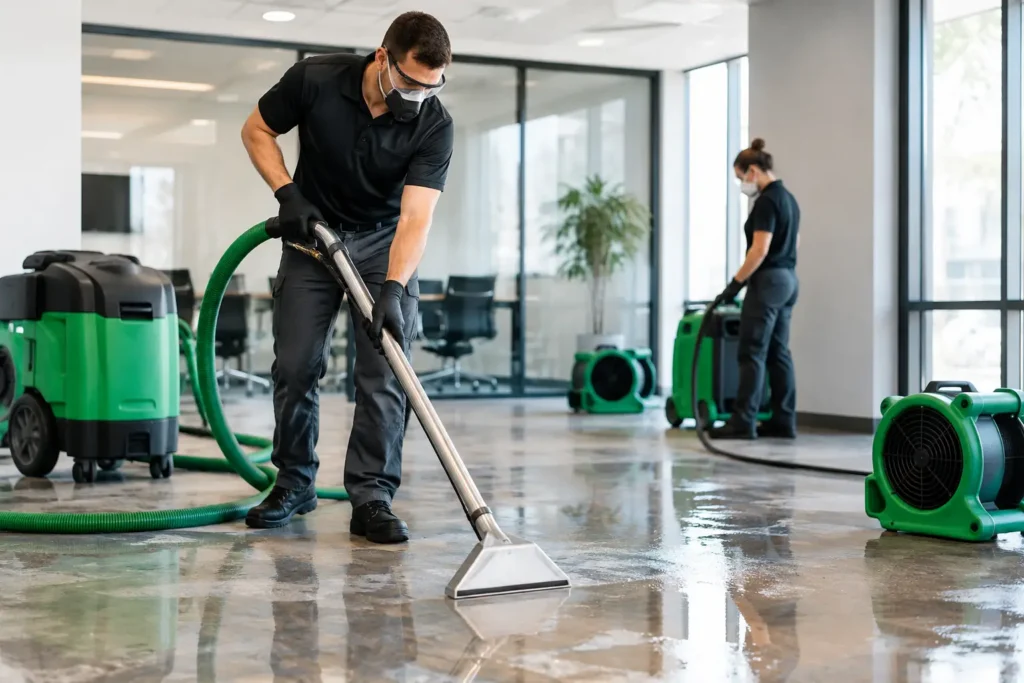
A burst supply line above an office suite, a roof leak over inventory, or a sewer backup in a multifamily common area can disrupt operations long before the visible water is removed. The best commercial water restoration services act quickly to contain the loss, identify where moisture has traveled, protect occupants and assets, and provide the documentation needed to make sound repair and insurance decisions.
For commercial property owners and managers, the right restoration partner is not simply a cleanup crew. They must be organized under pressure, equipped to work around business operations, and capable of carrying the project from emergency mitigation through reconstruction.
What Commercial Water Restoration Should Accomplish
Commercial water losses are rarely limited to one wet carpet or ceiling tile. Water can move through wall cavities, below flooring, above suspended ceilings, and into insulation, electrical areas, mechanical rooms, tenant spaces, or stored contents. A proper response starts with finding the source, stopping further intrusion when possible, and determining the full extent of affected materials.
The immediate objective is to stabilize the property. That can include water extraction, temporary protection from ongoing weather exposure, removal of unsalvageable materials, controlled drying, and measures to limit moisture migration. The next objective is equally important: verifying that drying is progressing appropriately and that the building can move safely into repairs.
For a retail center, this may mean isolating one affected suite while helping the rest of the property remain accessible. For an office building, it may require after-hours work, careful protection of equipment, and coordination with facility staff. For an apartment or condominium community, the response often requires clear communication across multiple units and common areas. The work plan should fit the building and its operational needs, not force the building to fit a one-size-fits-all process.
How to Evaluate Commercial Water Restoration Services
Speed matters after a loss, but a fast arrival alone does not define quality. Look for a contractor that can explain what happened, what will happen next, and how each decision protects the property. Clear communication is especially valuable when owners, tenants, adjusters, facilities teams, and boards all need reliable updates.
Emergency capability and site control
Ask whether the company is prepared to respond to active water intrusion, not just perform scheduled repairs. The restoration team should assess site conditions, identify safety concerns, establish containment where needed, and begin practical mitigation steps without creating unnecessary disruption.
Commercial sites can present hazards that require experienced coordination. Wet electrical components, slipping risks, contaminated water, compromised ceilings, and restricted access areas must be handled with appropriate safety procedures. OSHA-compliant practices, documented site conditions, and a disciplined approach to access control help protect occupants, employees, and the restoration team.
Moisture detection and drying verification
Visible water is only part of the problem. Qualified technicians use moisture meters, thermal imaging, and other diagnostic tools to locate affected materials and establish drying goals. Moisture mapping creates a record of where readings were taken, what materials are wet, and how conditions change during the project.
This process helps prevent two costly outcomes: removing materials that could have been dried successfully, or leaving concealed moisture behind that can damage finishes and contribute to mold conditions later. Drying equipment should be placed based on the building materials, the affected area, and measured conditions – not simply by placing fans throughout the space.
Documentation that supports decisions
A commercial water loss may involve an insurance carrier, property manager, ownership group, tenants, and vendors. Thorough documentation reduces confusion. Look for detailed daily records, photographs, moisture logs, equipment documentation, scope notes, and communication that clearly distinguishes emergency mitigation from reconstruction work.
Advanced documentation, including 360 imaging and thermal images when appropriate, can give stakeholders a clearer view of conditions that are difficult to see once walls and ceilings are opened or drying is complete. Good records do not determine coverage, but they can help support a clear, fact-based discussion of the damage and necessary work.
Reconstruction under one accountable team
Mitigation is only the first phase. Once affected areas are dry and approved for repair, the property may need drywall, insulation, flooring, painting, plumbing, electrical, roofing, ceiling systems, cabinetry, or other building work. Hiring separate vendors for each phase can create gaps in communication and extend downtime.
A full-service restoration contractor can coordinate mitigation and reconstruction with one project-management structure. That continuity makes it easier to preserve the original documentation, track approved scope changes, schedule trades in the right order, and keep the owner informed from the initial emergency through final repairs.
Questions to Ask Before You Authorize Work
A water emergency is stressful, but property managers can still ask focused questions. The answers will reveal whether the contractor has a process built for commercial losses.
Ask who will manage the project and how often updates will be provided. Confirm how the team will document affected areas, monitor drying, protect unaffected portions of the property, and coordinate access with tenants or building staff. If insurance is involved, ask what reports and photographs will be available for the claim file and how the contractor will communicate with the assigned adjuster.
Also discuss the transition from mitigation to reconstruction. A contractor should be able to explain which materials may need removal, which may be restorable, what conditions must be met before repairs begin, and how the repair scope will be developed. Exact timelines depend on the water source, materials affected, drying conditions, approvals, and the availability of replacement materials. A trustworthy provider explains those variables rather than making promises before the assessment is complete.
What to Do While Help Is on the Way
The first few hours can influence the size and cost of a water loss. Do not ask employees or tenants to handle unsafe cleanup, move heavy saturated materials, or enter areas with possible electrical or contamination hazards. Instead, focus on protecting people and preserving information.
- Restrict access to wet or visibly damaged areas, especially where ceilings are sagging or electrical equipment may be affected.
- Notify building management, maintenance personnel, and the appropriate emergency contacts.
- Move accessible documents, electronics, inventory, and furnishings away from the affected area only when it can be done safely.
- Take basic photos or video of the source and visible damage before significant changes are made, if conditions allow.
If water is coming from a plumbing failure, roof opening, appliance connection, or other active source, prompt professional action can limit continued damage. Avoid turning equipment back on or reopening an area simply because surfaces feel dry. Commercial materials often retain moisture below the surface.
Why Local Construction Knowledge Matters After Mitigation
Water restoration is not complete when the equipment is removed. The property must be put back together correctly, with attention to code requirements, building assemblies, finishes, and how the space will be used after repairs. This is where restoration experience and construction expertise need to work together.
Apollo Construction & Renovation Corp. supports commercial property owners and managers throughout Maryland, Northern Virginia, Washington DC, and Pennsylvania with emergency mitigation, detailed documentation, insurance restoration support, and coordinated reconstruction. Its approach follows IICRC-based restoration protocols while using practical construction planning to help move a damaged property toward recovery.
The best choice depends on the type of loss, building use, affected materials, and operational priorities. A small, clean-water leak in an unoccupied office may require a focused drying plan. A widespread loss affecting multiple tenants, contaminated water, or structural materials requires broader coordination and a more controlled scope.
When water affects a commercial property, choose a team that will assess carefully, communicate clearly, and remain accountable after the initial emergency work is done. That level of planning gives owners and managers a stronger path back to a safe, functional space.
Every property and insurance policy is different. Contact Apollo to discuss the work your property may need; your insurer determines coverage.