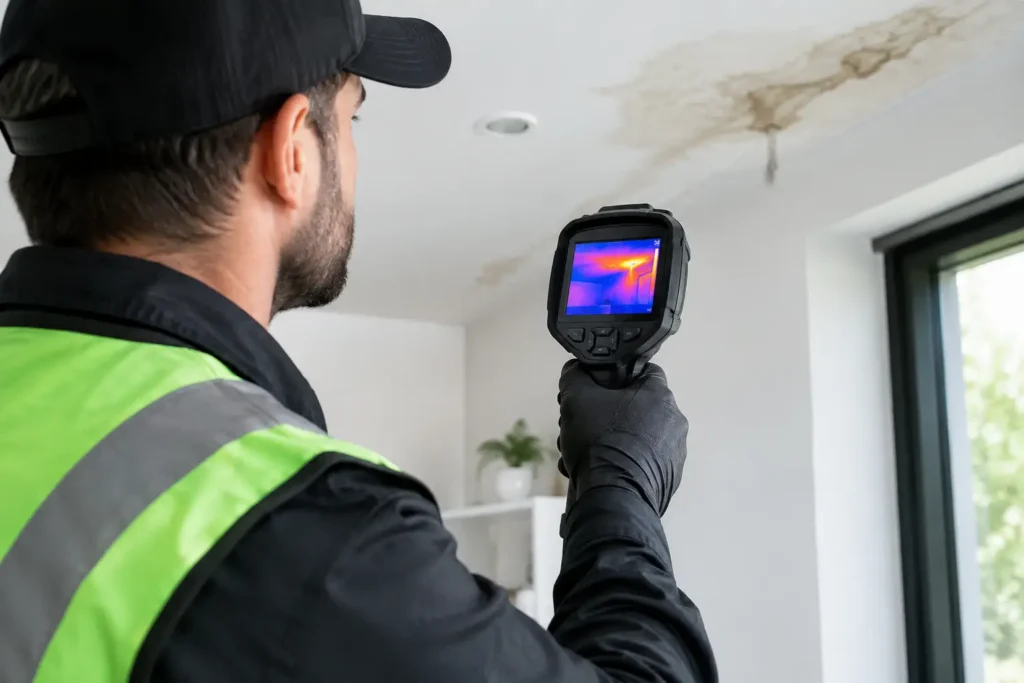
A thermal imaging water leak review can give a property owner a clearer picture of what may be happening behind a wall, beneath flooring, or above a ceiling – without opening up finishes just to start looking. When a water stain appears, a floor begins to cup, or a musty odor develops, thermal imaging is often one of the first diagnostic tools restoration professionals use to narrow the search and document conditions.
It is valuable technology, but it is not a magic leak detector. An infrared camera identifies temperature differences across a surface. Those differences may point to moisture, but they can also be caused by insulation gaps, air movement, HVAC lines, sunlight, or differences in building materials. A reliable inspection pairs thermal images with moisture readings, visual assessment, plumbing evaluation, and sound restoration judgment.
What Thermal Imaging Can Reveal During a Water Leak Inspection
Thermal cameras display surface temperatures as colors or shades. Because wet materials often cool or warm at a different rate than dry materials, moisture patterns can sometimes appear as distinct areas on a wall, ceiling, or floor. The camera can help an inspector identify where further testing is needed and reduce unnecessary exploratory demolition.
For example, a slow plumbing leak inside a bathroom wall may create a cooler pattern extending below a supply line. A roof leak may leave irregular temperature changes around a ceiling stain after rain. Water migrating under engineered hardwood may show a broad anomaly along the edge of a room, helping the mitigation team determine where moisture mapping should begin.
This matters because visible damage is not always the full extent of the loss. Water follows gravity, framing, piping, subfloor seams, and low points. The wettest location may be several feet from the original source. Thermal imaging gives restoration professionals a faster way to investigate those pathways while protecting as much unaffected material as conditions allow.
Thermal Imaging Water Leak Review: What the Camera Cannot Confirm
A camera can identify an anomaly. It cannot independently confirm that the anomaly is active water damage, identify the exact source, or determine whether a material is dry enough to close. That distinction protects property owners from both missed damage and unnecessary repairs.
A cold spot on a wall could be moisture, but it could also be an uninsulated exterior cavity. A warm pattern around a ceiling can come from a recessed light, ductwork, or sun exposure on the roof above. Reflective surfaces, airflow from registers, and recent weather changes can also affect the image.
That is why qualified technicians verify suspect areas with appropriate moisture meters. Pinless meters can help assess moisture conditions below a surface, while pin meters can provide more targeted readings in wood and certain building materials. When necessary, professionals may use controlled inspection openings, leak detection methods, or a plumber’s evaluation to confirm the source.
The best result is not a dramatic infrared image. It is a documented, supportable finding that guides the right mitigation and repair plan.
When a Thermal Inspection Is Most Useful
Thermal imaging is especially useful when water damage is suspected but the source or extent is unclear. It is commonly used after a supply line leak, appliance overflow, roof intrusion, window leak, toilet backup, shower failure, or HVAC condensate issue.
It can also help when the property shows subtle warning signs: recurring stains, peeling paint, warped trim, a persistent odor, unexpected humidity, or a higher water bill with no obvious explanation. For commercial properties and multifamily buildings, infrared imaging can help prioritize investigation in larger areas where water may have traveled beyond the initial report.
Timing affects what the inspection shows. If a suspected roof leak has not been exposed to rain recently, the temperature pattern may be less distinct. If a wall has just been heavily heated or cooled by HVAC equipment, readings may need time to stabilize. An experienced inspector considers these conditions rather than treating one image as a final answer.
Why Moisture Mapping Matters More Than a Single Image
A thermal camera is most effective as part of a systematic moisture-mapping process. After identifying possible affected areas, the restoration team takes and records moisture readings from damaged and unaffected comparison areas. Those readings establish the scope of work, support drying decisions, and create a record of conditions for the property owner and, when applicable, the insurance claim.
Moisture mapping is particularly important after a hidden leak. Drywall can look normal while insulation, framing, baseboards, and flooring retain moisture. If materials remain wet, they can deteriorate, lose structural integrity, or contribute to microbial growth. On the other hand, removing materials without confirming moisture conditions can increase repair costs and disruption.
A documented inspection helps strike the right balance. It supports targeted removal of unsalvageable materials, proper placement of drying equipment, and ongoing monitoring until established drying goals are met. This is consistent with IICRC-based water mitigation practices, which rely on measurable conditions rather than appearance alone.
What to Expect From a Professional Leak Assessment
A thorough assessment begins with the basics: when the issue was noticed, whether water is still entering the property, what fixtures or weather events may be involved, and which rooms show changes. The technician then evaluates visible conditions and uses thermal imaging to identify areas that warrant closer attention.
Next comes confirmation. Moisture readings, material assessment, and source investigation help distinguish a moisture concern from a temperature-only anomaly. If the leak is active, stopping the source is the priority. Depending on the cause, that may involve shutting off water, contacting a qualified plumber, securing a roof opening, or addressing a failed appliance connection.
Once the source is controlled, the mitigation plan can be developed. This may include water extraction, removal of saturated porous materials, structural drying, cleaning, odor control, and monitoring. Detailed photographs, thermal images, and moisture records can also help explain the scope of damage to an adjuster or property manager without overstating what the technology proves.
Apollo Construction & Renovation Corp. uses thermal imaging and moisture documentation as part of an organized water-damage assessment process, helping property owners move from uncertainty to an informed recovery plan.
Questions to Ask After a Thermal Imaging Inspection
Property owners should leave the inspection with clear answers, not just a collection of colored images. Ask whether moisture was confirmed with a meter, what the likely source is, whether the source is still active, and which materials are affected. It is also reasonable to ask what can be dried, what may need removal, and how progress will be measured.
For an insurance-related loss, ask for organized documentation of observed conditions, moisture readings, photographs, and the proposed mitigation scope. Coverage decisions belong to the insurer, but accurate documentation helps the claim process reflect the actual conditions found at the property.
If the cause is not yet confirmed, the next step should be specific. That might mean a plumbing pressure test, roof inspection, appliance evaluation, or a limited exploratory opening in the most likely area. A professional should explain why that step is recommended and what it is intended to verify.
Acting Quickly Without Guessing
If water is actively leaking, protect people first, avoid electrical hazards, and stop the water source only when it is safe to do so. Move valuable contents away from the affected area if they can be moved safely, and avoid using the space until the cause and conditions have been assessed.
For a stain, odor, or suspected hidden leak, do not assume that a dry-looking surface means the problem has passed. Early inspection can limit the affected area and help preserve more of the building. Thermal imaging is a useful starting point, but the value comes from the trained evaluation behind it: confirming moisture, identifying the source, documenting the extent, and carrying the work through proper drying and repair.
When your property gives you signs of hidden water, a measured assessment is better than waiting for visible damage to grow. The right inspection should provide a clear next step and the confidence to protect the building before a small leak becomes a larger restoration project.
Every property and insurance policy is different. Contact Apollo to discuss the work your property may need; your insurer determines coverage.