
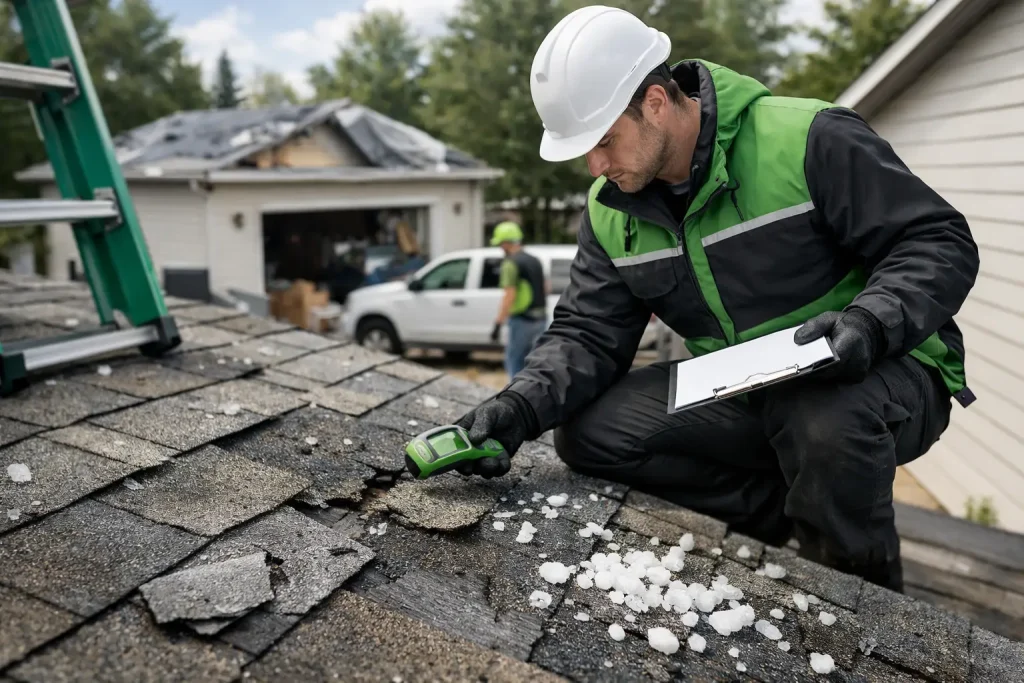
After a hailstorm, a roof can look fine from the ground and still have real damage that shortens its life. A proper hail damage roof inspection is designed to catch the problems you cannot reliably see from a driveway, especially on asphalt shingles, metal roofing, flashing, vents, gutters, and other impact-prone areas. For homeowners and property managers, timing matters. Waiting too long can make it harder to separate storm-related damage from normal wear and can allow small issues to turn into leaks, interior damage, and more expensive repairs.
Why a hail damage roof inspection matters
Hail does not damage every roof the same way. The result depends on hail size, wind speed, roof age, material type, slope, and even which side of the building took the strongest impact. Two neighboring properties can go through the same storm and end up with very different outcomes.
That is why a visual glance is not enough. Hail can bruise asphalt shingles without tearing them apart right away. Those bruises may weaken the protective granule surface, expose the mat underneath, and accelerate deterioration over time. On metal roofs, hail may leave cosmetic dents in one area and functional damage at seams, fasteners, or flashing in another. Gutters, downspouts, siding, skylights, soft metals, and rooftop equipment can also provide important clues about the force and direction of the storm.
A thorough inspection gives you a clear record of current conditions. If repairs are needed, that documentation becomes valuable for planning the scope of work and supporting an insurance claim. If the roof is not significantly damaged, you gain peace of mind and a baseline record for the future.
What happens during a hail damage roof inspection
A professional inspection should be systematic, not rushed. The goal is to identify storm-related impact damage, separate it from age-related wear, and document everything clearly.
Exterior and roof surface assessment
The inspection usually starts with the full exterior. An experienced inspector looks at the roof covering, ridges, hips, valleys, flashing, vents, pipe boots, drip edge, gutters, downspouts, siding, window screens, and other surfaces that can show impact marks. Soft metal components often tell an important part of the story because hail strikes can leave visible dents there even when shingle damage is less obvious.
On asphalt shingles, the inspector checks for bruising, displaced granules, fractured matting, circular impact marks, edge damage, and signs that the seal or surface integrity has been compromised. On other roof systems, the inspection approach changes. Metal, slate, tile, wood shake, and low-slope commercial roofing all respond differently to hail, so the inspector needs to evaluate the material in context rather than applying a one-size-fits-all standard.
Interior and leak-related review
If there are signs of water intrusion, the inspection should extend beyond the roof surface. Stains on ceilings, damp insulation, attic moisture, and ventilation issues may indicate that storm damage has already affected the building envelope. This is especially important for commercial properties and multifamily buildings where hidden moisture can spread unnoticed.
In some cases, thermal imaging or moisture mapping may help document areas of concern. These tools do not replace a hands-on inspection, but they can support a more complete understanding of what the storm may have caused.
Photos, notes, and damage documentation
Good documentation is not optional. Clear photos, annotated notes, and organized reporting help property owners understand the condition of the roof and help adjusters review the findings. This is one reason many owners prefer a contractor with storm restoration experience rather than a basic visual inspection alone.
When documentation is detailed, it is easier to explain whether the roof needs isolated repair, partial replacement, or a full replacement. It also helps avoid confusion later if conditions worsen or additional areas are uncovered during repair.
What inspectors look for after hail
The challenge with hail is that not all marks are functional damage. Some are cosmetic. Some are manufacturing irregularities. Some are foot traffic scuffs or old wear patterns. Distinguishing among those conditions takes experience.
Signs of functional damage
Functional damage affects the roof’s ability to shed water and protect the structure. On shingles, that can include bruising that breaks the mat, punctures, torn or fractured sections, or impact damage that removes enough granules to expose vulnerable substrate. On metal roofing, functional damage may involve punctures, seam separation, damaged locks, or flashing distortion that creates a path for water entry.
Damage to roof accessories matters too. Cracked vent caps, compromised pipe boots, bent flashing, damaged skylight components, and deformed gutters may all contribute to future leaks even if the main roof field appears mostly intact.
Cosmetic damage versus performance issues
Some hail impacts leave visible marks without immediately affecting water resistance. That does not mean they should be ignored, but the repair decision may depend on the roofing material, warranty implications, age of the roof, and owner priorities. A commercial owner with a newer standing seam roof may make a different decision than a homeowner with an older laminated shingle system already showing age.
This is where honest assessment matters. Not every dent justifies replacement, and not every seemingly minor bruise should be dismissed. A reliable inspection explains the trade-offs clearly.
When to schedule a hail damage roof inspection
Sooner is better, especially after a confirmed hail event, visible exterior impact, or any sign of leaking. Prompt inspection helps preserve evidence, reduces the chance of secondary damage, and gives you time to make informed decisions before the next storm arrives.
If your neighbors are having roofs, siding, or gutters checked after the same storm, that is often a practical cue to schedule your own inspection. The same goes for finding granule accumulation in downspouts, dented metal components, torn window screens, or unexplained water spots indoors.
Property managers and commercial owners should move quickly because even minor roof damage can affect multiple units, tenant spaces, or common areas. Delayed response can increase disruption and complicate maintenance planning.
Why insurance documentation is such a big part of the process
A hail damage roof inspection is not just about spotting damage. It is also about creating a defensible record of what happened. Insurance carriers evaluate storm claims based on documented conditions, material damage, repairability, and policy terms. The stronger and clearer the inspection record, the smoother that conversation tends to be.
That does not mean every roof will qualify for full replacement, and it should not be presented that way. Some claims result in repair scopes. Some involve multiple building components beyond the roof. Some are affected by prior wear, maintenance history, or policy limitations. But without solid inspection data, you are starting from a weaker position.
This is where a contractor experienced in restoration work can help by documenting storm-related findings thoroughly, communicating clearly, and coordinating with the adjuster when needed. Apollo Construction & Renovation Corp. approaches storm inspections with that level of organization because the inspection phase often sets the tone for everything that follows.
A few mistakes property owners make after hail
One common mistake is assuming that no leak means no damage. Many hail-related roofing issues do not become active leaks right away. Another is relying only on ground-level photos or a quick opinion without full documentation. That can lead to missed damage or vague reports that are not useful later.
It is also a mistake to delay until the roof has gone through months of heat, wind, and rain. As time passes, it becomes harder to document the original storm impact cleanly. For commercial properties, postponing inspection can also create liability concerns if water intrusion affects tenants, equipment, or interior finishes.
Choosing the right contractor for a hail damage roof inspection
Not all inspections are equal. You want a licensed and insured contractor who understands storm-related roofing damage, follows safe inspection practices, and can explain findings in plain language. Experience with insurance restoration is especially valuable because the inspection often needs to serve two purposes at once: identifying the correct repair path and documenting the loss properly.
Ask whether the inspection includes photo documentation, review of related exterior components, and a clear explanation of whether the damage appears cosmetic, functional, or mixed. For larger homes, multifamily properties, commercial buildings, and HOAs, organized reporting and project coordination become even more important.
A dependable contractor should not pressure you into a predetermined outcome. The goal is an accurate assessment and a practical next step, whether that means monitoring, repair, mitigation, or replacement.
Hail damage can be easy to underestimate when the roof still looks intact from the curb. A careful inspection gives you facts, not guesses, and that is what protects your property, your budget, and your next decision.
Every property and insurance policy is different. Contact Apollo to discuss the work your property may need; your insurer determines coverage.