
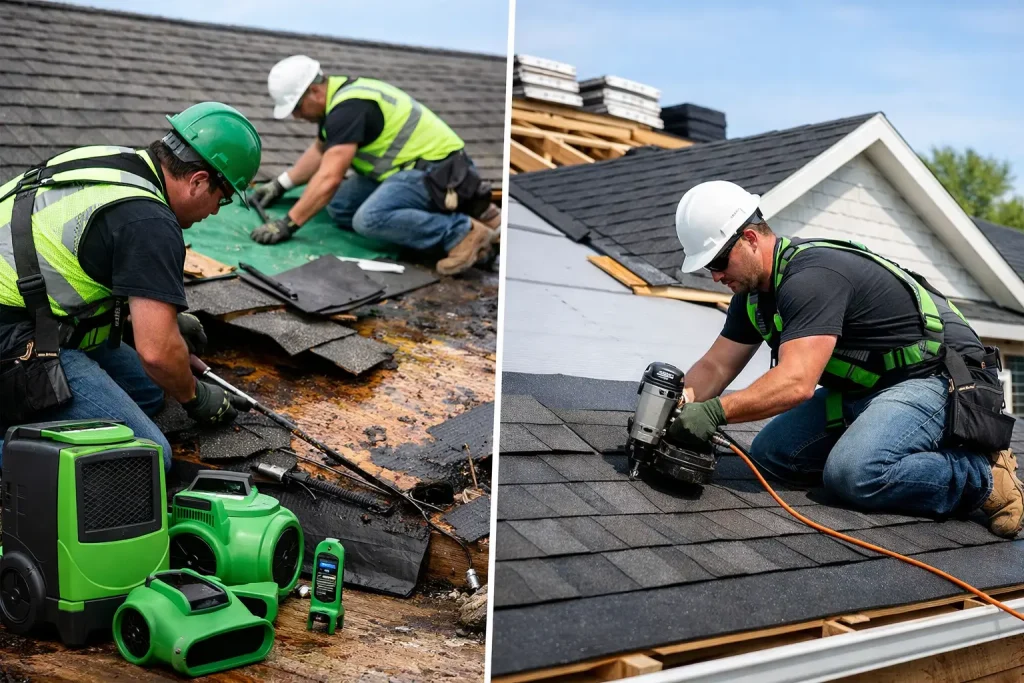
A roof problem rarely shows up at a convenient time. One leak after a storm can feel manageable, but once water starts entering the building envelope, the question of roof repair vs replacement becomes urgent. The right choice depends on more than the visible damage. Age, material condition, storm impact, ventilation, underlayment failure, and insurance factors all matter.
For homeowners and property managers, the goal is not just stopping the leak today. It is protecting the structure, avoiding repeat damage, and making a decision that holds up financially and technically. A patch may be the right move in one case and a short-term mistake in another.
Roof repair vs replacement: the real difference
Roof repair addresses a specific problem area while keeping most of the existing roof system in place. That might mean replacing a section of shingles, resealing flashing, correcting a vent penetration, repairing storm-damaged ridge caps, or addressing isolated wind and hail damage. Repair is usually the better option when the damage is limited and the rest of the roof is still performing as intended.
Roof replacement is broader. It involves removing enough or all of the existing roofing system to correct widespread failure, aging materials, recurring leaks, or hidden damage below the surface. In many cases, replacement is less about appearance and more about restoring full weather protection, code compliance, and long-term reliability.
The key point is simple: a repair fixes a defect, while a replacement resets the system. If the roof has multiple weak points, fixing one area may not solve the bigger problem.
When roof repair makes sense
A repair is often the practical choice when the roof is relatively newer and the damage is isolated. If a recent storm lifted a few shingles, dented flashing, or damaged one section near a valley, a targeted repair may fully restore performance. The same is true when the leak source is clearly identified and the surrounding materials are still in good condition.
Repairs also make sense when the roof has years of useful life left. For example, if the roof is halfway through its expected lifespan and there is no evidence of broad deterioration, investing in a localized repair is usually reasonable. In commercial settings, repairs may also be appropriate when punctures or seam issues are confined to a small section of the membrane.
That said, repair only works when the underlying system is stable. If decking is soft, underlayment is compromised, or moisture has spread beyond the visible stain, the scope can change quickly once inspection begins.
Signs a repair may be enough
A repair may be the right solution if the damage is limited to one area, the roof is not near the end of its service life, and leaks are not recurring in multiple locations. Missing shingles after a wind event, flashing damage around a chimney, or a minor gutter-related edge problem can often be corrected without replacing the full roof.
Documentation matters here. A thorough inspection should confirm whether the issue is isolated or part of a larger pattern. Moisture mapping, attic review, and exterior assessment help prevent a small leak from being misread as a small problem.
When replacement is the smarter investment
Replacement usually becomes the better decision when the roof is aging, leaks are recurring, or storm damage affects a large percentage of the system. If repairs are piling up year after year, the roof is already telling you something. At that point, continuing to patch weak areas can cost more over time while still leaving the property vulnerable.
A full replacement is also worth serious consideration when there is evidence of widespread shingle granule loss, curling, brittle materials, soft decking, failing flashing in multiple areas, or persistent moisture intrusion. These are signs the roof system is declining as a whole, not just in one isolated spot.
For property owners planning to hold the building long term, replacement can provide better value. It reduces the chance of emergency leaks, supports better insulation and ventilation corrections, and allows damaged components beneath the surface to be addressed properly.
Red flags that point toward replacement
If the roof has reached or is close to the end of its expected lifespan, if multiple leaks have appeared, or if prior repairs have not held, replacement is often the safer path. The same is true after significant storm damage where repair matching is poor or where compromised areas are spread across multiple slopes.
Another common issue is hidden water damage. A stain on a ceiling might seem small, but if water has migrated through insulation, underlayment, and decking, the actual affected area can be much larger than expected. In those cases, replacement may be the only reliable way to restore the roof system and prevent interior damage from continuing.
Cost is important, but it should not be the only factor
Most property owners start with price, and that is understandable. A repair usually costs less upfront than a replacement. But the better question is what the property will need over the next few years, not just what today’s invoice looks like.
If a repair extends the life of the roof by many years, it can be a smart investment. If it buys only a few months before another leak appears, it is not really saving money. Repeated service calls, interior water damage, mold concerns, insulation replacement, and disruption to occupants can quickly erase the short-term savings of a patchwork approach.
Replacement requires a larger initial investment, but it may lower long-term risk and reduce ongoing maintenance costs. It can also improve resale confidence for buyers who do not want to inherit an aging roof with a leak history.
Insurance can affect the decision
In storm-related situations, insurance may play a role in whether roof repair or replacement is appropriate. The cause of damage, the extent of the loss, local code requirements, and policy terms all matter. What looks like a simple repair question can become more complex if wind, hail, or another covered event has compromised larger areas of the roof system.
This is where proper inspection and documentation are critical. A detailed assessment can help distinguish between wear and tear, sudden storm damage, and long-developing roof failure. It can also support communication with adjusters when there is legitimate covered damage.
For insurance-related roofing losses, it helps to work with a contractor that understands both restoration standards and claim documentation. Apollo Construction & Renovation Corp. often supports property owners through inspection, photo documentation, damage reporting, and reconstruction planning so the scope matches the actual condition of the property.
The hidden issues many owners miss
The visible roof covering is only part of the system. Leaks can be caused or worsened by poor attic ventilation, ice dam patterns, clogged drainage, flashing failures, or moisture trapped below the surface. In commercial properties, ponding water and membrane separation can create similar problems that are not obvious from the ground.
This is why a decision should not be based on shingles alone. A roof may look repairable from the exterior but still have compromised decking or moisture intrusion beneath. On the other hand, a roof that looks worn may still be structurally sound enough for a targeted repair if the damage is limited and properly addressed.
A credible inspection should answer three questions clearly: what failed, how far the damage extends, and whether a repair will restore dependable performance or simply delay replacement.
How to make the right call
If you are weighing roof repair vs replacement, start with condition, not assumptions. Consider the roof’s age, the number of leak events, the location and spread of damage, and whether the issue came from a recent storm or long-term deterioration. Then compare the likely service life after repair against the cost and risk of continuing to maintain an aging system.
For homeowners, that often means asking whether you want the least expensive fix today or the most reliable solution for the next several years. For property managers and commercial owners, the equation also includes tenant impact, scheduling, asset protection, and the cost of unplanned interior damage.
There is no one-size-fits-all answer. Some roofs absolutely should be repaired. Others are past the point where another patch makes financial sense. The safest decision comes from a thorough inspection, clear documentation, and an honest assessment of the roof as a complete system.
When a roof starts failing, waiting usually narrows your options. A timely evaluation can protect the structure, support any valid insurance claim, and help you move forward with confidence instead of guesswork.
Every property and insurance policy is different. Contact Apollo to discuss the work your property may need; your insurer determines coverage.