
A small patch of mold under a bathroom vanity can be addressed quickly. A larger loss behind drywall, inside insulation, or across multiple rooms is a different situation entirely. If you are asking how long does mold remediation take, the honest answer is that it depends on how far the contamination has spread, what caused it, and whether materials can be cleaned or need to be removed.
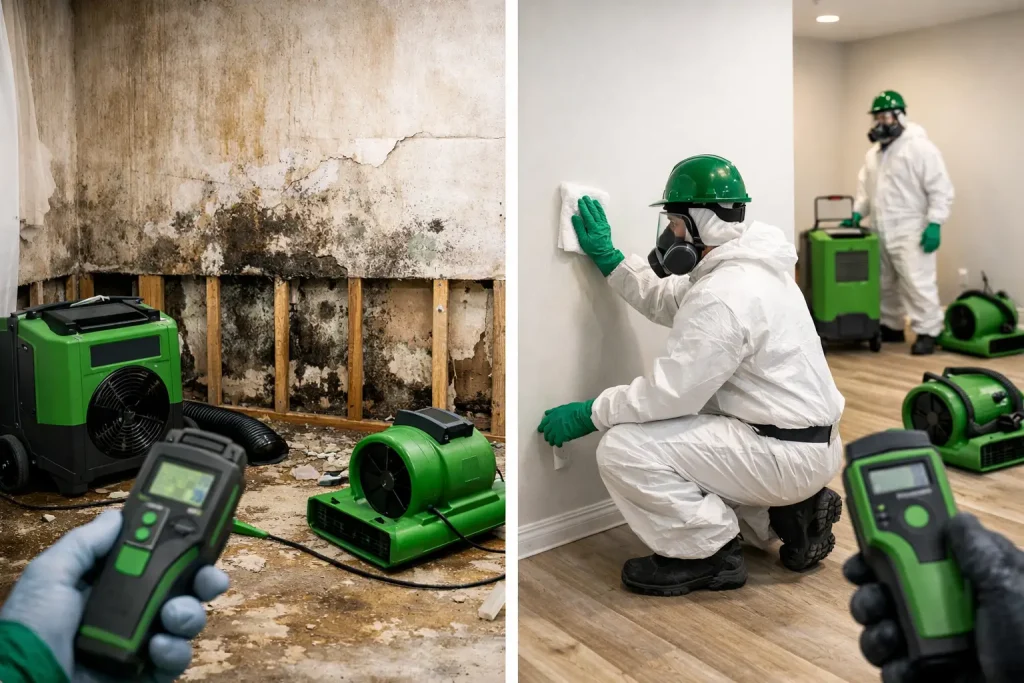
Mold remediation is not just a wipe-down service. A proper job involves identifying the moisture source, containing affected areas, removing contaminated materials when necessary, cleaning salvageable surfaces, drying the structure, and verifying that the space is ready for repairs. When those steps are handled correctly, the timeline is driven by conditions on site rather than guesswork.
How long does mold remediation take in most properties?
In many residential cases, mold remediation takes anywhere from 1 to 5 days for the remediation phase itself. That usually applies to limited contamination in one contained area, with a clear moisture source and no major structural demolition. If mold is widespread, hidden behind finishes, or tied to a significant water loss, the process can extend to 1 to 3 weeks or longer.
That range can feel broad, but there is a reason for it. Mold is rarely just a surface issue. What looks minor on the outside may involve wet framing, soaked insulation, HVAC contamination, or multiple layers of affected materials. The visible mold is only part of the timeline. The real schedule depends on how much of the building has been impacted and how quickly the environment can be returned to normal moisture levels.
What affects the mold remediation timeline?
The biggest factor is the size of the affected area. A small utility closet with limited growth is much faster to contain and clean than a finished basement with mold behind baseboards, drywall, and flooring. Square footage matters, but so does depth. Mold that has penetrated porous materials usually requires more labor and more controlled demolition than mold limited to non-porous or semi-porous surfaces.
The moisture source also matters. If the issue came from a slow plumbing leak that has now been repaired, remediation can often move forward without much interruption. If the source is still active, such as roof intrusion, condensation from HVAC issues, or ongoing humidity problems, that underlying condition has to be corrected first. Otherwise, mold returns and the timeline stretches because the job is not actually finished.
Access is another major variable. Mold inside an open mechanical room is easier to address than mold behind kitchen cabinets, under flooring, in crawl spaces, or inside wall cavities. The harder it is to reach affected materials safely and completely, the longer the work generally takes.
Testing and clearance requirements can also add time. Some projects include third-party environmental testing before or after remediation, especially in commercial properties, managed buildings, or insurance-related losses where documentation matters. Waiting for inspection scheduling or lab turnaround can add a day or more, even if the actual remediation work is complete.
The typical stages of mold remediation
Inspection and scope development
The first step is determining what is affected and why. That may involve a visual inspection, moisture readings, thermal imaging, and evaluating nearby building materials for hidden damage. In some losses, the scope can be confirmed quickly. In others, limited demolition is needed to understand how far moisture and mold have traveled.
This stage may take a few hours for a straightforward issue or a full day if the property is larger or the damage is concealed. For property owners, this is where realistic scheduling starts. A reliable contractor should be able to explain what is known, what still needs to be confirmed, and whether reconstruction is likely after remediation.
Containment setup
Containment helps prevent mold spores and dust from spreading into unaffected parts of the property. Depending on the size and location of the loss, this may involve plastic barriers, negative air machines, HEPA filtration, and controlled entry points.
Containment is often completed the same day the project begins, but larger or multi-area losses can take longer to secure. This step may not feel like visible progress to an owner, but it is one of the most important parts of a proper remediation process.
Removal and cleaning
This is the part most people picture when they think about mold remediation. Contaminated drywall, insulation, carpeting, or other unsalvageable materials are removed and bagged for disposal. Salvageable structural surfaces are cleaned using approved methods based on the material type and level of contamination.
For a smaller project, removal and cleaning may be completed in 1 to 2 days. For more extensive losses, especially where multiple rooms or building systems are involved, this phase can take several days. Commercial buildings and occupied properties often require more coordination, which can further affect the schedule.
Drying and moisture control
Even after visible mold is removed, the structure still has to be dry enough to support repairs and help prevent recurrence. Drying time varies widely based on the materials involved, the amount of water exposure, humidity levels, and airflow conditions.
In some cases, drying is largely complete by the time remediation begins. In others, especially after leaks, flooding, or hidden saturation, drying equipment may need to remain in place for several days. This is one reason a project that looks simple at first can take longer than expected.
Post-remediation verification and repairs
Once remediation is complete, some properties move into clearance testing or final moisture checks before reconstruction begins. If drywall, trim, cabinets, flooring, or insulation were removed, those repairs happen after the remediation portion is done.
This is where confusion often comes in. Homeowners may ask how long does mold remediation take, but what they really need to know is how long the entire recovery will take. Remediation and reconstruction are related, but they are not the same phase. Mold removal may take a few days, while complete restoration of the affected area can take longer depending on material availability and the extent of rebuilding.
When mold remediation takes longer than expected
Hidden damage is the most common reason for schedule changes. Once walls, ceilings, or flooring are opened, the affected area may be larger than originally visible. That does not always mean something went wrong. It often means the original damage was concealed and is only now being fully documented.
Another common delay is active moisture that has not been fully resolved. A leaking pipe behind a wall is one issue. A building envelope problem, roof failure, or poor ventilation pattern is more complex and may require additional trades before the environment is ready for final remediation and rebuild.
Occupied properties can also slow the process. In homes, access may need to be coordinated around family schedules, pets, or sensitive contents. In commercial spaces, containment, after-hours work, and tenant considerations can add time even when the crew is moving efficiently.
Insurance documentation may affect timing as well. On covered losses, some property owners want full photo documentation, moisture mapping, and detailed reporting before reconstruction begins. That process adds value and helps support the claim, but it can add steps to the overall schedule.
What property owners can do to keep the process moving
The fastest projects usually have three things in place early: a confirmed moisture source, clear access to the affected area, and prompt decisions about scope and repairs. If the cause of the mold is still uncertain, the timeline will stay uncertain too.
It also helps to work with a contractor who can manage both remediation and reconstruction planning. That reduces handoff delays and keeps the project organized from containment through repairs. In insurance-related situations, good documentation can prevent avoidable back-and-forth later.
Most important, do not push for speed at the expense of thoroughness. Rushing through containment, skipping moisture verification, or leaving affected materials in place may shorten the calendar now but create a much larger problem later.
A realistic answer for homeowners and property managers
For a minor isolated issue, mold remediation may take 1 to 3 days. For a moderate loss involving drywall removal, containment, cleaning, and drying, 3 to 7 days is common. For extensive contamination or losses tied to major water damage, expect 1 to 3 weeks or more when inspection, drying, remediation, clearance, and repairs are all factored in.
That may not be the quick answer most people want, but it is the right one. Mold problems respond best to a disciplined process, clear communication, and proper documentation at every stage. If you are facing mold in a home, multifamily property, office, or commercial building, the best next step is a professional inspection that defines the actual scope. Once the affected materials, moisture conditions, and repair needs are clear, the timeline becomes far more predictable and the path to a clean, stable property gets much easier to manage.
Every property and insurance policy is different. Contact Apollo to discuss the work your property may need; your insurer determines coverage.