A water loss can look dry long before the structure is actually dry. Carpet may feel normal, standing water may be gone, and walls may show no obvious moisture, yet water can remain inside drywall, insulation, subfloors, framing, and cabinets. That is why property owners often ask, how long does structural drying take after water damage.
For a straightforward, clean-water loss that receives immediate professional mitigation, structural drying often takes three to five days. Larger losses, slow leaks, saturated materials, high humidity, contaminated water, or water that has traveled behind finishes can extend the process to a week or longer. The correct answer is not based on a calendar alone. It is based on documented moisture readings showing that affected materials have returned to an acceptable drying standard.
Why structural drying is more than removing water
Water extraction is the first urgent step, but it is not the same as structural drying. Extraction removes visible water from floors, carpets, and other surfaces. Structural drying addresses the moisture absorbed into building materials and concealed spaces.
Drywall, wood framing, engineered flooring, insulation, and cabinetry all absorb and release moisture differently. A floor may appear dry while the subfloor beneath it remains wet. A ceiling stain may stop spreading while insulation above the ceiling continues to hold moisture. Leaving that moisture in place can lead to material deterioration, odors, microbial growth, warping, and a more extensive reconstruction project.
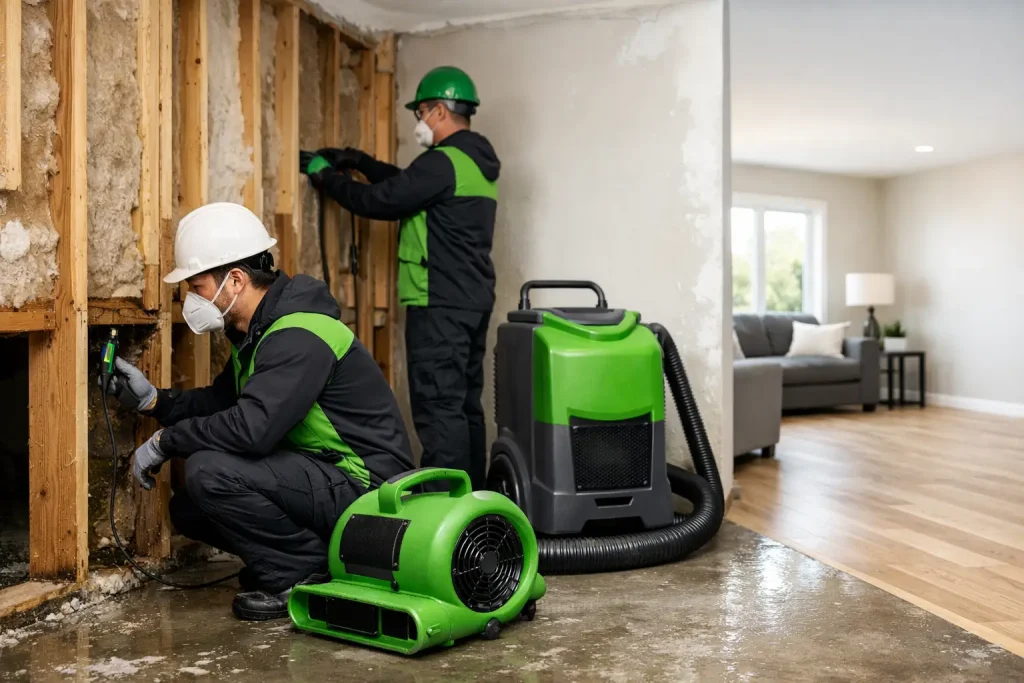
Professional mitigation teams use controlled airflow, dehumidification, temperature management, and moisture monitoring to dry the structure safely and efficiently. The goal is not to dry a room until it feels comfortable. The goal is to bring affected materials back to their normal moisture condition without causing unnecessary damage to the property.
How long does structural drying take in common situations?
Every loss is different, but these general ranges can help set expectations. A small plumbing leak on a hard surface floor, addressed immediately, may dry in two to three days after extraction. A bathroom overflow that affects flooring, drywall, and vanity areas commonly takes three to five days.
A burst pipe or appliance supply-line failure that travels through multiple rooms or floors may require five to seven days or more. If water has been present for an extended period, materials may need to be removed rather than dried in place. Wet insulation, swollen particleboard cabinetry, delaminated flooring, and compromised drywall often cannot be reliably restored through drying alone.
Drying time is also different from total restoration time. Once the structure is dry, repairs may still include drywall replacement, insulation, flooring, cabinetry, painting, plumbing work, or reconstruction. Mitigation stabilizes the loss and prevents further damage. Reconstruction returns the property to its pre-loss condition.
The factors that affect drying time
The most significant factor is how quickly mitigation begins. Water continues to migrate after the initial event, moving through seams, under flooring, behind baseboards, and into wall cavities. Prompt extraction and moisture control can reduce both drying time and the amount of material that must be removed.
The source and category of water
Clean water from a supply line is handled differently than water from a dishwasher discharge, washing machine overflow, drain backup, or sewage-related event. Contaminated water may require removal of porous materials for health and safety reasons, regardless of whether those materials could technically be dried.
The longer water remains in contact with materials, the more likely it is that contamination, deterioration, and microbial growth concerns will affect the scope of work. Do not assume that clear-looking water means there is no risk. A professional assessment is the safest way to determine the appropriate response.
The materials affected
Dense materials such as hardwood, framing lumber, and concrete can take longer to release moisture. Porous materials, including drywall and insulation, may absorb water quickly and lose structural integrity when saturated. Some materials can be dried in place when addressed early and monitored correctly. Others are more cost-effective and reliable to remove and replace.
Floor assemblies are particularly challenging. Water trapped beneath vinyl, tile, engineered wood, or carpet can remain concealed without proper moisture testing. Cabinets and built-ins may also block airflow, creating wet areas that require specialized drying methods or selective removal.
The size and spread of the loss
A localized water event is generally faster to dry than a loss affecting multiple rooms or levels. Water follows gravity, so an upstairs leak can impact ceilings, walls, insulation, and contents below. In commercial properties, water may travel across large floor areas, through wall systems, or into tenant spaces before it is discovered.
The visible wet area is not always the full affected area. Moisture mapping and thermal imaging help identify where water has migrated so the drying plan can address the actual scope rather than only the obvious damage.
Indoor conditions and equipment setup
Humidity, temperature, ventilation, and the quantity and placement of drying equipment all matter. In the Mid-Atlantic, humid weather can slow evaporation when a structure is not properly controlled. Opening windows may feel like a practical solution, but it can introduce humid outside air and interfere with the drying environment.
Professional-grade air movers create airflow across wet surfaces, while dehumidifiers capture evaporated moisture from the air. In some cases, technicians use cavity drying systems, floor mats, or containment to target moisture hidden inside building assemblies. Equipment must be adjusted as conditions change, which is why daily monitoring matters.
What professional moisture monitoring should look like
A reliable drying plan begins with a thorough inspection. Technicians identify the water source, classify the loss, inspect affected materials, and document initial conditions. They then establish drying goals by comparing affected materials with unaffected materials in the same structure whenever possible.
During the drying process, technicians should take moisture readings and evaluate temperature and humidity conditions. These readings show whether materials are responding to the equipment and whether the drying setup needs to change. They also create a clear record for property owners and insurance claim documentation.
At Apollo Construction & Renovation Corp., IICRC-based mitigation practices, moisture mapping, thermal imaging, and detailed project documentation help guide water damage decisions from initial response through reconstruction. This approach helps avoid two common problems: removing materials that could have been saved and closing walls or floors before they are properly dry.
Why rushing the process creates expensive problems
It is understandable to want equipment removed quickly. Drying equipment can be noisy, occupy space, and disrupt normal routines. But shutting down the drying process before materials reach their drying goals can create hidden issues that emerge later.
Wood flooring may cup or separate. Drywall can soften or develop staining. Baseboards and trim can swell. Lingering moisture in cavities may create odors or conditions that require additional remediation. A short inconvenience during controlled drying is usually preferable to reopening finished surfaces after repairs are complete.
The opposite problem matters too. Equipment should not run indefinitely without verification. Proper moisture measurements allow the mitigation team to remove equipment when the structure has met drying targets, helping control time, disruption, and unnecessary cost.
What property owners should do while drying is underway
Keep the drying area accessible and avoid moving or unplugging equipment. Air movers and dehumidifiers are positioned intentionally, and even small changes can reduce their effectiveness. Keep doors and windows in the condition recommended by the mitigation team so indoor humidity remains controlled.
If you notice a new odor, additional staining, unusual noise from equipment, or a change in the source of the leak, report it promptly. For insurance-related losses, retain photos, invoices, and communication records, and ask for clear documentation of affected areas and moisture readings. This can support an organized claim review and make the transition to repairs more efficient.
Avoid attempting to open walls, remove electrical fixtures, or handle contaminated water without trained professionals. Water damage can involve hidden electrical, structural, and environmental concerns that are not apparent from the surface.
When to call for help
Call for professional water mitigation as soon as you find standing water, a burst pipe, a roof leak, water-stained ceilings, wet flooring, or moisture after a storm. Fast action does not guarantee that every material can be saved, but it gives the property the best chance of a shorter, more controlled recovery.
Structural drying is complete when testing confirms the building materials are dry, not when the room simply looks dry. A qualified restoration team can explain the readings, the expected timeline, and the next steps so you can make informed decisions and move forward with confidence.
Every property and insurance policy is different. Contact Apollo to discuss the work your property may need; your insurer determines coverage.