
A burst pipe can soak insulation behind finished walls long before the visible stain gets your attention. A wind event can lift roofing materials and allow water into the attic. After a fire, smoke residue may travel well beyond the room where the loss began. In each case, insurance claim contractor help can make the recovery process more organized from the first emergency call through final repairs.
The right contractor does more than provide an estimate. A qualified restoration team identifies immediate safety and moisture concerns, performs necessary mitigation, documents the condition of the property, communicates clearly about the scope of work, and rebuilds damaged areas using sound construction practices. That support can reduce confusion when you are managing a property emergency and an insurance claim at the same time.
What Insurance Claim Contractor Help Should Include
Property damage recovery usually happens in phases. The first phase is protecting the building from additional damage. The next is documenting what happened and evaluating the materials, systems, and spaces affected. Only after the property is stable can reconstruction move forward efficiently.
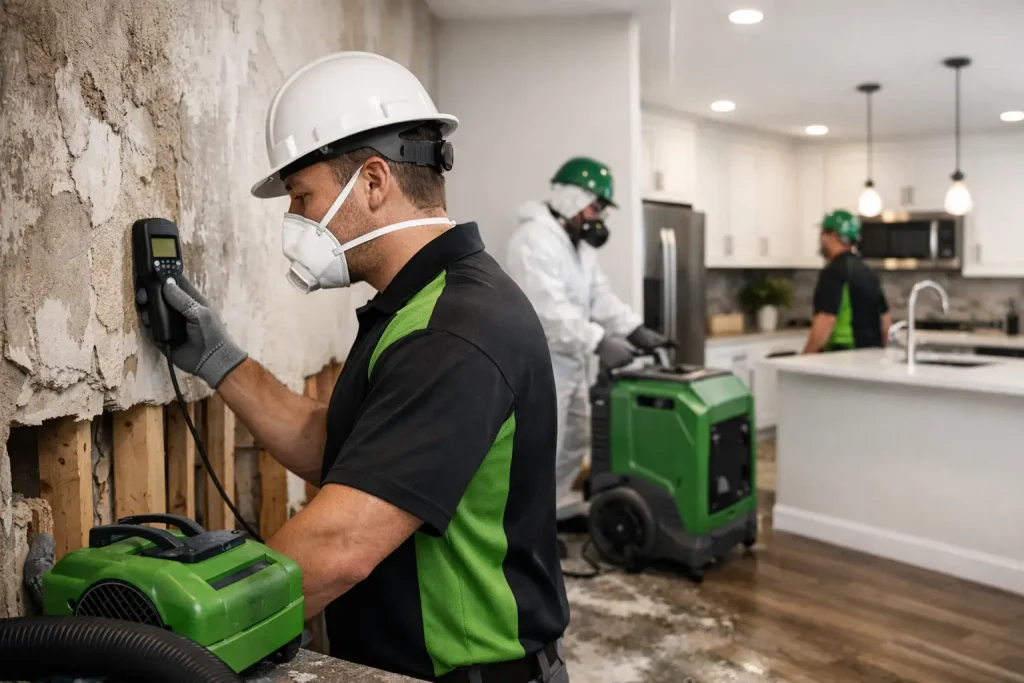
For water damage, this may involve extracting standing water, setting drying equipment, removing unsalvageable materials, and using moisture readings or thermal imaging to identify hidden wet areas. For fire and smoke damage, the work may include emergency board-up, odor and residue assessment, contents handling, cleaning, and structural repairs. Storm losses may require temporary roof protection, a detailed exterior inspection, and repair of roofing, siding, gutters, or interior water damage.
A full-service contractor can coordinate these stages instead of leaving you to find a separate mitigation company, roofer, electrician, plumber, drywall crew, painter, and flooring installer. That single point of accountability is especially valuable for commercial properties, HOAs, and occupied homes where delays can affect residents, operations, or tenant relationships.
Insurance carriers make their own coverage decisions based on the policy, cause of loss, exclusions, deductibles, and claim investigation. A contractor cannot promise coverage or dictate the claim outcome. What an experienced insurance restoration contractor can do is provide accurate observations, repair documentation, photos, measurements, drying records, and a detailed scope that helps establish what work is necessary to restore the property.
Start With Mitigation, Not Cosmetic Repairs
After a covered loss, the condition of the property can change quickly. Water can migrate into framing, insulation, cabinetry, flooring, and wall cavities. A damaged roof can allow additional moisture into the building during the next rainfall. Smoke residue and odor can become more difficult to address when cleaning is delayed.
This is why emergency mitigation should take priority over cosmetic work. The goal is to stabilize the loss and prevent secondary damage while preserving the information needed for the claim. Depending on the situation, this may mean water extraction, structural drying, temporary tarping, board-up, contents pack-out, controlled demolition, or environmental testing.
Do not remove materials, discard damaged contents, or begin major repairs without documenting the loss unless immediate action is needed to protect people or prevent further property damage. Take clear photos and video of affected areas, save receipts for emergency expenses, and keep a record of conversations with your carrier. If conditions are unsafe, such as an active electrical hazard, unstable structure, sewage contamination, or suspected asbestos, keep the area secured and wait for qualified professionals.
A professional team should explain why mitigation is needed, what equipment or procedures will be used, and how the property will be monitored. At Apollo Construction & Renovation Corp., this approach includes IICRC-based restoration protocols, detailed moisture documentation, and organized reporting support for eligible insurance restoration projects.
Documentation Turns Observations Into Supportable Scope
A small ceiling stain does not always represent a small loss. Water may have traveled across framing or collected above insulation before it became visible. Likewise, a roof inspection may reveal storm-related damage that is not obvious from the ground.
Strong documentation makes the condition of the property easier to understand. Depending on the loss, a contractor may use photographs, 360 imaging, moisture mapping, thermal imaging, diagrams, measurements, material samples, and written daily logs. These records can show the affected areas, the emergency work performed, drying progress, and the components that require repair or replacement.
Documentation should be factual and specific. It should distinguish between visible damage, likely concealed damage requiring further investigation, and unrelated pre-existing conditions when identified. That clarity protects everyone involved. It helps the property owner understand the work, gives adjusters useful information for their evaluation, and helps the construction team build a realistic reconstruction plan.
How to Choose an Insurance Restoration Contractor
The lowest estimate is not always the safest choice after a property loss. A contractor may be pricing only the visible finish materials while missing hidden moisture, damaged underlayment, affected insulation, code-related requirements, or the need to coordinate multiple trades. On the other hand, not every damaged component must be replaced. The appropriate scope depends on the cause of loss, material condition, safety requirements, and policy evaluation.
Look for a contractor that can explain its findings in plain language and provide a clear path from emergency service to completed reconstruction. Ask whether the company is licensed and insured for the work, whether technicians follow established restoration standards, and whether it has experience documenting insurance-related losses.
It is also reasonable to ask who will manage the project after mitigation ends. Some firms handle only emergency dry-out or cleanup, leaving the owner to coordinate reconstruction. Others can manage the entire repair process, including roofing, drywall, insulation, flooring, painting, plumbing, electrical, cabinetry, and final finishes. For larger losses, continuity matters because the reconstruction team needs a complete understanding of what was removed, why it was removed, and what must be restored.
For roof and storm claims, inspection qualifications are another useful consideration. A detailed inspection should address the roof covering, flashing, penetrations, drainage components, siding, windows, and interior signs of water intrusion where relevant. A HAAG-certified inspection background can add technical value when evaluating roof conditions, but the contractor should still communicate findings honestly and avoid making promises about coverage.
Keep Communication Organized During the Claim
Insurance claims often slow down when information is spread across text messages, phone calls, invoices, photos, and informal notes. Create one file for the loss and keep claim numbers, adjuster contact information, photos, mitigation records, estimates, invoices, and correspondence together.
Your contractor can support this process by providing an itemized scope, progress updates, photos, and explanations for changes discovered during demolition or repair. Concealed conditions are common in restoration work. For example, opening a water-damaged wall may reveal wet insulation, microbial growth, deteriorated framing, or damaged wiring that could not be confirmed during the initial inspection. When that happens, the right response is not guesswork. It is to document the finding, discuss the needed work, and submit the information through the proper claim process before proceeding when approval is required.
Clear communication also helps avoid confusion about upgrades. Insurance restoration generally aims to return damaged areas to their pre-loss condition, subject to policy terms. If you decide to select premium flooring, redesign a bathroom, change cabinetry, or make other elective improvements during reconstruction, those costs may be separate from the covered repair. A reliable contractor will separate restoration work from owner-requested upgrades so the project remains transparent.
Recovery Is More Than Rebuilding What You Can See
A successful restoration project protects the building first, then restores it with attention to the systems behind the finishes. Drywall, paint, and flooring are the final layer of the job. The work before them – drying, cleaning, inspection, safe removal, structural assessment, and coordinated repairs – is what helps prevent repeated problems after the claim is closed.
If your home, commercial building, or managed property has suffered water, fire, smoke, storm, mold, or roofing-related damage, act promptly, document carefully, and choose a contractor that can manage both the technical work and the communication that follows. The right partner brings order to a difficult moment and keeps the focus where it belongs: protecting your property and restoring it properly.
Every property and insurance policy is different. Contact Apollo to discuss the work your property may need; your insurer determines coverage.