
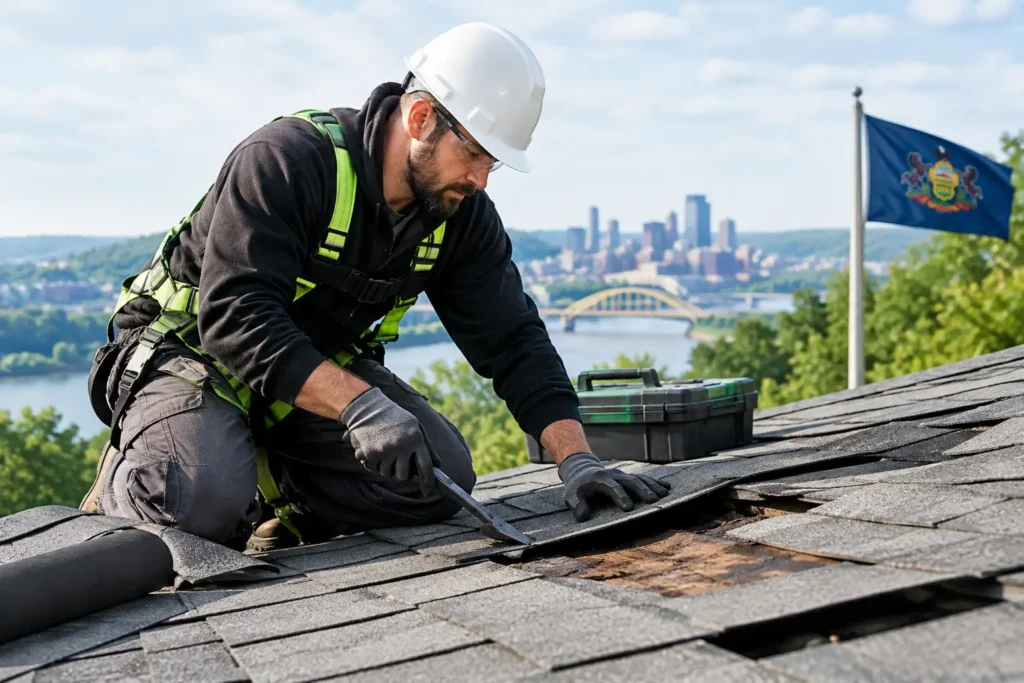
A roof leak rarely stays a roof-only problem. Water can travel along roof decking, framing, insulation, wiring paths, and interior walls before it appears as a ceiling stain. Calling a qualified Pennsylvania roof leak repair contractor quickly helps limit that hidden damage, protect the property, and create the documentation needed if an insurance claim may be involved.
The right response depends on the source of the leak, how long water has been entering, and whether the damage is isolated or part of a larger roofing failure. A missing shingle after a storm may call for a focused repair. Widespread wind damage, deteriorated flashing, saturated insulation, or recurring leaks may require a broader restoration plan. The priority is to stop further intrusion, identify the actual cause, and repair the building system correctly.
What to Do When a Roof Leak Appears
Start by protecting people and limiting additional damage. If water is near electrical fixtures, outlets, or a breaker panel, avoid contact and arrange for professional evaluation. Move furniture, electronics, and valuables away from the affected area when it is safe to do so. Place containers beneath active drips and photograph visible damage before cleanup, including ceiling stains, wet belongings, and water entering through the roof.
Do not climb onto a wet, steep, wind-damaged, or icy roof to search for the leak. The visible drip indoors is often not directly below the roof opening, and a temporary surface fix can miss the true problem or create a safety hazard. A trained team can assess the roof exterior, attic space, and interior materials as one connected system.
If the event is ongoing, emergency measures such as professional tarping or temporary protection may be appropriate. These steps are intended to reduce further exposure while a complete inspection and permanent repair plan are developed.
Why the Leak Location Is Not Always the Cause
Roof leaks can begin at vulnerable transitions rather than in the middle of a roof field. Flashing around chimneys, skylights, vents, dormers, valleys, wall intersections, and pipe penetrations is frequently involved. Clogged or damaged gutters can also force water toward fascia, soffits, and roof edges. In other cases, wind has lifted shingles or loosened fasteners without leaving obvious damage from the ground.
Inside the building, wet drywall and insulation can hold moisture long after rainfall stops. That moisture may weaken materials, contribute to staining, and create conditions that require specialized drying or removal. For commercial properties, a small breach in a low-slope roofing system can affect a much larger area of insulation or deck than the ceiling evidence suggests.
This is why a visual roof check alone is not enough after a significant leak. A complete assessment should connect the exterior failure to the condition of the materials below it.
What a Professional Roof Leak Inspection Should Include
A dependable Pennsylvania roof leak repair contractor should explain what was found, why it is allowing water intrusion, and what work is necessary to correct it. The inspection process should be methodical, especially when storm damage or an insurance claim is possible.
A thorough evaluation commonly includes an exterior review of shingles or roofing membrane, flashing, penetrations, gutters, drainage components, roof edges, and storm-related damage. The inspector should also review accessible attic or ceiling areas for wet insulation, staining, mold-like growth, compromised decking, and signs of repeated moisture exposure.
Advanced diagnostic tools can help identify conditions not visible at the surface. Moisture mapping and thermal imaging can support a more accurate understanding of the affected area, while detailed photos and 360 imaging create a clear project record. These findings help property owners make informed decisions and can support communication with an insurance carrier or adjuster when coverage applies.
An inspection should not automatically lead to a full replacement recommendation. Sometimes a targeted repair is the appropriate solution. The decision depends on the roof’s age and condition, the extent of damaged materials, the number of vulnerable areas, code requirements, and whether a repair can restore reliable performance without creating a patchwork of future problems.
Choosing a Pennsylvania Roof Leak Repair Contractor
Roof leaks are stressful because the visible damage can change quickly. Look for a contractor with roofing knowledge and restoration capability, not just a crew prepared to replace shingles. If water has entered the structure, the work may involve emergency protection, moisture inspection, drying, interior repair, insulation replacement, electrical coordination, and reconstruction.
Ask how the contractor determines the source of the leak and how they document affected materials. A clear scope should distinguish between temporary protection, roof repair, moisture mitigation, and interior reconstruction. It should also identify any conditions that may change the scope once concealed materials are opened.
Credentials and jobsite practices matter. A qualified contractor should be properly licensed and insured, follow applicable safety requirements, and communicate clearly about scheduling, materials, access, and cleanup. For insurance-related losses, experience with organized photo documentation, estimates, and adjuster communication can reduce confusion during a difficult process.
Apollo Construction & Renovation Corp. brings roofing, mitigation, reconstruction, and insurance restoration coordination together for property owners facing water intrusion and storm-related damage. That integrated approach can be especially valuable when a roof leak has affected more than the roof itself.
Repairing the Whole Damage Path
A lasting repair begins with correcting the water entry point, but it should not end there. If roof decking is deteriorated, it may need replacement before new roofing materials are installed. Damaged flashing, underlayment, drip edge, ventilation components, gutters, or siding transitions may also need attention to prevent a repeat issue.
Once the roof is secured, the interior should be evaluated for moisture and material damage. Wet insulation may lose performance and retain moisture against framing. Saturated drywall can require removal, depending on the extent and duration of exposure. A professional restoration team can assess drying needs using established, IICRC-based practices and verify that affected areas are addressed before reconstruction begins.
For a residential property, reconstruction may include drywall, insulation, paint, flooring, trim, and ceiling repair. For a commercial building or multifamily community, the plan may also require coordination around occupied spaces, tenant communication, protected access routes, and phased repairs. The scope should fit the property, not force every loss into the same process.
How Insurance May Fit Into a Roof Leak Claim
Insurance coverage depends on the policy language, cause of loss, maintenance history, deductible, and the specific conditions found during inspection. Sudden storm damage may be handled differently than long-term wear, deferred maintenance, or a leak that developed over time. A contractor should not promise claim approval or tell a property owner what an insurer will cover.
What a capable restoration contractor can do is document the damage thoroughly, provide a detailed repair scope, preserve evidence of the source when possible, and communicate factual findings clearly. Photos, moisture readings, emergency mitigation records, and itemized estimates can help establish an organized record of the loss.
Property owners should report a potential claim promptly and keep copies of estimates, invoices, photographs, and insurer correspondence. Before authorizing non-emergency work, clarify how the repair process will be coordinated with the claim. Immediate steps needed to prevent further damage are different from permanent reconstruction decisions, and both should be documented.
Preventing the Next Leak
Not every roof leak can be prevented, particularly after severe wind or hail, but regular maintenance can reduce avoidable failures. Have the roof inspected after major storms and when you notice loose shingles, granules in gutters, damaged flashing, sagging areas, or stains on upper-level ceilings.
Keep gutters and downspouts clear so water moves away from the roof edge and foundation. Trim branches that scrape roofing materials, and address loose siding, damaged fascia, or failed sealant at roof-to-wall transitions before water has an opportunity to enter. Older roofs deserve particular attention because small defects can become more consequential as materials age.
The best time to identify a roofing weakness is before rain reaches the interior. If you are seeing a stain, drip, or storm-related roof damage now, act quickly, document what you see, and bring in a qualified professional who can protect the property from the roof deck to the finished ceiling.
Every property and insurance policy is different. Contact Apollo to discuss the work your property may need; your insurer determines coverage.