
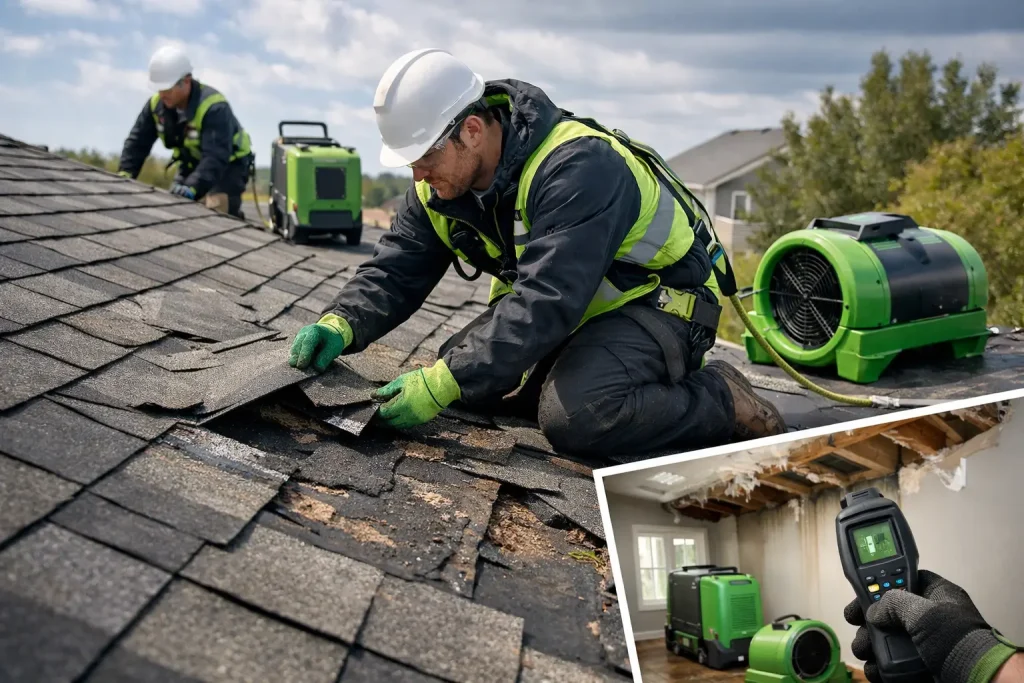
A roof can look mostly intact from the ground and still have enough storm movement to create a real problem. That is what makes wind damaged shingle repair time-sensitive. A few lifted or creased shingles can let water reach the underlayment, decking, or attic long before a stain shows up on the ceiling.
After a wind event, many property owners focus on what they can see from the yard – a shingle on the lawn, a piece of flashing out of place, a gutter section pulling away. The harder part is spotting the damage that has not fully failed yet. Wind does not always tear a roof open in one dramatic moment. Often, it weakens the seal, bends the shingle, and creates a pathway for future leaks during the next rain.
Why wind damage to shingles gets worse quickly
Asphalt shingles are designed to shed water in overlapping layers and resist uplift through seal strips and proper fastening. When strong gusts break that bond or flex the shingle beyond its limit, the material may crease, crack, or lose granules. Once that happens, the roof system becomes more vulnerable each time it is exposed to wind, heat, and rain.
This is why wind damaged shingle repair is not just about replacing what blew off. The larger concern is the surrounding field of shingles. If one section lifted, nearby shingles may have partially unsealed as well. In a repair inspection, the goal is to identify both visible loss and hidden compromise before moisture intrusion spreads into insulation, drywall, framing, or interior finishes.
For commercial buildings, townhome communities, and multi-unit properties, the stakes are even higher. A small roof opening can lead to interior damage, tenant complaints, mold concerns, and more complicated repair coordination. Fast action protects both the building and the claim file.
What wind damage usually looks like
Not every wind-related roofing issue looks the same, and that matters when deciding whether a spot repair is appropriate or whether a larger section needs replacement.
The most obvious sign is missing shingles. If tabs are gone, underlayment or roof decking may be exposed. That condition needs immediate temporary protection to reduce the risk of active leakage.
A more subtle sign is creasing. This often appears when a shingle tab lifts in the wind and folds back slightly. From the ground, the roof may still look uniform. Up close, the mat may be fractured near the top of the tab. Creased shingles are compromised even if they are still lying flat at the moment.
You may also see lifted edges, torn corners, broken seal strips, displaced ridge cap shingles, loosened flashing, or heavy granule loss where shingles were repeatedly flexed. On older roofs, wind damage can overlap with age-related brittleness. That does not mean the issue should be ignored. It means the repair approach needs to be based on actual condition, roof age, and whether matching materials are available.
What to do right after a storm
Safety comes first. If shingles are missing or debris has fallen, avoid climbing onto the roof or sending maintenance staff up without proper training, fall protection, and damage assessment experience. Wind events can leave surfaces unstable, especially near ridges, eaves, and wet slopes.
Start with a visual inspection from the ground. Look for missing materials, bent metal, debris impact, or anything unusual along the ridge and roof edges. Inside the property, check ceilings, attics, upper wall corners, and mechanical rooms for new moisture staining or active drips.
Take clear photos of anything visible. Include wide shots of the building and close-ups of debris, displaced shingles, and interior moisture signs. Good documentation helps establish storm-related timing and supports a more organized repair and insurance review process.
If the roof is actively leaking, temporary mitigation may be needed to prevent secondary damage. That can include emergency tarping or other protective measures until full repairs are completed. Speed matters here. The cost of delayed action is often not the shingle itself. It is the water that gets past it.
When a repair makes sense and when it may not
Wind damaged shingle repair can be very effective, but it depends on the extent of the damage and the condition of the existing roof system.
A localized repair often makes sense when damage is limited to a small area, the surrounding shingles remain flexible and well-adhered, and matching shingles are available. In that case, a qualified contractor can remove compromised shingles, inspect the underlayment and decking below, replace damaged materials, and restore the section with proper fastening and sealing methods.
A repair becomes more complicated when the roof has widespread creasing, repeated uplift across multiple slopes, brittle shingles that cannot be lifted without breaking, or discontinued materials that make a proper blend difficult. If the underlayment, flashing, or decking has also been affected, the work may need to extend beyond the visible loss.
This is where a professional inspection is important. The right answer is not always the smallest repair. It is the repair scope that actually restores performance and protects the property long term.
How professional wind damaged shingle repair should be handled
A proper repair starts with inspection, not assumptions. The contractor should evaluate the affected slopes, test for seal failure where appropriate, check for creases and fractures, and inspect related components such as ridge caps, starter shingles, flashing, vents, gutters, and attic conditions.
If shingles are removed, the underlying roof components should also be checked. Water can travel beneath the visible damaged area, especially on steeper roofs or around penetrations. A repair that only replaces the top layer without verifying what happened underneath may leave hidden issues behind.
The repair itself should match the roof system as closely as possible in material type, color, fastening pattern, and installation method. Nail placement matters. Hand sealing may be needed depending on weather conditions and manufacturer requirements. Flashing details must be re-secured and integrated correctly so the repair does not create a new weak point.
For insurance-related losses, documentation is part of the job. Clear photos, inspection findings, measurements, and scope notes help support communication with adjusters and keep the project moving. That is especially valuable when a roof issue is part of a broader storm damage claim involving siding, gutters, windows, or interior water damage.
The insurance side of storm roof damage
Many wind events lead property owners to ask the same question: is this just maintenance, or is it storm damage that should be reviewed through insurance? The answer depends on the policy, the timing, and the documented condition of the roof.
In general, sudden and direct storm damage is treated differently from wear and tear. That is why early inspection and accurate documentation matter. If shingles were lifted, creased, or torn by a recent wind event, those findings should be recorded before more weather changes the evidence.
It also helps to have one contractor who understands both construction and claims documentation. The goal is not to overstate damage. It is to present the condition clearly, support the scope with facts, and keep mitigation and repairs organized. Apollo Construction & Renovation Corp. works with property owners through that process, from emergency protection and inspection to reconstruction and final repairs.
Common mistakes that make roof damage worse
The first mistake is waiting too long because the leak has not started yet. Wind-damaged shingles often fail in stages. A roof can make it through one storm and leak during the next.
The second is relying only on a ground-level opinion. Some damage can be seen from the yard, but creases, lifted seals, and underlayment issues often require a closer inspection.
The third is choosing a quick cosmetic patch instead of a durable repair. If the damaged section is not properly tied back into the roof system, the same area may fail again under the next round of wind pressure.
Finally, property owners sometimes focus only on the roof covering and miss related damage. Gutters, fascia, soffits, siding transitions, attic insulation, and interior finishes may all need attention if water has already entered.
A faster response usually means a smaller repair
Storm damage rarely gets better with time. What starts as a few wind-lifted shingles can turn into wet decking, ceiling damage, insulation loss, and a more expensive restoration project if the opening is left exposed.
If you suspect wind damage, treat it like a building protection issue, not just a roofing inconvenience. A prompt inspection, temporary mitigation when needed, and a repair scope based on actual conditions give you the best chance of protecting the property and avoiding avoidable interior damage.
A good repair does more than replace shingles. It restores confidence that the roof is ready for the next storm.
Every property and insurance policy is different. Contact Apollo to discuss the work your property may need; your insurer determines coverage.