
A damp basement wall is rarely just a cosmetic problem. A faint musty odor, peeling paint, darkened drywall, or a wet line along the floor can signal water moving through the foundation, around a window, or down from the roofline. This waterproofing basement walls guide explains how to identify the source, choose an appropriate repair, and know when a professional assessment is the safest next step.
Water intrusion can affect more than stored belongings. Prolonged moisture may damage finishes, insulation, framing, and flooring while creating conditions that support mold growth. For property owners in the Mid-Atlantic, where heavy rain, snowmelt, freeze-thaw cycles, and older foundations are common, early action can prevent a manageable repair from becoming a larger restoration project.
Start by Finding Where the Water Is Coming From
Waterproofing only works when it addresses the actual path of water. Applying a coating to an interior wall may reduce visible dampness, but it will not correct overflowing gutters, poor grading, a failed footing drain, or a foundation crack that is admitting water under pressure.
Start with a careful visual inspection during or shortly after rainfall. Look for water stains that begin high on the wall, which can point to window wells, siding transitions, exterior penetrations, or runoff entering above grade. Moisture concentrated at the wall-floor joint often suggests hydrostatic pressure or drainage problems around the footing. A narrow vertical crack can leak after storms, while horizontal cracks, bowing, or displacement deserve prompt professional evaluation because they may indicate structural movement.
Do not assume every basement moisture issue begins outside. Plumbing leaks, condensate lines, uninsulated cold-water pipes, appliance drains, and high indoor humidity can all create wet conditions. The timing matters: water that appears only after rain calls for a different investigation than moisture that develops when a bathroom, laundry room, or HVAC system is operating.
A qualified restoration and construction team can use moisture mapping and thermal imaging to help distinguish active water migration from old staining. Documentation of affected materials, moisture readings, and the suspected source is also useful when a sudden loss may involve an insurance claim. Coverage depends on the policy, cause of loss, and circumstances, so property owners should document promptly and communicate with their carrier rather than assume a repair is covered.
Waterproofing Basement Walls Guide: Exterior Repairs First
When groundwater or surface runoff is reaching the foundation, exterior water management is generally the most durable solution. The goal is simple: keep bulk water away from the wall and give it a controlled route away from the home.
Correct roof runoff and surface grading
Begin at the roofline. Gutters should be clean, securely pitched, and large enough to handle normal rain events. Downspouts need to discharge well away from the foundation through properly placed extensions or a drainage system that carries water to an appropriate location. Water pouring beside the house can saturate soil quickly, especially during repeated storms.
The ground should slope away from the foundation so surface water does not collect against the wall. Settled soil, landscaping borders, patios, and walkways can unintentionally direct water back toward the structure. Regrading may be enough for a minor runoff issue, but drainage improvements should be planned carefully so water is not redirected toward a neighboring property, sidewalk, or lower-level entry.
Repair cracks from the outside when practical
Small cracks are not all the same. Some result from normal concrete shrinkage, while others reflect movement or pressure. An appropriate repair may involve cleaning and sealing an accessible exterior crack, injecting a crack from the interior, or excavating to repair the wall and exterior waterproofing assembly.
Excavation is more disruptive and costly than a simple interior repair, but it can be the right approach when the outside membrane has failed, the footing drain is blocked, or the wall needs repair below grade. It gives contractors access to inspect the foundation, repair defects, apply a waterproof membrane, install drainage materials, and protect the wall before backfilling. This work should be designed for site conditions, soil type, foundation depth, and the building’s drainage layout.
Address window wells and below-grade openings
Basement windows, stairwells, utility penetrations, and window wells are common leak points. Window wells should drain properly, sit at an appropriate height relative to the surrounding grade, and remain clear of debris. A cover can reduce the amount of rain entering the well, but it is not a substitute for drainage. If water stands in a window well, the underlying drain may be clogged, disconnected, or missing.
When Interior Waterproofing Makes Sense
Interior systems have an important role, particularly where exterior excavation is impractical or where water pressure below the slab is contributing to seepage. The right interior solution manages water after it reaches the foundation and directs it to a controlled discharge point.
A perimeter drainage system may be installed along the inside edge of the basement floor. Water entering at the wall-floor joint is collected and routed to a sump basin, where a properly sized sump pump discharges it safely away from the building. Depending on the property and risk level, a battery backup or secondary pump may be recommended to help protect the area during a power outage or primary-pump failure.
Interior wall membranes can direct water downward into the drainage system and protect finished spaces from recurring dampness. These systems are often effective for managing known groundwater issues, but they do not make exterior drainage unimportant. If gutters are overflowing and grading directs rain toward the foundation, those conditions should still be corrected.
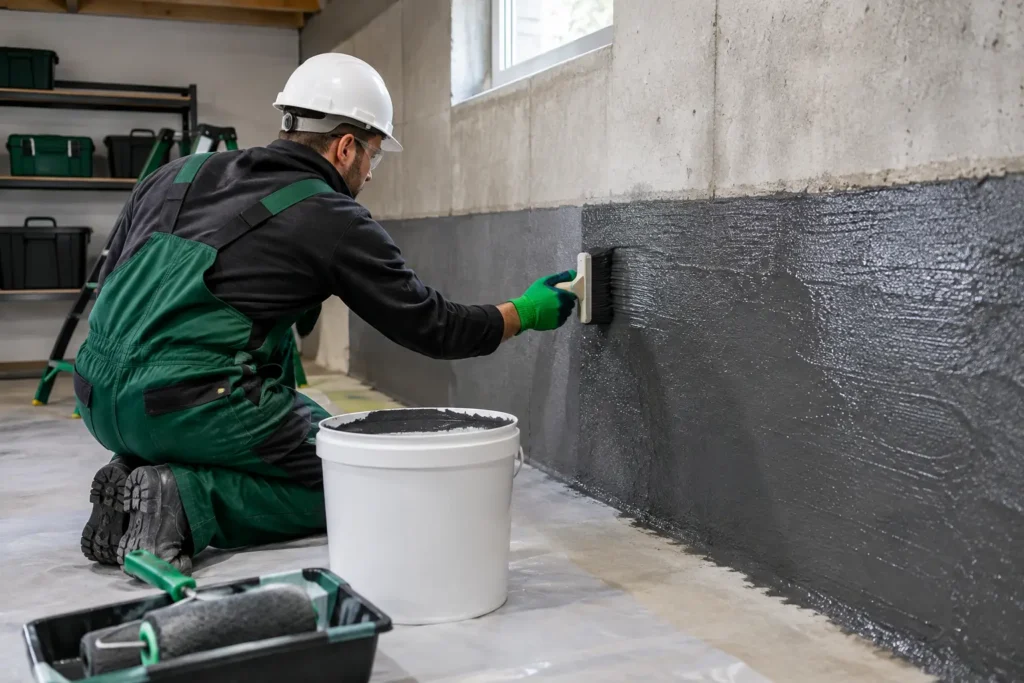
Waterproof coatings and sealants have a narrower use. They can be helpful on sound masonry walls with minor moisture vapor transmission, but they are not a dependable answer for active leaks, high hydrostatic pressure, or structural cracks. Coatings can also trap moisture if applied to unsuitable surfaces or over materials that have not dried properly. Before sealing any wall, identify whether the wall is wet from active intrusion, condensation, or past damage.
Protect the Basement Before and After Repairs
If water has entered the basement, the first priority is safety. Avoid standing water near electrical equipment, outlets, extension cords, furnaces, or panels. If there is any concern about electrical hazards, contaminated water, or structural instability, keep occupants out of the area and contact qualified professionals.
For clean-water intrusion, remove valuables from the affected area if it is safe to do so, photograph the damage, and begin drying as quickly as possible. Porous materials such as carpet pad, insulation, cardboard boxes, and some drywall may retain moisture even after the visible water is gone. Delayed drying can increase damage and create mold concerns.
A professional mitigation response typically includes controlled water extraction, moisture inspection, drying equipment, and ongoing monitoring until materials meet acceptable drying targets. This is different from placing a fan in the room and hoping the wall dries. Proper drying decisions depend on material type, moisture levels, air movement, humidity, and the extent of water migration behind finishes.
After a waterproofing repair, keep the basement easier to inspect. Store belongings on shelving instead of directly on the floor, leave access around utility equipment, and avoid permanently covering walls that have unresolved moisture issues. Check gutters, downspout discharge points, window wells, and sump pump operation on a regular schedule and before periods of heavy weather.
Know When to Call a Professional
A single damp spot may have a straightforward cause. Repeated water entry, persistent odors, visible mold-like growth, damaged drywall, or wet flooring calls for a more complete assessment. The same is true when cracks are widening, walls are bowing, doors or windows near the foundation begin sticking, or water is reaching finished living areas.
Professional help is especially valuable when more than one system may be involved. A basement leak can require water mitigation, mold-safe handling, drainage corrections, foundation repair, electrical coordination, drywall removal, insulation replacement, and reconstruction. Coordinating those trades through one organized project plan helps reduce unnecessary delays and protects the quality of the finished repair.
For homeowners and property managers, the best time to investigate basement moisture is before the next storm exposes it again. Apollo Construction & Renovation Corp. can assess water damage conditions, document moisture concerns, and help move the property from emergency mitigation through repairs and reconstruction with clear communication at each stage.
Every property and insurance policy is different. Contact Apollo to discuss the work your property may need; your insurer determines coverage.