
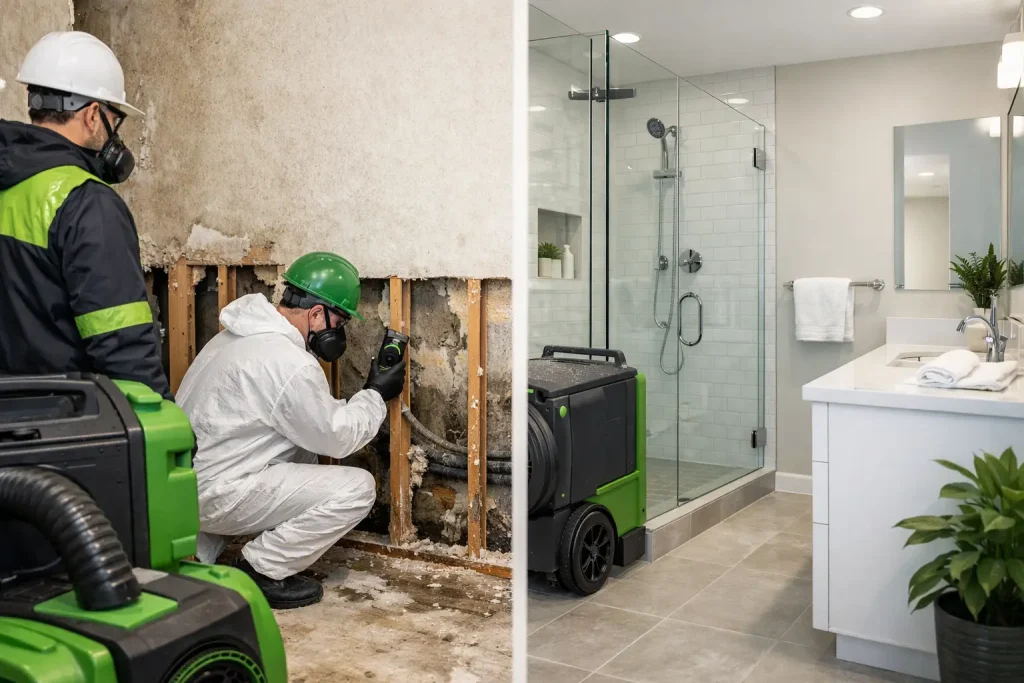
A bathroom that looks “mostly fine” after a leak is often where expensive mistakes start. Water travels behind tile, under flooring, into wall cavities, and around plumbing penetrations long before stains show up on the surface. A proper bathroom remodel after water damage is not just about making the room look new again. It is about stopping hidden deterioration, correcting the source of the loss, and rebuilding with materials and methods that hold up over time.
That distinction matters whether the damage came from an overflowing toilet, a failed supply line, a shower pan leak, or a roof issue that reached the bathroom ceiling. Cosmetic repairs alone can leave trapped moisture, softened subfloors, compromised drywall, mold growth, or recurring leaks behind a fresh finish. The right remodel starts with investigation and drying, then moves into smart reconstruction.
What a bathroom remodel after water damage should address first
Before anyone chooses tile, paint color, or a new vanity, the damaged bathroom needs to be evaluated as a restoration project. The first priority is identifying the full extent of moisture intrusion. In bathrooms, water rarely stays where the visible damage appears. It can wick into baseboards, framing, insulation, adjacent rooms, and lower levels.
This is why professional documentation and moisture testing matter. A thorough inspection should look at the flooring system, wall cavities, tub or shower surrounds, plumbing connections, and any penetrations around toilets, sinks, and fixtures. If water affected the ceiling below, that area also needs to be opened and assessed. In insurance-related losses, this early documentation is especially important because it helps support the scope of repairs.
Just as important is fixing the source before reconstruction begins. If the original problem was a failed wax ring, cracked drain assembly, deteriorated grout lines, missing waterproofing, or a plumbing supply issue, rebuilding before those issues are corrected only resets the clock on the next loss.
Drying and demolition are part of the remodel, not a separate issue
Homeowners often think of demolition as a messy prelude to the real work. In water damage restoration, it is part of the real work. Selective demolition allows damaged materials to be removed so the structure can dry properly and hidden damage can be seen.
In some bathrooms, that may mean removing only the vanity, sections of drywall, and affected flooring. In others, especially where water sat for a while or spread under tile assemblies, the shower, underlayment, insulation, and subfloor may all need attention. It depends on the source, the category of water involved, how long the moisture remained, and which materials were affected.
Drying should be based on readings, not guesswork. Materials need to return to acceptable moisture levels before they are closed back in. Rushing this stage is one of the most common reasons a newly renovated bathroom develops odor, warping, or mold concerns later.
When repair is enough and when full replacement makes more sense
Not every bathroom loss requires a full gut renovation. Some can be handled with targeted repair if the damage is contained and the affected materials can be matched. But in many cases, partial reconstruction leads to practical problems.
If the same flooring is discontinued, the vanity was custom sized, or the tile cannot be matched, a piecemeal repair may leave the bathroom looking patched together. There are also cases where the damaged assembly was outdated or improperly built to begin with. Replacing visible materials without upgrading the waterproofing underneath may save money today but create a higher risk of another leak.
A full remodel often makes more sense when damage reaches the shower system, the subfloor has softened, multiple finishes were affected, or the bathroom already needed updating. For insurance-related work, the scope depends on the policy, the cause of loss, and what materials were directly impacted, so there is often a balance between covered restoration and owner-selected upgrades.
Key rebuild decisions that affect long-term performance
A successful bathroom remodel after water damage should improve durability, not just appearance. That starts behind the finished surfaces.
Subfloor and framing integrity
If the floor feels spongy near the toilet, tub, or shower, the structural layers below need close attention. Water-damaged subflooring can lose strength even when the finish floor still looks acceptable. Framing around tubs, curbs, and shower walls also needs to be checked for swelling, decay, or microbial growth. Rebuilding on compromised structure is never a shortcut worth taking.
Waterproofing behind tile and wet areas
Tile and grout are not the waterproof barrier. The actual protection should be in the system behind them. In a modern rebuild, that may include waterproof membranes, properly detailed shower pans, sealed penetrations, and manufacturer-approved installation methods. This is one of the most important upgrades in any damaged bathroom because many failures begin where water management was weak from the start.
Drywall, backer board, and insulation
Standard drywall does not belong in every area of a bathroom, especially where direct moisture exposure is expected. Damaged insulation also needs replacement if it lost effectiveness or was contaminated. The correct material selection depends on where it is being installed and how much moisture that area regularly sees.
Flooring and cabinet choices
Some materials tolerate future moisture events better than others. Natural hardwood in a bathroom may look attractive, but it is less forgiving than many tile or luxury vinyl options if another plumbing issue occurs. Vanities and trim made from lower-grade composite materials can swell quickly after even a small leak. This does not mean every bathroom should look purely utilitarian. It means the finish choices should match the room’s risk profile.
Insurance and remodeling often overlap
One of the biggest points of confusion for property owners is where restoration ends and remodeling begins. If the bathroom was damaged by a covered loss, insurance may pay for mitigation, demolition, and reconstruction of affected materials back to pre-loss condition. It may not cover elective upgrades beyond that scope.
That said, combining covered repairs with owner-paid improvements is often the most efficient path. If the shower walls are already opened and the vanity is being removed due to damage, many owners choose to upgrade fixtures, improve layout, or replace outdated finishes at the same time. The key is having a clear, documented separation between what is loss-related and what is elective.
This is where an experienced restoration and reconstruction contractor adds real value. Detailed moisture mapping, photos, line-item scope development, and communication around affected materials can help keep the project organized and reduce delays during the insurance review process.
Common mistakes that make bathroom water damage worse
The biggest mistake is treating the issue as cosmetic. New tile over a damp substrate, fresh paint over compromised drywall, or reinstalling fixtures before the room is dry can lead to repeat damage.
Another common problem is underestimating how far water spread. A toilet overflow may affect hallway flooring outside the bathroom. A shower leak may damage the wall cavity in the adjoining bedroom. A roof leak over a bathroom may also involve insulation, attic ventilation concerns, and ceiling framing.
There is also a timing issue. Waiting too long to begin mitigation can increase material loss and complicate the rebuild. Water damage does not stay static. The scope often grows the longer it sits.
What to expect from a professionally managed bathroom rebuild
A well-run project should move in a logical sequence: emergency response if needed, source control, inspection, documentation, mitigation, selective demolition, drying verification, scope review, reconstruction, and final finish work. That process is not about adding steps. It is about protecting the property and avoiding rework.
For homeowners and property managers, communication matters just as much as craftsmanship. You should know what was damaged, what is being removed, what can be saved, what the rebuild includes, and where any upgrade decisions affect schedule or cost. In a high-stress loss event, clarity is part of the service.
For properties across Maryland, Northern Virginia, Washington DC, Delaware, and Pennsylvania, working with one qualified team that understands both restoration protocols and finish reconstruction can simplify the process significantly. Instead of juggling mitigation vendors, trades, and insurance documentation separately, the project stays coordinated from dry-out through final installation.
Choosing the right contractor for a bathroom remodel after water damage
This type of project sits at the intersection of emergency restoration and quality remodeling. You need a contractor who understands moisture behavior, building assemblies, demolition strategy, and insurance documentation, but who can also deliver a finished bathroom that looks clean, functions properly, and holds up.
Ask how the damage will be documented, how moisture levels will be confirmed before rebuild, how waterproofing will be handled in wet areas, and whether the team can manage plumbing, electrical, drywall, flooring, and finish work under one roof. A contractor who can explain the process clearly is usually better prepared to execute it well.
A bathroom damaged by water can absolutely come back stronger than it was before. But the result depends on what happens before the new finishes go in. When the work starts with proper mitigation, accurate scoping, and disciplined reconstruction, the remodel does more than restore the room. It gives you a bathroom that is safer, more durable, and far less likely to fail again when the next small problem tries to turn into a major one.
Every property and insurance policy is different. Contact Apollo to discuss the work your property may need; your insurer determines coverage.